
“ Bennet’s manner is almost painfully thoughtful. His eye constantly seeks hers; and when he speaks to her, the mechanical smile which greets every body else is replaced by a kind of indescribable, touching appeal for forgiveness. It is conveyed in no particular thing that he says or does, but it pervades his whole intercourse with her. As Gabriel and Ellen grow up toward maturity, Mrs. Bennet observes that the same peculiarity is stealing into his manner toward them. ”
Quotes about “Mrs. Bennet”
The Wedding Guest: A Friend of the Bride and Bridegroom (1856)
“ Bennet became a father, in the first gush of parental emotion he forgot even the exercise of the veto, in reference to the arrangements for the comfort of the little stranger, so that for a few weeks the happy mother carried out her own plans without any interference."Have you decided on a name for this dear little girl?" said Mrs. Bennet, as they sat together, one morning, caressing the object of so many hopes, and of so much affection."I wish you to name her, my dear," he replied; "it is your privilege to do so." ”
 Jane Austen,
Pride and Prejudice
(1817)
Jane Austen,
Pride and Prejudice
(1817)
“ Bennet, as soon as they were out of the house, "as ever I saw. He simpers, and smirks, and makes love to us all. I am prodigiously proud of him. I defy even Sir William Lucas himself, to produce a more valuable son-in-law." The loss of her daughter made Mrs. Bennet very dull for several days. "I often think," said she, "that there is nothing so bad as parting with one's friends. One seems so forlorn without them." "This is the consequence you see, madam, of marrying a daughter," said Elizabeth. "It must make you better satisfied that your other four are single." "It is no such thing. ”
G. E. Mitton, Jane Austen and Her Times
“ Bennet’s subsequent calm rebuke in his admonition to his daughter, “‘An unhappy alternative is before you, Elizabeth. From this day you must be a stranger to one of your parents. Your mother will never see you again if you do not marry Mr. Collins, and I will never see you again if you do,’” heightens the effect of his wife’s folly. Mrs. Bennet’s fatuous self-complacency, selfishness, and want of sense might have been almost too painful to cause amusement even in a book, had they not been set off by her husband’s sardonic humour, just the touch that Jane Austen knew so well how to give. ”
 Jerome K. Jerome,
Fanny and the Servant Problem
Jerome K. Jerome,
Fanny and the Servant Problem
“ BENNET. I am old-fashioned enough to think also of my duty to those I serve. If his lordship has done me the honour to marry my niece, the least I can is to see to it that she brings no discredit to his name. [Mrs. Bennet, followed by Jane Bennet, a severe-looking woman of middle age, has entered upon the words “the least I can do.” Bennet stays them a moment with his hand while he finishes. Then he turns to his wife.] You will be interested to find, Susannah, that the new Lady Bantock is not a stranger.MRS. BENNET. Not a stranger! [She has reached a position from where she sees the girl.] ”
Jane Austen,
Pride and Prejudice
(1817)
“ I do think Mrs. Long is as good a creature as ever lived—and her nieces are very pretty behaved girls, and not at all handsome: I like them prodigiously." Mrs. Bennet, in short, was in very great spirits; she had seen enough of Bingley's behaviour to Jane, to be convinced that she would get him at last; and her expectations of advantage to her family, when in a happy humour, were so far beyond reason, that she was quite disappointed at not seeing him there again the next day, to make his proposals. "It has been a very agreeable day," said Miss Bennet to Elizabeth. ”
Sarah Fanny Malden, Jane Austen (1889)
“ Bennet, 'and I daresay she is a very agreeable woman. It is a pity that great ladies in general are not more like her. Does she live near you, sir?' "'The garden, in which stands my humble abode, is separated only by a lane from Rosings Park, her ladyship's residence.' "'I think you said she was a widow, sir? Has she any family?' "'She has one only daughter, the heiress of Rosings, and of very extensive property.' "'Ah,' cried Mrs. Bennet, shaking her head, "then she is better off than many girls. And what sort of young lady is she? ”
Lilian Garis, The Girl Scout Pioneers; Or, Winning the First B. C
“ Bennet, who as housekeeper for Gerald Douglass and his young sister Jacqueline, had good reason to value her reputation, Tessie (now Stacia) was engaged. Her especial duties were to be with Jacqueline, and Mrs. Bennet deplored to Mr. Gerald the fact that this young girl brought no reference."But she is so young, Margaret," he had replied. "I am sure we can supervise. And you know, Jack has been taking a lot of my time lately. Yet the doctor says her ultimate cure depends on her cheerful frame of mind, and she is getting along so beautifully. ”
Jane Austen,
Pride and Prejudice, a play founded on Jane Austen's novel
“ Bennet.Nonsense! You are jealous.Jane.Jealous! Of Lydia?Mrs. Bennet.Well, she is no more forward than any of you. All you girls are crazy about Mr. Wickham. [Indulgently.] But I can't wonder at it. He certainly is a most engaging young man. What were those French words he said to me as he went out, Lizzy?Elizabeth.They were Latin, dear. He paid a very charming compliment to our pretty mamma. He said—The daughters are lovely, but the mother is lovelier. You know papa always says that you are handsomer than any of us.Mrs. Bennet. ”
The World's Greatest Books — Volume 01…
“ Bennet first heard the great news she sat quite still, and unable to utter a syllable; and at first even Jane and her father were almost incredulous of the engagement, because they had seen practically nothing of the courtship. But in the end they were all convinced, and Mr. Bennet's decisive comment was: "I admire all my three sons-in-law highly. Wickham, perhaps, is my favourite; but I think I shall like your husband quite as well as Jane's. If any young men come for Mary or Kitty, send them in, for I am quite at leisure." ”
Sarah Tytler, Jane Austen and her works (1880)
“ The Bennets have an uncle and aunt in London, in trade, like the rest of their mother’s relations, inhabiting a house in the City region of Gracechurch Street, but who are in all other respects different from Mrs. Bennet and the Philips in Meryton. Mr. and Mrs. Gardiner are sensible, intelligent, amiable people, much esteemed by their elder nieces. The couple have promised to take Elizabeth with them on a summer tour of a month’s duration to the Lakes; the idea cheers and consoles the girl under a hundred depressing and mortifying influences. ”
Jane Austen,
Pride and Prejudice, a play founded on Jane Austen's novel
“ If it was not for the entail I should not mind it.Mr. Bennet.What should not you mind?Mrs. Bennet.I should not mind anything at all.Mr. Bennet.Let us be thankful that you are preserved from a state of such insensibility. ”
Jane Austen,
Pride and Prejudice
“ Bennet was alone, than she likewise began on the subject, calling on Miss Lucas for her compassion, and entreating her to persuade her friend Lizzy to comply with the wishes of her family. “Pray do, my dear Miss{144} Lucas,” she added, in a melancholy tone; “for nobody is on my side, nobody takes part with me; I am cruelly used, nobody feels for my poor nerves.”Charlotte’s reply was spared by the entrance of Jane and Elizabeth.“Ay, there she comes,” continued Mrs. Bennet, “looking as unconcerned as may be, and caring no more for us than if we were at York, provided she can have her own way. ”
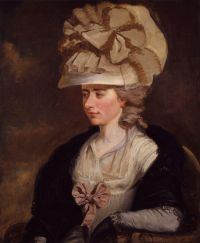 Fanny Burney,
Cecilia; Or, Memoirs of an Heiress…
Fanny Burney,
Cecilia; Or, Memoirs of an Heiress…
“ Miss Bennet, the lady, was in every sense of the phrase, the humble companion of Lady Margaret; she was low-born, meanly educated, and narrow-minded; a stranger alike to innate merit or acquired accomplishments, yet skilful in the art of flattery, and an adept in every species of low cunning. With no other view in life than the attainment of affluence without labour, she was not more the slave of the mistress of the house, than the tool of its master ”
Jane Austen,
Pride and Prejudice
(28 January 1813)
“ The astonishment of the ladies was just what he wished; that of Mrs. Bennet perhaps surpassing the rest; though, when the first tumult of joy was over, she began to declare that it was what she had expected all the while. ”
Jane Austen,
Pride and Prejudice
(28 January 1813)
“ Happy for all her maternal feelings was the day on which Mrs. Bennet got rid of her two most deserving daughters. With what delighted pride she afterwards visited Mrs. Bingley, and talked of Mrs. Darcy, may be guessed. I wish I could say, for the sake of her family, that the accomplishment of her earnest desire in the establishment of so many of her children produced so happy an effect as to make her a sensible, amiable, well-informed woman for the rest of her life; ”
Jane Austen,
Pride and Prejudice
(28 January 1813)
“ An invitation to dinner was soon afterwards dispatched; and already had Mrs. Bennet planned the courses that were to do credit to her housekeeping, when an answer arrived which deferred it all. Mr. Bingley was obliged to be in town the following day, and, consequently, unable to accept the honour of their invitation, etc. Mrs. Bennet was quite disconcerted. She could not imagine what business he could have in town so soon after his arrival in Hertfordshire; ”
Frances Barton Fox, The Heart of Arethusa
“ Bennet, no longer prefixed the Wonderful, had wormed itself into her brain without her having the slightest conception how it had got there, and now it presented itself to her, fully formed. Mr. Bennet was very decidedly one of the very sort of men Miss Eliza had been so careful to warn her against! He was one of those Awful Male Beings who were nice to girls to win their affections, only to deceive them! No one in the world could have been nicer to any girl than Mr. Bennet had been to her! ”
Jane Austen,
Pride and Prejudice
(28 January 1813)
“ The Longbourn party were the last of all the company to depart, and, by a manoeuvre of Mrs. Bennet, had to wait for their carriage a quarter of an hour after everybody else was gone, which gave them time to see how heartily they were wished away by some of the family. Mrs. Hurst and her sister scarcely opened their mouths, except to complain of fatigue, and were evidently impatient to have the house to themselves. They repulsed every attempt of Mrs. Bennet at conversation, and by so doing threw a languor over the whole party, which was very little relieved by the long speeches of Mr. ”
Robert Ames Bennet, Into the Primitive
“ She was wakened by a hoarse call: “Miss Jenny! Miss Jenny, answer me! Are you all right?”She started up, barely saving herself from a fall as the big unhusked nuts rolled beneath her 256 feet. The morning sunlight was streaming in over her door. She sprang down ankle-deep into the mire of the cave floor, and ran to loosen the bars. As the door swung up, she darted out, with a cry of delight: “You are safe–safe! Oh, I was so afraid for you! But you’re drenched! You must build a fire–dry yourself–at once!”“Wait,” said Blake. ”
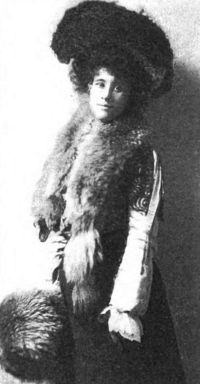 Onoto Watanna,
Me: A Book of Remembrance
Onoto Watanna,
Me: A Book of Remembrance
“ There was something so tremendously good about Bennet, so overpoweringly human and great, that I felt the same as I would have felt if a woman had offered to help me. On the other hand, I was desperately in love with Hamilton. I wanted to impress him. I wanted his good opinion. I unconsciously assumed a pose—perhaps that is it—and I had to live up to it. Then I have often thought that almost any woman would have confidently accepted help from Bennet, but might have hesitated to take anything from Mr. Hamilton.Some men inspire us with instant confidence; we are "on guard" with others. ”
Jane Austen,
Pride and Prejudice
(1817)
“ Bennet, alarmed. "Lizzy is only headstrong in such matters as these. In every thing else she is as good-natured a girl as ever lived. I will go directly to Mr. Bennet, and we shall very soon settle it with her, I am sure." She would not give him time to reply, but hurrying instantly to her husband, called out as she entered the library, "Oh! Mr. Bennet, you are wanted immediately; we are all in an uproar. You must come and make Lizzy marry Mr. Collins, for she vows she will not have him, and if you do not make haste he will change his mind and not have her." ”
The Wedding Guest: A Friend of the Bride and Bridegroom (1856)
“ Where the temporal and eternal welfare of my children is concerned, my dear husband, you must allow me to follow my own convictions of duty. In all things where conscience is not concerned, I shall, as I have uniformly done, yield my own preference and wishes to yours.""Well," said Mr. Bennet to himself, as he turned away, "women are inexplicable beings, and I begin to think neighbour Wilson's way of managing them is better than mine, after all. If you give them even a loophole to creep out at, they will be sure, sooner or later, to rebel openly, and set up for themselves. ”
Robert Ames Bennet, Into the Primitive
“ You’re not going to a dance,” he growled.He thrust the empty whiskey flask into his hip pocket, and went back to pass a sling of reeds through the gills of the coryphene.“All ready now,” he called. “Let’s get a move on. Keep my coat closer about your shoulders, Miss Jenny, and keep your shade up, if you don’t want a sunstroke.”“Thank you, Blake, I’ll see to that,” said Winthrope. “I’m going to help Miss Leslie along. I’ve fastened our two shades together, so that they will answer for both of us.”“How about yourself, Mr. Blake?” inquired the girl. “Do you not find the sun fearfully hot?” ”
Robert Ames Bennet, Out of the Primitive
“ She looked up at him with her tearful dark eyes, and clutched eagerly at the lapel of his coat."Mr. Blake! He has told me how resolute you are. You must not give up! I'm certain Vievie likes you. If only mamma hadn't meddled! She's always messing things. It's just because she can't realize I'm in long frocks. If—if only she had seen how much grander it would be to make herself the mother-in-law of an earl, instead of a mere aunt-in-law!"Blake's face darkened morosely. "That's the way things are—misdeal all around. Your mother is right. You've lost out ”
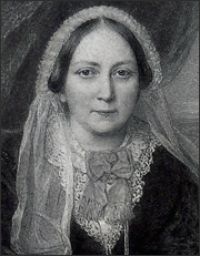 Mrs. Henry Wood,
It May Be True, Vol. 1 (of 3)
Mrs. Henry Wood,
It May Be True, Vol. 1 (of 3)
“ I am not sufficiently acquainted with Miss Bennet to be able to form, or rather give an opinion as to her character; most young ladies of the present day are fast, and perhaps your friend is not an exception to the general rule. ”
“ Miss Bennet made no remark."She's so fond of Miss Elton, too. I don't see how she could have meant to be rude to her.""I'm afraid there is not much doubt about that," was the answer."It seems to me," went on Ruth nervously, "that there's some mystery about it. Maysie won't tell me anything.""Maysie has no reason to be proud of herself," replied Miss Bennet coldly."It seems so horrid her not going in for the exhibition, and she's so good at painting.""There are various ways of making use of one's talents," said Miss Bennet, rising. "Now this——"Ruth jumped to her feet, and stood gazing. ”
Fanny Burney,
Cecilia; Or, Memoirs of an Heiress…
“ I had myself a great aversion to her at first sight. But the house is chearful,—very chearful; I like to spend a few days there now and then of all things. Miss Bennet, too, is agreeable enough, and——” “Miss Bennet agreeable!” cried Mrs Harrel, “I think she's the most odious creature I ever knew in my life; a nasty, spiteful old maid!” “Why indeed, ma'am, as you say,” answered Morrice, “she is not very young; and as to her temper, I confess I know very little about it; and Mr Monckton is likely enough to try it, for he is pretty severe.” ”
Robert Ames Bennet, Out of the Depths: A Romance of Reclamation
“ Night settled down close and dense over the plateau. The girl crouched beside the sleeper, her eyes peering out into the blackness, the drawn pistol ready in her hand. She could see only a few feet in the dim starlight. But her ears, accustomed to the dull monotone of the booming cañon, heard every sound––the click of the horses’ hoofs, even the munching of the nearest one, the hoot of the owls that flitted overhead, the distant yelps and wails of coyotes. 355An hour passed, two hours––a third. She crept around to replenish the fire. When she returned she heard the baby fretting. ”
Jane Austen,
Pride and Prejudice
(28 January 1813)
“ During dinner, Mr. Bennet scarcely spoke at all; but when the servants were withdrawn, he thought it time to have some conversation with his guest, and therefore started a subject in which he expected him to shine, by observing that he seemed very fortunate in his patroness. Lady Catherine de Bourgh's attention to his wishes, and consideration for his comfort, appeared very remarkable. Mr. Bennet could not have chosen better. Mr. Collins was eloquent in her praise. ”
