“ Chichester, subsiding into a lounge chair, and trying to look as if her tea-gown isn't quite new. She has selected this evening in especial to spring it upon her women friends. As a rule people look dowdy after being up all night. Mrs. Chichester is determined she won't. She appears as fresh as the proverbial lark, in an exquisite arrangement of white silk and lace, and a heavenly temper. Her eyes are a little greener than usual."You don't look it," says Sir Maurice, who is standing near. He is wondering if Tita will come down. Tita has not put in an appearance all day. ”
Quotes about “Mrs. Chichester”
“ What are looks?" cries Mrs. Chichester gaily. "Looks always belie one.""Certainly Lady Rylton's must belie her," says Mrs. Bethune, with a slow smile. "What cause has she for tears?""Not one!" declares Mrs. Chichester with decision. "It would be 'a sinner above all the Galileans' who would make Lady Rylton cry."Her queer green eyes smile at Tita, who smiles back at her in her little sweet way, and then all at once bursts out laughing. It is a charming laugh, apparently full of mirth. There are only two present who do not quite believe in it, Margaret and Tom Hescott—but these two love her. ”
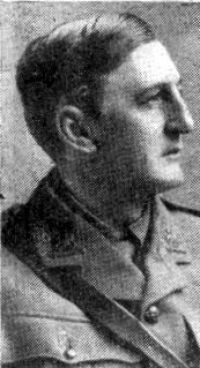 A. E. W. Mason,
The Summons — XXX: A Revolution in Sir Chichester
(1920)
“ Indeed, it was almost unthinkable that a couple of hours could produce so vast a revolution in a man. Here was a reporter who had come, without being asked, to interview Sir Chichester Splay, and the baronet would not see him! The incongruity struck Sir Chichester himself."Perhaps it will seem rather impolite, eh, Luttrell? Rather hard treatment on a man who has come so far? What do you think, Hillyard? I suppose I ought to see him for a moment—yes." Sir Chichester raised his voice in a sharp cry which contrasted vividly with the deliberative sentences preceding it. ”
A. E. W. Mason,
The Summons — XXX: A Revolution in Sir Chichester
(1920)
“ Sir Chichester's voice sagged again. He contemplated the little parcel swinging by a loop of string from Martin's finger. His face became a little stern. "That's a bad habit, Hillyard," he observed, shaking his head. "It will grow on you—nicotine poisoning may supervene at any moment. You had better begin to break yourself of it at once. I think so.""Chichester!" cried Millie Splay. "What in the world are you doing?"Sir Chichester was gently but firmly removing the parcel from Martin's hands, whilst Martin himself looked on, paralysed by the aggression. ”
Henry Fisk Carlton, The Story of Nathan Hale
“ Exactly! Now, Mrs. Chichester, let's set a trap for him. Will you help me?MRS. CHICHESTERI will that! A rebel—and like as not a spy—in my tavern!DREWGo in to him, engage him in conversation, then look out the window and remark that you see a small boat landing. ”
A. E. W. Mason,
The Summons — XXXI: Jenny and Millie Splay
(1920)
“ It was lying on the hall table all through the time when Sir Chichester was questioning her, and she said never a word about it. She was much too clever. But she saw it. I was watching her when she did see it. There was no concealing the swift look of satisfaction which flashed across her face. I haven't a doubt that she herself dropped the key where it was found. ”
“ Lady Rylton had organized it, and Sir Maurice, who never contradicted her, and who had not the slightest idea of the real meaning of it, had shrugged his shoulders. After all, let her have her own way to the last. There would be enough to pay the debts and a little over for her; and for him, poverty, a new life, and emancipation. He is tired of his mother's rule. "And how small!" goes on Mrs. Chichester, a tall young woman with light hair and queer eyes, whose husband is abroad with his regiment. "Like a doll. I love dolls; don't you, Captain Marryatt?" ”
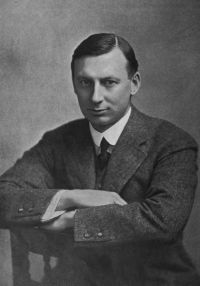 Edward Verrall Lucas,
Highways and Byways in Sussex
(1904)
“ Chichester is a perfect example of an English rural capital, thronged on market days with tilt carts, each bringing a farmer or farmer's wife, and rich in those well-stored ironmongers' shops that one never sees elsewhere. But it is more than this: it is also a cathedral town, with the ever present sense of domination by the cloth even when the cloth is not visible. Chichester has its roughs and its public houses (Mr. Hudson in his Nature in Downland gives them a caustic chapter) ; it also has its race-week every July, and barracks within hail; yet it is always a cathedral town. ”
Various, Chambers's Journal of Popular Literature…
“ Mrs Chichester flushed up now and then, a little out of humour, I fancied, at seeing herself thus travestied. But she said very little; indeed during the whole visit she seemed to be absorbed in one idea, so lost in astonishment at my good fortune as to be quite unlike her usual self. She was even impolitic enough to give some expression to her astonishment in a little aside to Lilian, who was quite indignant at the implied ill compliment to me.'You must say you will come and dine with us,' repeated Marian, when she at length rose to take her departure. 'You positively must! ”
A. E. W. Mason,
The Summons — XXX: A Revolution in Sir Chichester
(1920)
“ They began to blame themselves. "Poor woman! Poor woman!" Millie Splay whispered in a moan.Sir Chichester broke the silence."But we left Stella here when we went to Harrel," he began, and Hillyard interrupted him."There's no doubt that Stella sent the message," he said. "Your car, Mrs. Brown's and Luttrell's, were all used to take us to Harrel. One car remained in your garage—Stella's.""But there wouldn't be time for that car to reach London." Sir Chichester fought against Hillyard's statement. He did not want to believe it. ”
“ Martin Hillyard returned to the hall, and found Sir Chichester with the doctor, a short, rugged Scotsman. Dr. McKerrel was saying:"There's nothing whatever for me to do, Sir Chichester," he said. "The poor creature must have died somewhere about one o'clock of the morning." He saw Sir Chichester with a start fall once more to reading the paragraph in the Harpoon, and continued with a warmth of admiration, "Eh, but those newspaper fellows are quick! I saw the Harpoon this morning, and it was lucky I did. ”
A. E. W. Mason,
The Summons — XXX: A Revolution in Sir Chichester
(1920)
“ Martin sought to retrieve his cigarettes, but Sir Chichester laid them aside upon a high mantelpiece, as if Hillyard were a child and could not reach them."No, don't disappoint me, Hillyard! I am sure that you, too, can rise above a temptation. Why should I be the only one?" ”
“ Her eyes travelled from one to the other of the three men in the hall. They rested for a little moment longer upon Harry Luttrell than upon the rest; and it seemed to Hillyard that as they rested there they glittered strangely, and that the ghost of a smile flickered about her mouth."Yes," said Sir Chichester, pompously. "You understand that there will have to be an inquiry into the cause of Mrs. Croyle's death; and one wants for the sake of everybody, your dead mistress more than any one, that there should be as little talk as possible." ”
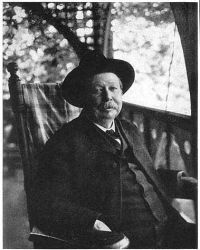 Joel Chandler Harris,
Free Joe and Other Georgian Sketches
“ Chichester laughed. The fact that so handsome a girl as Babe should deliberately fall in love with so lank and ungainly a person as Tuck Peevy seemed to him to be one of the problems that philosophers ought to concern themselves with; but, from his point of view, the fact that Babe had not gradually faded away, according to the approved rules of romance, was entirely creditable to human nature on the mountain. A candle, burning in the room that Chichester occupied, shone through the window faintly, and fell on Babe, while Chichester sat in the shadow. ”
Various, Chambers's Journal of Popular Literature…
“ Marian drew herself up with a few murmured words to the effect that the mistress of Fairview was quite equal to the position she found herself{262} in. But it was of no avail. She was not a gentlewoman in Mrs Tipper's eyes; and Mrs Chichester herself was but a poor imitation of one. ”
“ You know his house in Midhurst. Will you take your car, and bring him back. There is nothing more that we can do until he comes." He stood for a little while by the table in the hall, staring down at it, and taking particular note of its grain."A curious thing," he said. "The key of her room is missing altogether."To no one did it come at this moment that the disappearance of the key was to prove a point of vast importance. No one made any comment, and Sir Chichester fell to silence again. "She looked like a child sleeping," he said at length, "a child without a care." ”
Mrs. Georgie Sheldon, Thrice wedded, but only once a wife (1891)
“ Poor Enid Chichester knew nothing whatever of what was transpiring around her, for the moment the curtains had parted, revealing Ralph leading in his lovely bride, she had uttered a faint cry, and then sunk softly down into the depths of a massive chair and quietly swooned away; and there she had remained, wholly unconscious, no one noticing or realizing what had happened to her, so intent were all upon the exciting scene before her. ”
 Sabine Baring-Gould,
Devonshire Characters and Strange Events
(1908)
“ Edward Chichester and his brother did not look inviting, as they stood in the street with teeth and fists clenched, and "their tails were up." After this they escorted Sir Robert Garden many times, but there were no further molestations. For a considerable number of years Captain Chichester was on the unemployed list, eating out his heart in his bungalow at Instow. But to every man at least once in life comes a chance, and the unlucky and unsuccessful man is he who, seeing it, does not recognize and grasp the chance. ”
A. E. W. Mason,
The Summons — XXVIII: The Long Sleep
(1920)
“ But Millie Splay broke in upon his protestations in a voice as shrill as a scream."Oh, stop, Chichester, and look! There, in the third column! Just under your eyes!"And Sir Chichester Splay read. As he read his face changed."Yes, that won't do," he said, very quietly. He carried the newspaper back with him to his chair and sat down again. He had the air of a man struck clean out of his wits. "That won't do," he repeated, and again, with a rush of angry blood into his face, "No, that won't do." ”
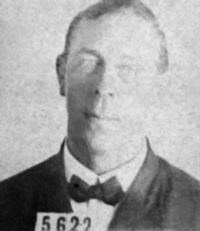 Robert Hichens,
The Dweller on the Threshold
“ Shall we add Chichester's discovery of secret lapses in his worshiped rector's life, to the nervous dyspepsia and the sittings? Shall we do that?""And Lady Sophia?""There's a sunflower type of woman. The rising sun can't escape her inevitable worship.""The change in Harding may be a natural one. But there is something portentous in the change in Chichester," said Malling. "You know I'm a rather cool hand, and certainly not inclined to easy credulity. But there's something about Chichester which—well, Professor, I'll make a confession to you that isn't a pleasant one for any man to make. ”
Edward Verrall Lucas,
Highways and Byways in Sussex
(1904)
“ Like all cathedral towns Chichester has beautiful gardens, as one may see from the campanile. There are no lawns like the lawns of Bishops, Deans, and Colleges; and few flower beds more luxuriantly stocked. Chichester also has a number of grave, solid houses, such as Miss Austen's characters might have lived in ”
 Jeffery Farnol,
The Amateur Gentleman
“ Chichester laughed softly, and stepped into the room."Salvation, was it, and a new life?" he inquired, "are you the one to be saved, Ronald, or Smivvle here, or both?"Ronald Barrymaine was dumb, his eyes sought the floor, and his pale cheek became, all at once, suffused with a burning, vivid scarlet."I couldn't help but overhear as I came upstairs," pursued Mr. Chichester pleasantly, "and devilish dark stairs they are—""Though excellent for eavesdropping, it appears!" ”
 George W. M. Reynolds,
The Mysteries of London, v. 1/4
“ The butcher burst out into a roar of laughter, which was echoed by several other inmates of the room."Who the devil are you?" demanded Chichester, recovering his presence of mind sooner than the baronet; for both were astounded at this unexpected and very embarrassing encounter."Upon my honour, the man must be mistaken," murmured Sir Rupert Harborough. ”
Robert Hichens,
The Dweller on the Threshold
“ Harding looks of contempt flashed over Chichester's face, transforming it. The anxiety of the master, product of vanity but also of sympathy, was overlaid by the powerful contempt of a man who longs to traverse misstatements but is forced by circumstances to keep silence. And so certain was Malling that the cause of Mr. Harding's perturbation lay in Chichester's mental attitude, that he longed to spring up, to take the curate by the shoulders and to thrust him out of the church. Then all would be well. He knew it. The rector's self-confidence would return and, with it, his natural powers. ”
Robert Hichens,
The Dweller on the Threshold
“ Joseph's exactly two years."The rector seemed about to say more, then shut his large mouth almost with a snap. Malling made no remark. He was quite certain that snap was merely the preliminary to some further remark about Chichester. And so it proved. As they came to St. Peter's Eaton Square, the rector resumed:"I often think that it is a man's limitations which make him critical of others. The more one knows, the wider one's outlook, the readier one is to shut one's eyes to the foibles, even to the faults, of one's neighbors. I have tried to impress that upon our friend Chichester." ”
 A. T. Quiller-Couch,
True Tilda — Chapter 24
(1909)
“ Like most men of fifty or thereabouts, and like every man who finds himself at that age a bachelor rector of a remote country parish, Parson Chichester had collected a number of small habits or superstitions—call them which you will: they are the moss a sensible stone gathers when it has ceased rolling. He smoked a pipe in the house or when he walked abroad, but a Manila cheroot (he belonged to the age of cheroots) when he rode or drove; and he never rode on a Sunday, but either walked or used a dog-cart. ”
Homer Greene, The unhallowed harvest (1917)
“ There was some casual conversation, in which Miss Chichester only incidentally joined, and then, possibly through inadvertence, possibly by design, the action of the vestry in demanding the dismissal of the rector was referred to.“I know you don’t agree with me, Ruth,” said Miss Chichester, “but, in my opinion, we shall never have peace in the parish till that man goes.”“And in my opinion,” responded Ruth, “we shall never have righteousness nor real happiness in the parish until the church as a body accepts his views. ”
Robert Hichens,
The Dweller on the Threshold
“ Stepton was aware of a furtive but strong desire for artificial light in the room, but he did not choose to mention it. And Chichester, whose voice—so it seemed to his hearer—began to have that peculiar almost alarming timbre which belongs to a voice speaking not for the ears of another, but for the satisfaction only of the soul which it expresses, continued his narrative, or confession, as if unaware of the dying of day. ”
Robert Hichens,
The Dweller on the Threshold
“ I won't ring.""Very well, sir.""Dispersion," said Chichester to Malling in a firmer voice, as Ellen disappeared."Concentration makes for strength. Mr. Harding seems to me mentally—what shall I say?—rather torn in pieces, as if preyed upon by some anxiety. Now, if you'll allow me to be personal, I should say that you have greatly gained in strength and power since I knew you two years ago.""You—you observe a difference?" asked Chichester, apparently in great perturbation. ”
Various, The Mirror of Literature, Amusement…
“ CHICHESTER CROSS.Few places in Britain can boast of higher antiquity than the city of Chichester. Its origin is supposed to date back beyond the invasion of Britain by the Romans. It was destroyed towards the close of the fifth century, by Ella, but rebuilt by his son, Cissa, the second king of the South Saxons, who named it after himself, and made it the royal residence and capital of his dominions.Chichester, as may be expected, is a fertile field for antiquarian research. Its cathedral, churches, and ecclesiastical buildings abound with fine architecture ”
Robert Hichens,
The Dweller on the Threshold
“ Again Chichester's voice died away. In the silence that followed the professor heard the faint ticking of a clock. He had not noticed it before. He could not tell now whether it came from within the room or from the room behind the folding-doors. It seemed to him as if this ticking destroyed his power to think clearly, as if it threw his brain into an unwonted confusion which made him feel strangely powerless. He was aware of a great uneasiness approaching, if not actually amounting to fear. This uneasiness made him long for light. Yet he knew that he dreaded light ”
