Mrs. Raynor

Definition and stakes

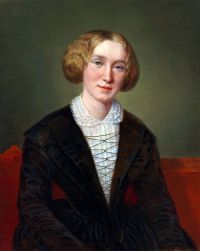
Portrait of George Eliot George Eliot,  Scenes of Clerical Life

“ Raynor had supported herself in her widowhood by keeping a millinery establishment, and in this way had earned money enough to give her daughter what was then thought a first-rate education, as well as to save a sum which, eked out by her son-in-law, sufficed to support her in her solitary old age. Always the same clean, neat old lady, dressed in black silk, was Mrs. Raynor: a patient, brave woman, who bowed with resignation under the burden of remembered sorrow, and bore with meek fortitude the new load that the new days brought with them. ”
Source: Gutenberg

Portrait of Mrs. Henry Wood Mrs. Henry Wood,  Edina: A Novel

“ On one side of the table sat the major; a tall and very portly man, with a bald head and a white moustache, looking every day of his nine and-sixty years. He had been getting on for fifty when he married his young wife; who was not quite eight-and-thirty yet: a delicate, fragile-looking woman, with a small fair face and gentle voice, mild blue eyes, a pink colour, and thin light brown hair quietly braided back from it. Mrs. Raynor looked what she was: a gentle, yielding, amiable, helpless woman ”
Source: Gutenberg

Portrait of Mrs. Henry Wood Mrs. Henry Wood,  Edina: A Novel

“ There are some women really not capable of forethought, and Mrs. Raynor was one of them. As to doing anything to advance their own interest, by cultivating Mrs. Atkinson's favour, both were too single-minded for such an act; it may be said too strictly honourable.
It was with them, his uncle and aunt, that Frank Raynor had spent his holidays when a boy, and all his after-intervals of leisure. They were just as fond of Frank as they were of their own children: he was ever welcome. The major sometimes called him "my son Frank," when speaking of him to strangers
”
Source: Gutenberg

Get perspective with Kwize: daily news enlightened by great literature