Nazarenes

Definition and stakes

Henry Wood,  Victor Serenus: A Story of the Pauline Era

“ It is indeed true that I belong to the Nazarenes, which the scribes and elders call a heretical sect, but of a truth, we worship the God of our fathers. We accept the things which are written in the law and the prophets when truly interpreted, and peradventure it be allowable to have sects of Pharisees and Sadducees among the Jews, there is nothing more illegal in the existence of the Nazarenes. Behold it is but a question of religious liberty, which Rome, to her honor, guarantees to all her subjects. I have in all this controversy a conscience void of offence toward God and man! ”
Source: Gutenberg

Various,  Popular Science Monthly (1889)

“ In fact, "Nazarene" was, as is well known, the distinctive appellation applied to Jesus; his immediate followers were known as Nazarenes, while the congregation of the disciples, and, later, of converts at Jerusalem—the Jerusalem church—was emphatically the "sect of the Nazarenes," no more in itself to be regarded as anything outside Judaism than the sect of the Sadducees or of the Essenes. [18] In fact, the tenets of both the Sadducees and the Essenes diverged much more widely from the Pharisaic standard of orthodoxy than Nazarenism did. ”
Source: Wikisource

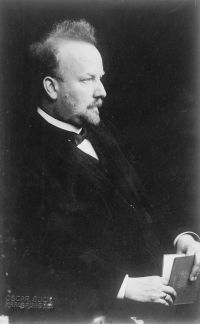
Portrait of Arthur Drews Arthur Drews,  The Christ Myth

“ According to Acts xxiv. 5 the first followers of Jesus were also called Nazoraes or Nazarenes. The expressions “Jesus” and “Nazorean” were therefore originally of almost like meaning, and by the addition of “the Nazorean” or “Nazarene” Jesus is not characterised as the man of Nazareth, as the Evangelists represent it, but as the Healer and Deliverer.
Whether there was a place called Nazareth in pre-Christian [60] days must be considered as at least very doubtful. Such a place is not mentioned either in the Old Testament or in the Talmud, which, however, mentions more than sixty Galilean towns
”
Source: Gutenberg

Get perspective with Kwize: daily news enlightened by great literature