Otto I of Germany

Definition and stakes

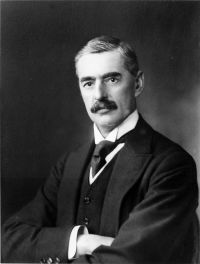
Portrait of Bayard Taylor Bayard Taylor A History of Germany from the Earliest Times to the Present Day

With him expired the dynasty of the Saxon Emperors, less pitifully, however, than either the Merovingian or Carolingian line.
When Otto the Great, towards the close of his reign, neglected Germany and occupied himself with establishing his dominion in Italy, he prepared the way for the rapid decline of the Imperial power at home, in the hands of his successors. The reigning Dukes, Counts, and even the petty feudal lords, no longer watched and held subordinate, soon became practically independent: except in Friesland, Saxony and the Alps, the people had no voice in political matters
Source: Gutenberg

Various Encyclopaedia Britannica, 11th Edition…

Before his death Henry obtained the promise of the nobles at a national assembly, or diet, at Erfurt to recognize his son Otto as his successor, and the promise was kept, Otto being chosen German king in July 936. Otto I. the Otto the Great. Great began his reign under the most favourable circumstances. He was twenty-four years of age, and at the coronation festival, which was held at Aix-la-Chapelle, the dukes performed for the first time the nominally menial offices known as the arch-offices of the German kingdom.
Source: Gutenberg

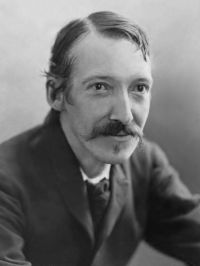
Portrait of Bayard Taylor Bayard Taylor A History of Germany from the Earliest Times to the Present Day

Germany might have grown into a united nation, if the good qualities of his line could have been transmitted without its inordinate ambition.
While thus laying, as he supposed, the permanent basis of his power, Otto was called upon by the king of France, who, [Pg 125] having married the widow of Giselbert of Lorraine, was now his brother-in-law, for help against Duke Hugo, a powerful pretender to the French throne. In 946 he marched at the head of an army of 32,000 men, to assist king Louis
Source: Gutenberg

Get perspective with Kwize: daily news enlightened by great literature