“ When we have undermined English misgovernment we have paved the way for Ireland to take her place among the nations of the earth. And let us not forget that that is the ultimate goal at which all we Irishmen aim. None of us, whether we be in America or in Ireland, or wherever we may be, will be satisfied until we have destroyed the last link which keeps Ireland bound to England. ”
Peerage of Ireland
Definition and stakes
The theme of “Peerage of Ireland” has been addressed by authors such as Thomas D'Arcy McGee, Mary Francis Cusack, William Petty, Lady Gregory and Roger Casement. It is often associated with terms like England, Irish, Parliament, Britain and great.
Quotes about “Peerage of Ireland”
“ Wherever an Irishman has fought in the name of Ireland it has not been to acquire fortune, land, or fame, but to give all, even life itself, not to found an empire, but to strike a blow for an ancient land and assert the cause of a swordless people. Wherever Irishmen have gone, in exile or in fight, they have carried this image of Ireland with them. ”
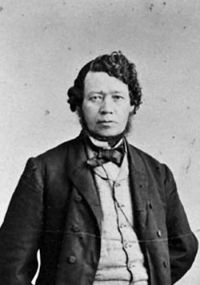 Thomas D'Arcy McGee,
A Popular History of Ireland : from the Earliest Period to the Emancipation of the Catholics…
Thomas D'Arcy McGee,
A Popular History of Ireland : from the Earliest Period to the Emancipation of the Catholics…
“ While their kinsmen in Ireland were declared incapable of filling the humblest public employments, or of exercising the commonest franchise, they met British ambassadors abroad as equals, and checked or countermined the imperial policy of Great Britain. It was impossible that such a contrast of situations should not attract the attention of all thinking men! It was impossible that such reputations should shine before all Europe without reacting powerfully on the fallen fortunes of Ireland! ”
Various, The Catholic World, Vol. 14, October 1871-March 1872
“ But whatever fate may be reserved for long-tried Ireland in the future, however disconsolate her present, every Irishman’s heart should glow with pride and love when he remembers the glory of her early days—glory such as no other country ever possessed—glory of which no centuries of relentless tyranny can deprive her—the glory of having been, when all was dark around, the home of learning and the fatherland of saints! ”
 George A. Birmingham,
Hyacinth
George A. Birmingham,
Hyacinth
“ Nothing like such a chance has ever offered itself in Irish history before. Everything goes to show that this is our opportunity. England is weaker than she has been for centuries, is clinging desperately to the last tatters of her old prestige. She hasn’t a single statesman capable of thinking or acting vigorously. Her Parliament is the laughingstock of Europe. Her Irish policy may be summed up in four words—intrigue with the Vatican. In Ireland the power of the faithful garrison is gone. ”
Scian Dubh, Ridgeway: An Historical Romance of the Fenian Invasion of Canada
“ Throughout every single hour of seven hundred long years, Ireland has been secretly plotting or openly fighting against England. Not one solitary reign, from Henry II down to Victoria I, but has been marked with Irish dissatisfaction of English rule. Either in the aggregate or in detail, the Irish people have, throughout that long period, been constantly asserting their right to independence, and their unalterable antipathy to the presence of a foreign power upon their shores. ”
“ Our aim is the establishment of an Irish Republic, for the simple and sole reason that no other ending of our quarrel with England could be either adequate or final. This is the one central and vital point of agreement among all who are worthy of the name of Irish Nationalists-that Ireland is a separate nation-separate in thought, mind, in ideals and outlooks. ”
J. N. Larned, History For Ready Reference, Volume 7 (1895)
“ It is that the only way of healing the evils of Ireland,—difficulties of her administration, of giving contentment and prosperity to her people, and of making her a strength instead of a weakness to the empire,—is that the Irish people should have the management of their own domestic affairs ”
“ Her coming to the throne, together with her fanatic devotion to the Reformation and an equal hatred of the old religion and all who clung to it, ushered in for Ireland two and a half centuries of almost unbroken misfortune. You cannot make people over. Some may take their opinions with their interest; others prefer to die rather than surrender theirs, and glory in the sacrifice. The proclamations of Elizabeth had no persuasion in them for the Irish. Her proscriptions were only another English sword at Ireland's throat. ”
 Percy Bysshe Shelley,
The Prose Works of Percy Bysshe Shelley…
(1897)
Percy Bysshe Shelley,
The Prose Works of Percy Bysshe Shelley…
(1897)
“ The accumulation of evil which Ireland has for the last twenty years sustained, and considering the unremittingness of its pressure I may say patiently sustained; the melancholy prospect which the unforeseen conduct of the Regent of England holds out of its continuance, demands of every Irishman whose pulses have not ceased to throb with the life-blood of his heart, that he should individually consult, and unitedly determine on some measures for the liberty of his countrymen. ”
Mary Francis Cusack, An Illustrated History of Ireland from AD 400 to 1800
“ I believe a careful study of Irish history is essential to the comprehension of the Irish question; and it is obviously the moral duty of every man who has a voice in the government of the nation, to make himself master of the subject. I believe there are honest and honorable men in England, who would stand aghast with horror if they thoroughly understood the injustices to which Ireland has been and still is subject. The English, as a nation, profess the most ardent veneration for liberty. ”
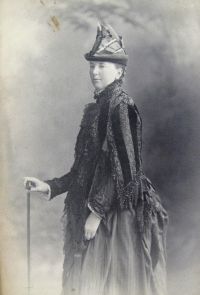 Emily Lawless,
The Story of Ireland
Emily Lawless,
The Story of Ireland
“ The laws and liberties of England were granted above five hundred years ago to the people of Ireland, upon their submission to the Crown of England, with a design to keep them in the allegiance of the king of England. How consistent it may be with true policy to do that which the people of Ireland may think an invasion of their rights and liberties, I do most humbly submit to the Parliament of England to consider. They are men of great wisdom, honour, and justice, and know how to prevent all future inconveniences. ”
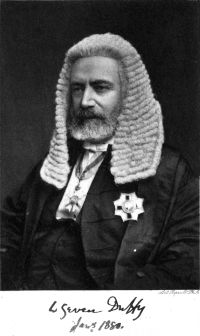 Charles Gavan Duffy,
My Life in Two Hemispheres
(1898)
Charles Gavan Duffy,
My Life in Two Hemispheres
(1898)
“ That office ought to carry with it the Government of Ireland in all important matters, and a career as fruitful as Thomas Drummond's and as brilliant as Plunkett's. To govern Ireland wisely and nobly implies heroic works of reform in various directions. I declare before Heaven you have no right to expect tranquillity till an Irish peasant can live in Ireland as prosperously, and an Irish gentleman, of the Irish race, can feel himself as much at home there, as the peasants and gentlemen of other European countries in their native lands. ”
John Adams, Novanglus, and Massachusettensis
“ These are the principles upon which the dependance and subordination of Ireland are founded. Whether they are just or not, is not necessary for us to enquire. The Irish nation have never been entirely convinced of their justice; have been ever discontented with them; and ripe and ready to dispute them. Their reasonings have ever been answered, by the ratio ultima and penultima of the tories, and it requires to this hour no less than a standing army of 12,000 men to confute them ”
James MacCaffrey, History of the Catholic Church from the Renaissance to the French Revolution…
“ From the beginning of the fourteenth century English power in Ireland was on the decline. The Irish princes, driven to desperation by the exactions and cruelties of the officials, adopted generally a more hostile attitude, while the great Norman nobles, who had obtained grants of land in various parts of Ireland, began to intermarry with the Irish, adopted their language, their laws, their dress, and their customs, and for all practical purposes renounced their allegiance to the sovereign of England. ”
Emily Lawless,
The Story of Ireland
“ The position of an Irish chieftain--with his practically limitless powers of life and death, his wild retinue of retainers whose only law was the will of their chief--offered an irresistible temptation to men of their type, and had many more charms than the narrow and uninteresting rôle of liegeman to a king whom they never saw, and the obeying of whose behests brought them harm rather than good. England had shown only too plainly that she had no power to protect her Irish colonists, of what use therefore, it was asked, for them to call themselves any longer English? ”
Thomas D'Arcy McGee,
A Popular History of Ireland : from the Earliest Period to the Emancipation of the Catholics…
“ The Irish are, unfortunately, not so; and yet, what is English or Scottish history to compare with Irish? Ireland was a land of saints and scholars when Britons were painted savages. Wise and noble laws, based upon the spirit of Christianity, were administered in Erin, and valuable books were written ere the Britons were as far advanced in civilization as the Blackfeet Indians. In morals and intellect, in Christianity and civilization, in arms, art, and science, Ireland shone like a star among the nations when darkness enshrouded the world. ”
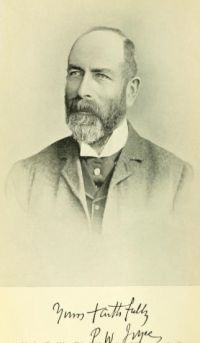 P. W. Joyce,
The Story of Ancient Irish Civilization
P. W. Joyce,
The Story of Ancient Irish Civilization
“ CHAPTER I. HOW THE ANCIENT IRISH PEOPLE WERE GOVERNED BY THEIR KINGS AND CHIEFS.There were in Ireland, from times beyond the reach of history, kings, who were of various grades according to the extent of the country or district they ruled over. The highest of all was the king of Ireland, who lived in the royal palace at Tara. He was called the Ard-ri [ard-ree] , i.e., ‘High king’ or Over-king, because he claimed authority over all the others. There was also a king over each of the five provinces—Leinster, Munster, Connaught, Ulster, and Meath—who were subject to the Ard-ri. ”
“ The ancient Irish loved their laws and took pride in obeying and enforcing them. The different attitude of the modern Irish towards foreign laws and administration is amply explained by the morally indefensible character of those laws and that administration, to be read in English statutes and ordinances and in the history of English rule in Ireland—a subject too vast and harrowing, and in every sense foreign to what has gone before, to be entered upon here. ”
Mary Francis Cusack, An Illustrated History of Ireland from AD 400 to 1800
“ How, then, could the Irish heart ever beat loyally towards the English sovereign? How could the Irish people ever become an integral portion of the British Empire? Pardon me for directing your attention specially to this statute. It will explain to you that the Irish were not allowed to be loyal; it will excuse them if they have sometimes resented such cruel oppressions by equally cruel massacres and burnings—if they still remembered these wrongs with that statute before them, and the unfortunate fact that its enactments were virtually continued for centuries. ”
Various, Blackwood's Edinburgh Magazine…
“ How the kind of religion imported by the legions of Irish beggary into England was to be purified by a new episcopal staff, is wholly beyond our comprehension. Or why the Protestant people of England, after feeding the pauperism of Ireland at home, should be bound to provide for its heresy here—or how, for the further allurement of the superfluous rabble of Ireland, we are to provide, for either their poverty or their pride, the pageant of twelve Popish mitres, we must leave it to his Lordship to explain. ”
 William Jennings Bryan,
The World's Famous Orations
(1906)
William Jennings Bryan,
The World's Famous Orations
(1906)
“ Never for one single hour since the Union was passed has Ireland been a constitutionally governed country. Never for one hour has the sovereign of England been the constitutional sovereign of Ireland. Ireland, in effect, has since 1800 been governed as a Crown Colony, with certain empty forms and pretenses of constitutionalism. ”
Bishop Liston seditious utterance (1922)
“ Above all, Ireland has been a builder of empires, not for self, but for others, not for filthy lucre, but for God’s cause, honor and freedom. Many are thinking that the difficulties in the face of the Irish Free State are almost insuperable. ”
Various, The Atlantic Monthly, Volume 08…
“ After having heard and written so much of the wrongs of Ireland under the domination of the English Parliament, he found that Ireland actually and practically formed a part of that Parliament,—the legislature being, not English, but Imperial. He must have known this before; but he had never felt it. He now saw that Ireland was as well represented as England or Scotland; that political offices were held in fair proportion by Irishmen; and that the Irish members engrossed much more than a fair share of the national time in debate and projects of legislation. ”
Robert John Buckley, Ireland as It Is, and as It Would Be Under Home Rule
“ In vain you go over England's successive attempts to pacify Ireland by conciliatory measures. The priest ruins all, for while your friend seems to agree with you—they are so easily led—yet the priest will secure his vote to a certainty. So long as a heretic power is at the head, so long Ireland will be discontented. If the country were under the rule of a Roman Catholic power, the people of Ireland would be satisfied with any laws whatever. ”
Edward Farr, The History of England in Three Volumes…
“ That, in carrying out these resolutions, the representatives of the Irish people should always keep in mind the adopting such a prudent and wise course as shall enable them to realise for the Irish nation the greatest possible quantity of good, and as shall also enable them to support and sustain in office, without any violation of principle, the first and only true and honest government that has ever been known in Ireland. ”
Edward Farr, The History of England in Three Volumes…
“ In addition to the resolutions adopted by the British parliament, it was proposed by the Irish parliament, that the number of Irish peers to be admitted to the house of lords of the United Kingdom should be four lords spiritual, by rotation of sessions, and twenty-eight lords temporal, elected for life by the peers of Ireland ”
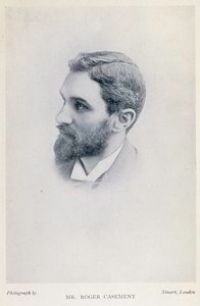 Roger Casement,
The Crime Against Europe: A Possible Outcome of the War of 1914
Roger Casement,
The Crime Against Europe: A Possible Outcome of the War of 1914
“ The Empire founded on Ireland by Henry and Elizabeth Tudor has expanded into mighty things. England deprived of Ireland resumes her natural proportions, those of a powerful kingdom. Still possessing Ireland she is always an empire. For just as Great Britain bars the gateways of northern and west central Europe, to hold up at will the trade and block the ports of every coast from the Baltic to the Bay of Biscay, so Ireland stands between Britain and the greater seas of the west and blocks for her the highways of the ocean. ”
Mary Platt Parmele, A Short History of England, Ireland and Scotland
“ It is certainly true that the disestablishment of the English Church in Ireland was one of the most righteous acts of this reign. The Irish question is such a tangled web of wrong and injustice complicated by folly and outrage, that the wisest and best-intentioned statesmanship is baffled. Whether the conditions would be improved by giving them their own Parliament, could only be determined by experiment; and that experiment England is not yet willing to try. ”
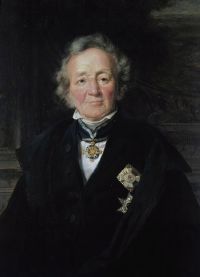 Leopold von Ranke,
A history of England principally in the seventeenth century…
(1875)
Leopold von Ranke,
A history of England principally in the seventeenth century…
(1875)
“ The resolutions of Parliament served him as his instruments in ruling the country; he put an army into the field, and found means to pay it: for the first time the revenues of Ireland covered the outgoings; the island was protected from piracies by its own naval power. While he remitted many oppressive burdens in favour of the Catholics, he yet gave fresh encouragement to the Protestant Churches by the agency of learned bishops and theologians; he maintained the conformity between the Irish and English Churches, which by his decisive word he had restored. ”
John Horace Round, The Commune of London, and other studies (1899)
“ It is not, however, for the Conquest only that this knowledge of the true state of Ireland ought to be acquired. The light it throws on the Irish people, their inherited and unchangeable tendencies, is of value from the parallel it presents to the latest modern developments. ”
Sir Jonah Barrington, Personal Sketches of His Own Times…
“ The British Government saw that either temporising or an appeal to force would occasion the final loss of Ireland: 150,000 independent soldiers, well armed, well clothed, and well disciplined, were not to be coped with,—and England yielded. [27] Thus the volunteers kept their oaths: they redeemed their pledge, and did not lay down their arms until the independence of Ireland had been pronounced from the throne, and the distinctness of the Irish nation promulgated in the government gazette of London. ”
J. N. Larned, History For Ready Reference, Volume 7 (1895)
“ I trust that the opportunity of making a great advance on this question of Irish government will not long be delayed, and when that opportunity comes my firm belief is that a greater measure of agreement than hitherto as to the ultimate solution will be found possible, and that a keener appreciation will be felt of the benefits that will flow to the Irish communities and British people throughout the world, and that Ireland, from being disaffected, impoverished, and discouraged, will take its place as a strong, harmonious, and contented portion of the empire. ”
Related terms
Authors who wrote about “Peerage of Ireland”
Thomas D'Arcy McGeeMary Francis Cusack William Petty
 Lady GregoryRoger CasementRichard BagwellRobert John BuckleyEmily LawlessEdward FarrAugustus J. ThébaudDuke of Richard Plantagenet Temple Nugent Brydges Chandos Grenville Buckingham and ChandosConstantine J. SmythWilliam PittThomas DavisP. S. O'Hegarty
 Eoin Mac NeillSydney SmithP. W. JoyceCharles Gavan DuffyPatrick M. Foley