“ So, sir, I understood the gentleman, and am happy to find that I did not misunderstand him. What he contends for is, that it is constitutional to interrupt the administration of the Constitution itself, in the hands of those who are chosen and sworn to administer it, by the direct interference, in form of law, of the States, in virtue of their sovereign capacity. The inherent right in the people to reform their government I do not deny; and they have another right, and that is, to resist unconstitutional laws, without overturning the government. ”
Constitutionalism
Definition and stakes
Constitutionalism is the principle that governmental authority originates from and is bound by fundamental law, ensuring that power is not wielded arbitrarily. This idea, examined by thinkers such as Daniel Webster and Joseph Story, underscores the primacy of constitutional structures in curbing governance and safeguarding individual freedoms.
Scholars like David Fellman emphasize its function in holding officials accountable to elevated legal benchmarks, while Gerhard Casper differentiates its historical foundations in the struggle for rights from its forward-looking ideal of organized governance. As discussions about constitutional interpretation demonstrate, the theme highlights an enduring conflict between state authority and the rule of law, influencing democratic legitimacy and civil rights worldwide.
Quotes about “constitutionalism”
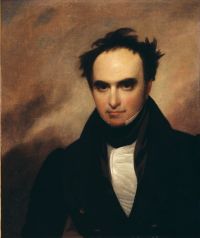 Daniel Webster,
The Great Speeches and Orations of Daniel Webster
Daniel Webster,
The Great Speeches and Orations of Daniel Webster
“ In what State has an assembly, calling itself the people, convened without law, without authority, without qualifications, without certain officers, with no oaths, securities, or sanctions of any kind, met and made a constitution, and called it the constitution of the STATE? There must be some authentic mode of ascertaining the will of the people, else all is anarchy. It resolves itself into the law of the strongest, or, what is the same thing, of the most numerous for the moment, and all constitutions and all legislative rights are prostrated and disregarded. ”
 Allen Johnson,
Union and Democracy
Allen Johnson,
Union and Democracy
“ It was enough for the purposes of the court that the Constitution was the supreme and paramount law of the land, established by the people of the United States. The Constitution defines and limits the powers of government it must then control any legislative act repugnant to it. "Certainly all those who have framed written constitutions contemplate them as forming the fundamental and paramount law of the nation, and, consequently, the theory of every such government must be, that an act of the legislature, repugnant to the constitution, is void." ”