Queens' College, Cambridge

Definition and stakes

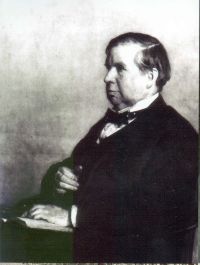
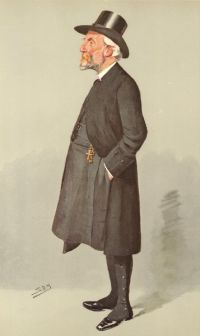
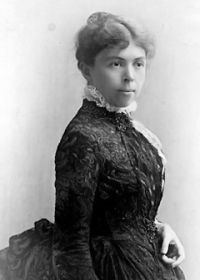
Portrait of Charles William Stubbs Charles William Stubbs,  Cambridge and Its Story

“ Two things only they have left behind them for which they merit gratitude. Firstly, a bundle of deeds and manuscripts, inconsiderable to them, very valuable to the scholars and historians of the future; and secondly, their fine old church and monastic buildings.
In writing in a previous chapter of the buildings of Queens’ we drew attention to the fact that the general plan of the College followed in the main the lines of a large country house such as Haddon Hall. And in degree this is true of the other college buildings in Cambridge.
”
Source: Gutenberg

M. A. R. Tuker,  Cambridge

“ The plan is not only a very perfect example of college architecture, but is a model of the xv century English manor-house, of the type of Haddon Hall; [190] so that Queens’ College is as homogeneous a structure as King’s is heterogeneous. The hall is on the west, adjoining it is the combination room, above, the President’s lodging with a bedchamber over it. The north side is kept for the chapel and for the library which is on the first floor. The chambers are on the east and south sides, the gateway being in the former. ”
Source: Gutenberg

M. A. R. Tuker,  Cambridge

“ Of the 16 colleges built between the xiii and xvi centuries, now in existence, 6 are due to the munificence of women—Clare, Pembroke, Queens’, Christ’s, S. John’s, and Sidney Sussex. Next as college builders come the chancellors of England, the bishops, and the kings who have each endowed the university with three colleges. Hervey de Stanton, Chancellor of the Exchequer in the reign of Edward II., Thomas Lord Audley chancellor to Henry VIII., and Sir Walter Mildmay Chancellor of the Exchequer to Elizabeth, all founded colleges, two of which still remain—Magdalene and Emmanuel. ”
Source: Gutenberg

Get perspective with Kwize: daily news enlightened by great literature