Saint Augustine of Canterbury

Definition and stakes

The New International Encyclopædia…

A residence was assigned to them at Canterbury, then called Durovernum, where they devoted themselves to monastic exercises and preaching. The conversion and baptism (Whitsunday, June 2, 597) of the King contributed greatly to the success of their efforts among his subjects. There is abundant testimony to the fact that a marked improvement in the life and manners of the Anglo-Saxons followed the evangelistic labors of Augustine and his companions.
In 597 he went to Aries, by direction of the Pope, and was there consecrated Archbishop of Canterbury and Metropolitan of England.
Source: Wikisource

James Paterson Curiosities of Christian History Prior to the Reformation

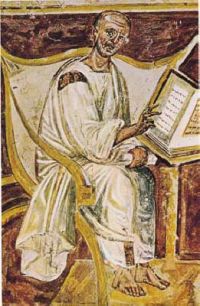
In a painting at the back of the stalls of Carlisle Cathedral, which was the only cathedral in England, the episcopal chapel of which belonged to Augustinians, there is a representation of scenes from the life of St. Augustine of Canterbury, and one of the devil with a book. The legend is, that the devil one day appeared to St. Augustine carrying a book. The saint asked what the book contained, and was answered, “The sins of men.”
Source: Gutenberg

1911 Encyclopedia Britannica (1911)

The apprehensions of Augustine’s followers caused him to return to Rome, but the pope furnished him with letters of commendation and encouraged him to proceed. He landed in Thanet in A.D. 597, and was favourably received by Æthelberht, king of Kent, who granted a dwelling-place for the monks in Canterbury, and allowed them liberty to preach. Augustine first made use of the ancient church of St Martin at Canterbury, which before his arrival had been the oratory of the Queen Berhta and her confessor Liudhard.
Source: Wikisource

Get perspective with Kwize: daily news enlightened by great literature