Simone Martini

Definition and stakes

Frank Jewett Mather,  A history of Italian painting (1923)

“ There is a refinement which is the harbinger of death. It appears in Siena in the person of Neroccio di Landi. He sublimates the style of his great predecessors, Simone and Sassetta, adding freely the more delicate ornamentation of the Renaissance. There is a peculiar pallor in his coloring and tension in his modelling. It is an art of nerves and ecstasies, wholly etherial. An admirable Annunciation in the Jarves Collection at New Haven shows the rich setting, the odd blend of precision with a languor that marks Neroccio as true grandson of Simone Martini. ”
Source: Gutenberg

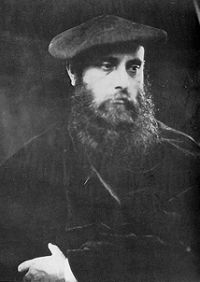
Portrait of William Michael Rossetti William Michael Rossetti,  1911 Encyclopædia Britannica, Volume 17… (1911)

“ Simone, in especial, tended to an excessive and rather affected tenderness in his female figures; he was more successful in single figures and in portraits than in large compositions of incident. He finished with scrupulous minuteness, and was elaborate in decorations of patterning, gilding, &c.
The first known fresco of Simone is the vast one which he executed in the hall of the Palazzo Pubblico in Siena—the “Madonna Enthroned, with the Infant,” and a number of angels and saints
”
Source: Wikisource

Various,  Encyclopaedia Britannica, 11th Edition…

“ MARTINI, SIMONE (1283-1344) , Sienese painter, called also Simone di Martino, and more commonly, but not correctly, Simon Memmi,1 was born in 1283. He followed the manner of painting proper to his native Siena, as improved by Duccio, which is essentially different from the style of Giotto and his school, and the idea that Simone was himself a pupil of Giotto is therefore wide of the mark. The Sienese style is less natural, dignified and reserved than the Florentine ”
Source: Gutenberg

Get perspective with Kwize: daily news enlightened by great literature