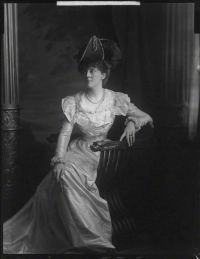
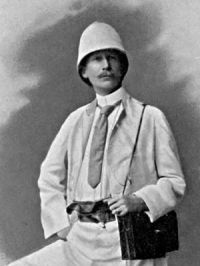
“ The velvety darkness of a southern night, with its sense of rich, luscious, breathing intensity, lay over that romantic spot in Southern Rhodesia where the grey walls of the Zimbabwe ruins, with a sublime, imperturbable indifference, continue to baffle the ingenuity and ravish the curiosity of all who would read their story. Scientists, archæologists, tourists come and go, but the stern old walls, guarded by the sentinel hills, give back no answer to eager questioning, eager delving, eager surmise. ”
Southern Rhodesia
Definition and stakes
Southern Rhodesia, a self-governing British Crown colony from 1923 to 1980, covered territories south of the Zambezi River, which later became Zimbabwe. Writers such as Gertrude Page captured its allure through evocative depictions of the landscape, while Isaac Marcosson outlined its administrative boundaries and economic disparities.
Edmund Morel analyzed colonial land policies, emphasizing the displacement of indigenous peoples, and Samuel Murray highlighted the difficulties encountered by settlers. These viewpoints together reveal the region’s intricate history, from colonial rule to the conflicts over identity and self-determination that influenced its path to independence.
Quotes about “Southern Rhodesia”
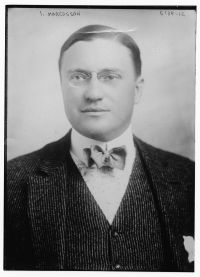
Isaac Frederick Marcosson,
An African Adventure
“ Under the Charter the Company was given administrative control of an area larger than that of Great Britain, France and Prussia. It divided up into Northern and Southern Rhodesia with the Zambesi River as the separating line. Northern Rhodesia remains a sparsely settled country—there are only 2,000 white inhabitants to 850,000 natives—and the only industry of importance is the lead and zinc development at Broken Hill. ”
Isaac Frederick Marcosson,
An African Adventure
“ Northern Rhodesia has no part in the fight against the Charter. It is only a question of time, however, when she will be merged into Southern Rhodesia for, with the passing of the Company, her destiny becomes identical with that of her sister territory. Northern Rhodesia's chief complaint against the Company was that it did not spend any money within her borders. ”
Edmund Dene Morel,
The Black Man's Burden
(1920)
“ The very least that can be clone in extenuation of the wrongs inflicted upon the natives of Southern Rhodesia is to confer upon the native population living in the Reserves a secure title; to make the Reserves inalienable save for public works of indispensable utility, and then only on the same conditions as those which apply to lands in white occupation; to make the "unalienated" land outside the Reserves equally inalienable wherever native communities are in occupation—such occupation to embrace villages, cultivated fields, grazing lands and water ”
Edmund Dene Morel,
The Black Man's Burden
(1920)
“ The story of Southern Rhodesia and of German South-West Africa is the story of conflict between white invaders and African peoples for the possession of the soil in the colonisable area of the Southern Continent. ”
Samuel Murray, Seven Legs Across the Seas: A Printer's Impressions of Many Lands
“ Rhodesia is a trap in which many poor men get caught. The riches of the country are much advertised in England, and those who come out and buy land soon find that their limited means are gone, and they are practically stranded. Both Rhodesia and South Africa are countries only for men with capital.The railway branches in two directions from Bulawayo—one easterly to Salisbury and out to Beira, Portuguese East Africa, the latter place being the port for Rhodesia; and northwesterly to Victoria Falls, and from that point 300 miles northward toward the southern border of the Congo Free State. ”
Edmund Dene Morel,
The Black Man's Burden
(1920)
“ The native population of Southern Rhodesia possesses to-day no rights in land or water. It is allowed to continue to live upon the land on sufferance and under certain conditions, according to the categories into which the land has been divided. The natives have no secure titles anywhere, not even in the Reserves, which are always liable to be cut up and shifted, and from which they can always be evicted upon "good cause" being shown; the "good cause" being the Company's good pleasure. ”
E. Alexander Powell,
The Last Frontier: The White Man's War for Civilisation in Africa
“ Like California, Southern Rhodesia has a unique and hospitable climate, free from the dangerous heats of an African summer and from cold winds in winter. Though the climate of nearly all of Southern Rhodesia is suitable for Europeans, much of the trans-Zambezi provinces, especially along the river valleys and in the low-lying, swampy regions near the great equatorial lakes, reeks with malaria, while in certain other areas, now carefully delimited and guarded by governmental regulation, the tsetse-fly commits terrible ravages among cattle and horses and the sleeping-sickness among men. ”
Frank Richardson Cana, 1922 Encyclopædia Britannica (1922)
“ The ultimate joining of Rhodesia to the Union was taken for granted by most South Africans, but the actual formation of the Union in 1910 seemed to have a contrary effect. It appeared to give a distinct stimulus to the already nascent desire of the Southern Rhodesians for independent self-government. A distinct advance in that direction was made in May 1911, when, by Order in Council, the elected members were given a majority of the seats in the Legislative Council, provision being made for safeguarding the interests of the British South Africa Company. ”
Frank Richardson Cana, 1922 Encyclopædia Britannica (1922)
“ Inhabitants.—At the census of May 3 1921 the white inhabitants of Southern Rhodesia numbered 33,621, [1] compared with 23,606 in 1911 and 12,596 in 1904. In 1921 males numbered 18,987 and females 14,634. The increase per cent, in the male pop. in the 10 years was 21.87, that of the female pop. 82.23. The natives in 1921 numbered 845,593, compared with 744,559 in 1911 and 591,493 in 1904. Asiatics in 1921 numbered 1,250 and the coloured pop. 1,997. Salisbury and Bulawayo, the chief towns, had in 1921 a white pop. ”
F. H. Hawkins, Through lands that were dark (1914)
“ Fredoux went to speak to the man, who retreated inside his waggon. Then followed an explosion of gunpowder, [Pg 38] which blew the waggon, the “depraved European,” Mr. Fredoux and all the Natives to pieces.At the conclusion of the journey from Kuruman I paid a short visit to Tiger Kloof and then proceeded north to visit the Matebeleland stations, in what is now known as Southern Rhodesia, taking three days’ holiday to see the wonderful Victoria Falls and places of interest in Bulawayo and the neighbourhood. Every Britisher naturally associates Rhodesia with the name and work of Cecil Rhodes. ”
Edmund Dene Morel,
The Black Man's Burden
(1920)
“ Between the Zambesi and Limpopo rivers stretches a country some 148,000 square miles in extent, i.e., just about three times the size of England. It is now known as Southern Rhodesia. In 1911 it contained 23,606 whites, 744,559 African natives, and 2.912 Asiatics and other "coloured persons" In the twenty-four years, 1890–1913, it yielded 61⁄2 million ounces of gold, valued at £251⁄4 millions sterling. In the middle of last century this country was occupied by a ruling African people, calling themselves the Amandebele (since corrupted into Matabele) "the naked men with shields." ”
John Guille Millais,
Life of Frederick Courtenay Selous…
“ Romance is often truth, whilst complete distortion may lie in official dreams.The British South African Company is ever active in trying to get the right kind of settlers in Southern Rhodesia and we have no fault to find with them for that if they were to put them in healthy, fertile areas, but what are the actual prospects of success there compared with other British colonies. They too have a post-war land-scheme of offering ex-soldiers a free land-grant of 500,000 acres. ”
Sol. T. Plaatje, Native Life in South Africa
“ The Matabele were routed, and King Mzilikasi was driven north, where he founded the kingdom of Matabeleland — now Southern Rhodesia — having left the allies to share his old haunts in the south.This successful expedition was the immediate outcome of the friendly alliance between the Boers in the "Free" State and Moroka's Barolong at Thaba Ncho. But Boers make bad neighbours in Africa, and, on that account, the Government of the "Free" State thereafter proved a continual menace to the Basuto, their neighbours to the east. ”
F. H. Hawkins, Through lands that were dark (1914)
“ Helm drove me from Bulawayo to Hope Fountain in a cart drawn by four mules, the two leaders rejoicing in the names of “Bella” and “Donna.” At Hope Fountain the Society holds for the benefit of the Natives a farm upon which some 500 people are living. In Southern Rhodesia, outside the towns, it is very difficult, if not impossible, to carry on missionary work except on such farms or in Native Reserves. ”
Isaac Frederick Marcosson,
An African Adventure
“ Perhaps the nearest approach to the Rhodesian line-up was the struggle of the California wheat growers against the Southern [Pg 117] Pacific Railway, which Frank Norris dramatized in his book, "The Octopus."All the while the feeling for Responsible Government in Rhodesia grew. A strong group which opposed the Chartered régime sprang up. At the beginning of the struggle the line was sharply drawn between the Charter adherents on one side and unorganized opponents on the other. ”
Frank Richardson Cana, 1922 Encyclopædia Britannica (1922)
“ The administrator in Southern Rhodesia was Sir William H. Milton, a man of great experience and tact in his dealings both with the white residents and the natives. After over 16 years’ service in the territory Sir W. H. Milton resigned in Oct. 1914 and was succeeded by Mr. (afterwards Sir) Drummond Chaplin. But while the administrator and his executive could do much to make the machinery of government work smoothly, there was no power, locally, to shape policy. Disputes arose between the Company and the settlers, who desired a still larger share in the administration. ”
George Chetwynd Griffith,
Men Who Have Made the Empire
“ To the east there is the ignorantly hostile Transvaal. Behind that and stretching far away to the northward is the Portuguese territory of Mozambique. Farther north are the southern confines of the Soudan, and the enormous virgin lands of Central Africa. To the west is German West Africa. Hence, but for that red strip, there would be no way either by sea291 or land through British territory—that is to say, through no territory that would not be hostile—to the Central African Empire of the future, most of which is, thanks to Cecil Rhodes, already called Rhodesia. ”
Hannah Frances Davidson, South and South Central Africa
“ They gradually become more and more sordid in appearance, their clothing disappears, and we become disgusted with them for so soon leaving behind the outward marks of civilization. But how [378] many months could we live their home life and be presentable in appearance?Let us take Charlie as an example. He, with a number of other boys, went to Southern Rhodesia to work on a farm. He remained a year and received fifteen shillings ($3.60) per month, and he had to pay his way down and back on the train. ”
“ Was it, perhaps, the marvellous, translucent atmosphere, or was it the blue intensity of the dreaming kopjes, ornamented ever and anon by gleaming white battlements of granite, where the sun blazed down on giant boulders, or was it the unfathomable, mysterious, syren-like allurement of the country, that, without effort, without thought, steeped the senses in an irresistible fascination? Why does Rhodesia fascinate? Why does she call men back again and again to her manifold discomforts and unnerving disappointments, to her pests and glare, to her bully beef and unwashed Kaffirs? ”
Le Roy Hooker, The Africanders (1900)
“ No exact statement of population can be made; estimates range from 1,000,000 to 2,000,000, of which only about 6,000 are whites. The entire territory is under the administration of the British South African Company, organized and incorporated in 1889, subject to the British High Commissioner at Cape Town. Rhodesia lies chiefly within the tablelands of South Africa and has large but yet undeveloped resources, including grazing and agricultural lands and important mining districts. Owing to the newness of the country to civilization no definite statement can be made relative to its commerce. ”
Owen Thomas, The Empire and the century — Land Settlement and Colonization in South Africa (1905)
“ Other specialized crops, on which there is not here space to dilate, offer equally favourable returns, and there is little doubt that for the Englishman of small capital, unable to prosper in the crowded Homeland, yet properly unwilling to go out from the British family, Rhodesia offers very exceptional opportunities in these directions. ”
South Africa and the Transvaal War…
“ Townships sprang up like mushrooms all over the high veldt in the vicinity of the gold-bearing reefs. The population rapidly increased. The Chartered Company, in the meanwhile, pushed on the railway from Mafeking towards Bulawayo, proceeded to construct the line from Umtali to Beira, and quickly placed Bulawayo into telegraphic communication with the outer world. And now there was every sign of prosperity; the development of the gold mines gave encouraging results; trade was good; the value of the land for farming was proved, and excellent crops were raised; Rhodesia’s future seemed assured. ”
“ They started from Gwelo, with its wide, tree-lined roads, in the freshness of the morning, and leaving the surrounding bare, uninteresting common quickly behind, dived straightway into a track of Rhodesia that is like a vast, undulating park. ”
Henry M. Stanley,
Through South Africa
“ The populating of Rhodesia by mixed races of whites of a superior order to any near it must exercise the Portuguese, whose territory lies between Rhodesia and the Indian Ocean. The iron road leading to it cannot be closed. The future of the country is no longer doubtful. We have tested its climate ourselves; we have heard the general conviction that these lofty plains, 4500 feet above the sea, suit the constitution of the white race ”
Owen Thomas, The Empire and the century — Land Settlement and Colonization in South Africa (1905)
“ Rhodesia is for the most part well watered and fertile, and having come into the hands of the Chartered Company practically unoccupied, the objection noted in the other four Colonies, of the previous occupation of the pick of the land, is here non-existent. Large blocks of country, in fact, actually await and cry out for settlement. ”
Isaac Frederick Marcosson,
An African Adventure
“ But Rhodesia remains a thriving part of the British Empire and the dream of the founder is realized. [Pg 122] IIIRhodesia produces much more than trouble for the Chartered Company. She is pre-eminently a land of ranches and farms. Here you get still another parallel with the United States because it is no uncommon thing to find a farm of 50,000 acres or more.I doubt if any other new region in the world contains a finer or sturdier manhood than Rhodesia. Like the land itself it is a stronghold of youth. ”
Henry M. Stanley,
Through South Africa
“ In Rhodesia to-day, however, you have a country, to which such people would be very advantageous. Cape Colony has an enormous area that requires to be populated, and so has Natal. How are you to reach the class of people required for this? What are you to offer them? It must be something better than where they are now.”“In your opinion Rhodesia is well adapted for cattle raising?”“Yes; the Matabele found it so, and there are still many cattle there despite the rinderpest. New cattle will do well enough, I think, if you take them rapidly by railway across the malarial belt.” ”
Henry M. Stanley,
Through South Africa
“ You must show that Rhodesia is better than Australia, where you have the fringes of the coast and the best parts of the interior already taken up. You have only to go to Melbourne, Sydney, and other large Australian towns, to find that they have a very large population who do not know what to do with themselves or where to go, who would be valuable to a new country like Rhodesia. ”
“ There had been so much "Rhodesia" of late. Everyone seemed bitten with a kind of silly craze for the place. Now it was gold; now it was land; now it was union or no union; now it was annexation and "twenty pieces of silver"; such a lot of fuss about some square miles of wilderness, containing odd outcrops of gold-bearing reef."There is nothing worth seeing in Rhodesia, except the Victoria Falls," he asserted; "and you can run up there and see all you want to and get back in a week!" And still he looked enquiringly at Meryl."We want to see the people," she said, half turning. ”
Henry M. Stanley,
Through South Africa
“ If the Government of Rhodesia neglect this, the Boers will go on filtering through the Transvaal to Rhodesia, and the same mistakes will recur that have been made in the Cape Colony and the Transvaal, where the settled population is Dutch and the moving English.”Australians Available.“What are the principal countries outside South Africa from which such settlers could be drawn?”“There are plenty of people in Australia, for instance, who would be very glad of the opportunity to settle in nice places in Rhodesia if they were tempted to do so. ”