Virginia House of Burgesses

Definition and stakes

and Geography Service Government Virginia. History The Road to Independence: Virginia 1763-1783

The constitutional philosophy of the House of Burgesses proclaimed in response to the Grenville revenue program in 1764 was not new. When Patrick Henry electrified the burgesses with his Stamp Act Resolves in May 1765, he was not setting forth a new concept of government, he was reaffirming, in a most dramatic form, constitutional positions the burgesses themselves well understood. The burgesses had developed their constitutional positions during the 1750's in response to a series of minor, isolated events—royal disallowance, the Pistole Fee Controversy, and the Two-Penny Act.
Source: Gutenberg

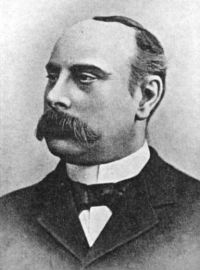
Portrait of Carl L. Becker Carl L. Becker Beginnings of the American People

In June of the same year twenty-two burgesses, representing eleven districts, together with the governor and council, assembled in the church at Jamestown and inaugurated representative government in Virginia by passing a body of laws in which the customs of England were adapted to the conditions of a frontier community. After the dissolution of the company in 1624 the appointment of the governor and council vested in the Crown, but the House of Burgesses, elected at first by the freemen, but after the Restoration on the basis of a freehold test, was continued.
Source: Gutenberg

1911 Encyclopædia Britannica, Volume 28… (1911)

The governor, supported by the great families, retained the same House of Burgesses for sixteen years lest a new one might not be submissive. The increasing mass of the population dwelt along the western border or on the less fertile ridges which make up the major part of the land even in tide-water Virginia. These poorer people—who were not, however, “poor whites”—developed an abiding hostility towards the oligarchy. They desired a freer land-grant system, protection against the inroads of the Indians along the border, and frequent sessions of an assembly to be chosen by all the freeholders.
Source: Wikisource

Get perspective with Kwize: daily news enlightened by great literature