Yucatán Peninsula

Definition and stakes

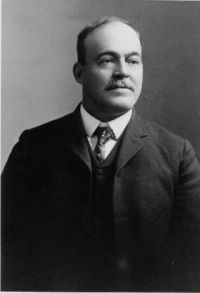
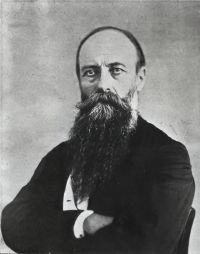
Portrait of Hubert Howe Bancroft Hubert Howe Bancroft,  The Native Races [of the Pacific states…

“ One of the most important features of Yucatan is the absence of any important river. The coast, which is of great extent, has in general a bleak and arid appearance, and is little broken except on the north-west, 645 where it is indented by the laguna de Terminos, and on the eastern side by the bays of Ascension, Espíritu Santo, and Chetumel. The central part of the Yucatan peninsula is occupied by a low ridge of mountains, of barren aspect. A short distance from the coast the general appearance of the country improves, being well-wooded, and containing many fertile tracts. ”
Source: Gutenberg

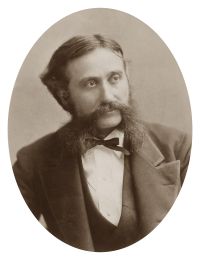
Portrait of Augustus Le Plongeon Augustus Le Plongeon,  Vestiges of the Mayas

“ VESTIGES OF THE MAYAS.
Yucatan is the peninsula which divides the Gulf of Mexico from the Caribbean Sea. It is comprised between the 17° 30 ́ and 21° 50 ́, of latitude north, and the 88° and 91° of longitude west from the Greenwich meridian.
The whole peninsula is of fossiferous limestone formation. Elevated a few feet only above the sea, on the coasts, it gradually raises toward the interior, to a maximum height of above 70 feet. A bird’s-eye view, from a lofty building, impresses the beholder with the idea that he is looking on an immense sea of verdure, having the horizon for boundary
”
Source: Gutenberg

Erwin E. Klaas,  Summer Birds From the Yucatan Peninsula…

“ Its area is approximately 143,500 square kilometers and includes the Mexican states of Campeche and Yucatán and the sparsely settled Territory of Quintana Roo, plus parts of British Honduras and the Petén region of Guatamala. The peninsula has a mean breadth of about 300 kilometers and a coast line of about 1100 kilometers.
Topographically, the peninsula is a low-level plain that rises gradually inland to the south. The coast on the north and west is low, sandy, and semi-barren; openings through the outer coastal strand lead to narrow brackish lagoons surrounded by mangroves.
”
Source: Gutenberg

Get perspective with Kwize: daily news enlightened by great literature