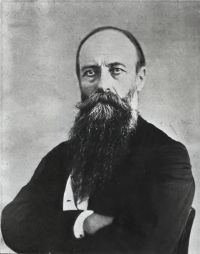
Augustus Le Plongeon

Augustus Le Plongeon

Summary

Portrait of Augustus Le Plongeon Augustus Le Plongeon Vestiges of the Mayas

All creation rejoices because a few tears of mother Nature have brought joy and happiness to all living beings, from the smallest blade of grass to the majestic palm; from the creeping worm to man, who proudly titles himself the lord of creation.
Yucatan has no rich metallic mines, but its wealth of vegetable productions is immense. Large forests of mahogany, cedar, zapotillo trees cover vast extents of land in the eastern and southern portions of the peninsula; whilst patches of logwood and mora, many miles in length, grow near the coast.
Source: Gutenberg

Portrait of Augustus Le Plongeon Augustus Le Plongeon Vestiges of the Mayas

My God, my God, why hast thou forsaken me? they have done him an injustice, presenting him in his last moments despairing and cowardly, traits so foreign to his life, to his teachings, to the resignation shown by him during his trial, and to the fortitude displayed by him in his last journey to Calvary; more than all, so unbecoming, not to say absurd, being in glaring contradiction to his role as God. If God himself, why complain that God has forsaken him?
Source: Gutenberg

Portrait of Augustus Le Plongeon Augustus Le Plongeon Vestiges of the Mayas

If identical customs and manners, and the worship of the same divinities under the same name, besides the traditions of a people pointing towards a certain point of the globe as being the birth-place of their ancestors, prove anything, then I must say that in Egypt also we meet with the tracks of the Mayas, of whose name we again have a reminiscence in that of the goddess Maia, the daughter of Atlantis, worshiped in Greece.
Source: Gutenberg

Get perspective with Kwize: daily news enlightened by great literature