
“ There was nothing of the pomp or panoply of war about the headquarters, or the military government, or the bearing of General Lee.... Persons having business with his headquarters were treated like human beings, and courtesy, considerateness, and even deference were shown to the humblest. He had no gilded retinue, but a devoted band of simple scouts and couriers who, in their quietness and simplicity, modelled themselves after him.... The sight of him upon the roadside or in the trenches was as common as that of any subordinate in the army. ”
Army headquarters
Definition and stakes
The theme of “army headquarters” has been addressed by authors such as John B. Wilson, Ulysses S. Grant, Joseph Orton Kerbey, Edward Parrott and Sun Tzu. It is often associated with terms like officer, states, general, corps and division.
Quotes about “army headquarters”
George Gallie Nasmith, On the Fringe of the Great Fight
“ General headquarters is usually a very busy place, for there are the heads of the various services of the army, and all the orders affecting the army as a whole are issued through it. The offices of the chiefs of the services are business offices and are operated in a most business-like way. The system is so perfect that it is difficult to escape from it should an order be neglected or a duty left undone. ”
John K. Mahon and Romana Danysh, CMH 60-3: Infantry, Part I: Regular Army…
“ The headquarters would be assigned to a permanent location and would maintain regimental history and traditions, keep records, display colors, trophies, and other properties, and perhaps conduct regimental recruiting and operate regimental training units. A proposal to centralize all infantry regimental headquarters at the Infantry Center at Fort Benning, Georgia, was tentatively approved by the Army Staff in 1959, but it was rejected the following year because of lack of funds, personnel, and appropriate on-post facilities. ”
Edward Parrott, The Childrens' Story of the War…
“ Behind each army corps, and some way in front of general headquarters, but also sufficiently far from the turmoil of the fighting, are the army corps headquarters, which are exactly like general headquarters, though on a smaller scale. ”
John B. Wilson, Maneuver and Firepower: The Evolution of Divisions and Separate Brigades (1998)
“ Also in 1927, for echelons above divisions in the Regular Army, the adjutant general constituted one army, one cavalry corps, and three army corps headquarters. In addition, the 3d Cavalry Division, a new Regular Army unit, was added to the rolls to complete the cavalry corps. No army corps, cavalry corps, or army headquarters was organized at that time, but moving these units in the mobilization plans from the Organized Reserve to the Regular Army theoretically made it easier to organize the units in an emergency. ”
Mary Lee Stubbs and Stanley Russell Connor, ARMOR-CAVALRY: Part 1; Regular Army and Army Reserve…
“ In the organization of the Tank Corps, AEF, all tank units were assigned to the General Headquarters, Tank Corps. For specific combat missions, they were attached to armies or to subordinate elements and reverted to general headquarters control as directed. An army tank headquarters, designed to function with an army headquarters, consisted of a headquarters and a heavy artillery mobile ordnance repair shop. ”
United States Army Center for Military History with images by the US Army Institute of Heraldry, 002 Infantry Division (United States…
“ Headquarters, 2nd Division Constituted 21 September, 1917 in the Regular Army. Headquarters, 1st Provisional Brigade Redesignated as Headquarters, 3rd Infantry Brigade in the 2nd Division on 22 September, 1917. ”
Jacob D. Cox, Military Reminiscences of the Civil War…
“ The clerical work and the official correspondence of the command could then go on; for the headquarters of an army corps in the field is as busy a place as a bank or counting-house in a city. It is the business centre for a military population of 12,000 or 15,000 men, where local government is carried on, and where their feeding, clothing, arming, and equipping are organized and directed, to say nothing of the military conduct in regard to the enemy, or of the administration of affairs relating to the neighboring inhabitants. ”
Mary Lee Stubbs and Stanley Russell Connor, ARMOR-CAVALRY: Part 1; Regular Army and Army Reserve…
“ But by late 1943 the War Department decided that armored divisions could be employed properly by standard corps, and it directed that the II, III, and IV Armored Corps be redesignated as the XVIII, XIX, and XX Corps, respectively. The I Armored Corps had already been inactivated overseas and its personnel used in the organization of Seventh Army headquarters. The basic element of the Armored Force was the armored division- a complete, self-sufficient, combined arms team, whose components, strength, and equipment varied during the war. ”
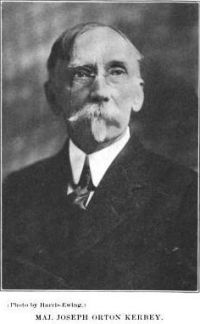 Joseph Orton Kerbey,
The Boy Spy
“ I took courage when the party began to move off toward the house, and, as they passed my loophole, I discovered, to my astonishment, that one of the three who had come up the road was none other than the young man I had seen in General Patterson's headquarters, accompanying the old gentleman, and both of whom were so cordially entertained by our General's staff. Here he was, a direct messenger from headquarters of our army, meeting, by a concerted signal, a Rebel officer in the enemy's country. ”
William E. Sellers, With Our Fighting Men
“ We must remember that the fighting base is an ever-moving base, moved according to the exigencies at the front, now forward, now back. It is many miles behind the firing line, far from the sound though not the sights of war. Here are Headquarters, where the brains of the Army do their responsible work. To Headquarters comes information from every available source. The telegraph and telephone instruments tick and ring all day long. Motor cyclists bring their store of knowledge, and aeroplanes, most important of all informants, dispense their news. ”
John B. Wilson, Maneuver and Firepower: The Evolution of Divisions and Separate Brigades (1998)
“ March denied the request because the Army was to maintain training centers. Unlike the infantry, which incorporated the machine gun into the regiment, cavalry maintained separate machine gun squadrons of three troops each because of the perceived immobility of such weapons compared with other divisional arms. A headquarters for special troops was authorized, under which were placed the division headquarters troop, a signal troop, an ordnance maintenance company, and a veterinary company. ”
Army War College, Specimens of British Trench Orders
“ Every man is to know the position of his platoon commander's shelter and the company headquarters. (j) At least two men per section of the support and reserve companies must be able to act as guides to all the company headquarters of the battalion. (k) All officers must know the shortest route from their own headquarters to those of the company on their flanks and to their own battalion headquarters. (l) It is the duty of every officer or man to fasten any loose wire that he may see which has become temporarily detached. ”
Edward Parrott, The Childrens' Story of the War…
“ As the army moves backwards or forwards, general headquarters is moved from one place to another; but it is always far enough in the rear not to be disturbed by the guns of the enemy, and in such a position that it can easily be in touch with every part of the fighting line. It often happens that the commander wishes to be in closer touch with the operations that are going on, or perhaps he desires to meet his generals in order to consult with them, and to receive their reports in person. ”
Various, Continental Monthly , Vol. 5, No…
“ Besides the regular staff, constituted as above related, there are the officers of an infantry regiment which furnishes guards and escorts, and officers of cavalry squadrons detailed to furnish orderlies. The headquarters of the army is therefore a town of considerable population. ”
Phillip F. E. Schuler, Australia in Arms
“ With his Staff he took up his headquarters in a section of Mena House for use as offices, with their living tents pitched close by. This was the chance to organize and dovetail one unit into another, work brigade in with brigade, artillery with the infantry, the Light Horse regiments as protecting screens and scouts. The Army Service Corps, Signallers, Post Office, all came into being as part of a larger unit for the first time. The troops became part of a big military machine, units, cogs in the wheel. ”
William T. Sherman, Memoirs of General W. T. Sherman…
“ If the order referred to should not be published from the Adjutant-General's office, you will read these instructions as your authority to assume command of all the troops in North Carolina, dating all official communications, "Headquarters Army of the Ohio." Your headquarters will be in the field, and with the portion of the army where you feel yourself most needed. ”
Various, The New York Times Current History of the European War…
“ Benoît, five miles further on, a subordinate headquarters was encountered, again in a château belonging to a rich French resident. The Continental soldier leaves tents to the American Army and quarters himself, whenever it is possible, comfortably in houses, wasting no energy in transporting and setting up tented cities for officers and men. No matter how fast or how far a German army moves, a completely equipped telegraph office is ready for the army commander five minutes after headquarters have been established. ”
William N. Tyler, The Dispatch Carrier and Memoirs of Andersonville Prison
“ We mounted our horses and started on after our men. We came up to the rear-guard five miles west of Jacksonport. I rode up to headquarters and reported to General Curtis: For the benefit of the reader who does not understand army discipline I want to say that when a soldier or detachment of men was sent out from camp, it did not matter how important or how trifling their mission was, they were expected to go to headquarters and report as soon as they returned. That was to let the officers know what success they had, and also to let them see that they were back again. ”
John B. Wilson, Maneuver and Firepower: The Evolution of Divisions and Separate Brigades (1998)
“ The Regular Army and the National Guard were to furnish the regimental combat teams and the Organized Reserve Corps the combat support units. By early 1948 the combat elements had been organized, and the formation of most other units had been authorized, including the headquarters company of the division. The War Department determined, however, that the 106th Infantry Division was not needed and never added it to the reserve troop list. The division headquarters company was inactivated in 1950, but most other units remained active as nondivisional organizations. ”
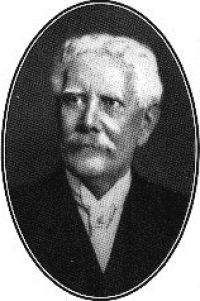 Charles Oman,
Wellington's Army, 1809-1814
“ The officers of the Quartermaster-General’s department, besides their duties with regard to the moving of the army, or the detachments of it, had often to undertake independent work at a distance from headquarters, and sometimes remote from the theatre of war. ”
Edward Parrott, The Childrens' Story of the War…
“ The commander-in-chief and his staff occupy what is called the general headquarters of the army, which is stationed in some town behind the area in which fighting is actually going on. Battles are now waged over so many miles that a commander-in-chief cannot possibly see for himself what is happening all along his line. He has to rely upon others, who bring him or send him information by telegraph, telephone, motor car, motor cycle, or aircraft. ”
Warner A. Ross, My Colored Battalion
“ Then I was transferred to the headquarters company, a rather uncertain and complicated organization in those days, with an authorized strength of seven officers and three hundred and fifteen men. I remained with that company until after our arrival in France.In the infantry regiments of the Ninety-second Division the lieutenants and captains were colored with the exception of the regimental staff captains and the captains of the headquarters and supply companies. The majors commanding the battalions and the lieutenant-colonel and the colonel were old regular army white officers. ”
George Durston, The Boy Scouts on the Trail
“ Amiens is the headquarters of the second army corps," explained Harry. "All the reservists of that corps report here, no matter where they live. When a regiment loses a lot of men, if it is in the second corps, new men from here go forward to fill their places. ”
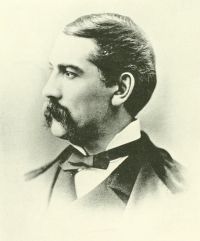 Selden Connor,
Campfire and Battlefield
“ The command of the main Union force, organized from the volunteers who were pouring into Washington, devolved on Irvin McDowell, a major in the regular army, now promoted to be brigadier-general, who established his headquarters at Alexandria, across the Potomac from Washington, there directing the defence of the capital, and thence advancing to Bull Run. ”
René-Louis-Jules Radiguet, The Making of a Modern Army and its Operations in the Field
“ As close to the General’s headquarters as possible, a staff-officer must establish a centre28 of information, where he will keep a force of men and all the equipment that will enable him to keep in constant communication with his General, with the infantry, the artillery, the captive balloons, all the services of the aviation, etc. ”
Various, Blackwood's Edinburgh Magazine…
“ Life at headquarters proved to be much what I had anticipated. In attending the movements of the army, we officials had sometimes very little work; sometimes, especially when the troops remained a few days stationary, a great deal. While they moved from day to day, we seldom had much to do but to follow them, and make ourselves as comfortable as we could at the end of the day's march. The military movements from Aire to Toulouse were curious. ”
Harold Reginald Peat, Private Peat
“ Each body of men as I have named them is really a separate and distinct unit in itself, but cooperating with all others. The food from the base is brought to the army corps by rail, and is distributed to the divisional headquarters by divisional transports which are operated by the Army Service Corps or the Mechanical Transport. From the divisional headquarters the next step is to the brigades, and brigade transports collect the food and take it another few miles nearer to the boys. ”
John B. Wilson, Maneuver and Firepower: The Evolution of Divisions and Separate Brigades (1998)
“ Adjutants alone were to comprise the staff of the infantry and artillery brigades, which had no headquarters troop for work details. The next higher headquarters, the army corps, would provide planning and administration for active operations. [6] Based on the report of 10 May, War College Division officers prepared tables of organization that authorized 19,000 officers and enlisted men for the division (Chart 3) , an increase of about 1,300. No basic structural changes took place; self-sufficiency justified the additional men. ”
Mary Lee Stubbs and Stanley Russell Connor, ARMOR-CAVALRY: Part 1; Regular Army and Army Reserve…
“ With approval of the CARS plan early in 1957, the old cavalry and armored regiments could be revived, at least in name, to continue their regimental histories. As illustrated in Chart No. 1, the plan provided an average of approximately fifteen battalions that could be organized to perpetuate the lineage and honors of a single regiment. The regimental headquarters was placed under Department of the Army control, and the other regimental elements were used to form separate battalions or squadrons as needed. Within these battalions and squadrons the organic elements were new. ”
Mary Lee Stubbs and Stanley Russell Connor, ARMOR-CAVALRY: Part 1; Regular Army and Army Reserve…
“ Finally, in mid-1944, the Headquarters and Headquarters Troop, 56th Cavalry Brigade, became the 56th Reconnaissance Troop, Mechanized. Seventy-three nondivisional cavalry units were active in the Army during the war. In general, they were squadrons and groups, many of which had been formed by breaking up nondivisional cavalry regiments. Each mechanized cavalry group was composed of a headquarters and headquarters troop and two or more attached mechanized cavalry reconnaissance squadrons. ”
George Gallie Nasmith, On the Fringe of the Great Fight
“ CHAPTER IX.ToC THE MEDICAL ORGANIZATION OF THE BRITISH ARMY.Each battalion at the front has a headquarters, usually in a dug-out or a sheltered farm house close to the lines: each brigade, consisting of four infantry battalions has a headquarters farther to the rear: each division, consisting of three infantry brigades, artillery, etc. ”
Mary Lee Stubbs and Stanley Russell Connor, ARMOR-CAVALRY: Part 1; Regular Army and Army Reserve…
“ The new plan called for 2 cavalry and 7 infantry divisions. A cavalry division consisted of a headquarters, 3 brigades (each with 3 cavalry regiments) , a horse field artillery regiment, a mounted engineer battalion, a mounted signal battalion, an aero squadron, and the necessary trains: ammunition, supply, engineer, and sanitary. The remaining 7 authorized cavalry regiments were assigned to the 7 infantry divisions, a regiment to each division, to provide a mobile force capable of performing reconnaissance, counterreconnaissance, and security missions for the division. ”
Related terms
Authors who wrote about “army headquarters”
John B. Wilson Ulysses S. GrantJoseph Orton KerbeyEdward ParrottSun TzuFrancis J. ParkerJacob D. Cox
 Henry VillardJohn K. Mahon and Romana DanyshWilliam T. ShermanKelly MillerMary Lee Stubbs and Stanley Russell ConnorGeorge Gallie NasmithCharles OmanSelden ConnorArmy War CollegeSir C. E. Callwell
 Niccolò Machiavelli
 Mercy Otis Warren
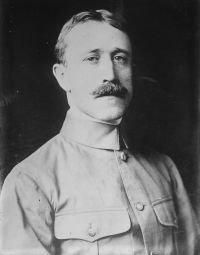 Frederick Palmer
Ulysses S. GrantJoseph Orton KerbeyEdward ParrottSun TzuFrancis J. ParkerJacob D. CoxHenry VillardJohn K. Mahon and Romana DanyshWilliam T. ShermanKelly MillerMary Lee Stubbs and Stanley Russell ConnorGeorge Gallie NasmithCharles OmanSelden ConnorArmy War CollegeSir C. E. CallwellNiccolò MachiavelliMercy Otis WarrenFrederick Palmer