Bat (cricket)

Definition and stakes

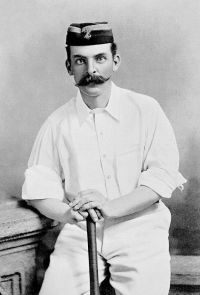
Portrait of Allan Gibson Steel Allan Gibson Steel,  Cricket (1888)

“ A batsman is perfectly right in refusing to hit or play at wide balls on the off side, but when he remains passive to balls a few inches only outside the off-stump, he not only acknowledges his want of confidence in himself, but also degrades the dignity of a cricket bat by substituting in its place his own usually nervous legs. ”
Source: Wikisource

Portrait of Allan Gibson Steel Allan Gibson Steel,  Cricket (1888)

“ The body of the batsman in many cases completely obstructs the view the wicket-keeper ought to have of the ball. Even if he can get a good sight of the ball there is that abominable bat being fiddled about, baulking the eyesight in the most tantalising manner, and there are some batsmen who have a provoking habit of waving their bats directly the bowler begins his run, and continuing their antics till the ball is right up to them; while others seem to be built like windmills, and have a limb always at hand to throw out between the unhappy wicket-keeper and the rapidly-advancing ball. ”
Source: Wikisource

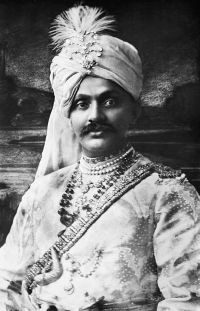
Portrait of Ranjitsinhji Vibhaji II Ranjitsinhji Vibhaji II,  The Jubilee Book of Cricket (1897)

“ Experience teaches how much advantage there is in the possession of a good bat. And it also teaches the result of using a bad or unsuitable article: such a weapon is very liable to take away completely that confidence which is a necessary condition of good batting. In the case of a gun, a horse, or a fishing-rod, the fit is the thing; and this fit is quite independent of the intrinsic merits of the article. In a similar manner the virtue of a bat is not merely absolute but relative. My first piece of advice, then, is for every player to choose a bat duly proportioned to his size and strength. ”
Source: Wikisource

Get perspective with Kwize: daily news enlightened by great literature