Eagle feather

Definition and stakes

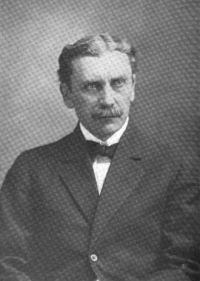
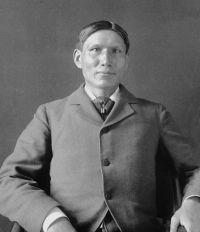
Portrait of Charles A. Eastman Charles A. Eastman,  Indian Boyhood

“ My uncle, White Foot-print, now undertook to explain to me the significance of the eagle’s feather.
“The eagle is the most war-like bird,” he began, “and the most kingly of all birds; besides, his feathers are unlike any others, and these are the reasons why they are used by our people to signify deeds of bravery.
“It is not true that when a man wears a feather bonnet, each one of the feathers represents the killing of a foe or even a coup. When a man wears an eagle feather upright upon his head, he is supposed to have counted one of four coups upon his enemy.”
”
Source: Gutenberg

W. T. Larned,  American Indian Fairy Tales

“ Eagle Feather raised his hand in a threatening way, but Morning Glory caught him by the arm.
"No, no!" she said. "You must not harm him. See how friendly he is, and not a bit afraid. There is game enough in the forest for a brave boy's bow and arrow. Why should he spend his strength on a weak little mouse?"
Eagle Feather, pleased with anything that seemed like praise of his strength, let his hand fall.
"Your words are true words, Morning Glory," he answered. "Against Ahmeek, the beaver, or Wau-be-se, the wild swan, it is better that I should measure my hunter's skill."
”
Source: Gutenberg

Navaho Legends

“ This part of the myth alludes to the trap-door spiders, or tarantulæ of the Southwest, that dwell in carefully prepared nests in the ground.
107. By life-feather or breath-feather (hyĭná bĭltsós) is meant a feather taken from a live bird, especially one taken from a live eagle. Such feathers are supposed to preserve life and possess other magic powers. They are used in all the rites. In order to secure a supply of these feathers, the Pueblo Indians catch [232] eaglets and rear them in captivity (see pars. 560 et seq.)
”
Source: Gutenberg

Get perspective with Kwize: daily news enlightened by great literature