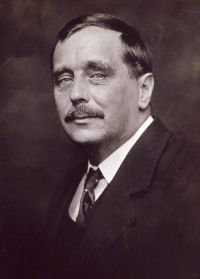
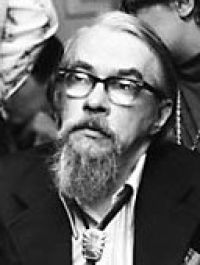
 Robert Sheckley,
The Status Civilization
Robert Sheckley,
The Status Civilization
“ All his studies had been for extraterrestrial exploration. There was no place for him on Earth; and now he was barred from space. ”
The concept of "extraterrestrial" includes life, phenomena, or beings beyond Earth, a theme widely examined in literature and policy. Authors like Edmond Hamilton imagined cosmic conflicts, as seen in Outside the Universe, where alien powers endanger galactic existence. Lyle Gifford Boyd analyzed misunderstandings of UFOs on Earth, while Robert Sheckley emphasized existential solitude in The Status Civilization.
Technical works, such as Advanced Automation for Space Missions, portrayed extraterrestrial exploration as a pursuit of resource self-sufficiency, weighing scientific drive against moral considerations. These differing viewpoints—from legend to technology—reveal humanity’s complex blend of curiosity and concern regarding the unknown.
Robert Sheckley,
The Status Civilization
“ All his studies had been for extraterrestrial exploration. There was no place for him on Earth; and now he was barred from space. ”
Outer Space Treaty of 1967 (1967)
“ States Parties to the Treaty shall pursue studies of outer space, including the Moon and other celestial bodies, and conduct exploration of them so as to avoid their harmful contamination and also adverse changes in the environment of the Earth resulting from the introduction of extraterrestrial matter and, where necessary, shall adopt appropriate measures for this purpose. ”
| override_editor, Advanced Automation for Space Missions… (1980)
“ Figure 5.27 - Population of extraterrestrial civilizations as a function of galactic time. If we do in fact find such machines and are able to interrogate them successfully, we may become privy to the doings of incredibly old alien societies long since perished. These societies may lead to many others, so we may be treated, not just to a marvelous description of the entire biology and history of a single intelligent race, but also to an encyclopedic travelogue describing thousands or millions of other extraterrestrial civilizations known to the creators of the probe we are examining. ”
From ancient fears of invasion to hopes for cosmic enlightenment, humanity projects its entire self onto the alien unknown. The prospect of first contact forces a stark confrontation with our own identity, revealing more about us than any potential visitor.
The history of chemical biosignature hunting reveals a profound ambiguity: Volatile sulphur compounds are both markers of terrestrial biology and common geological artifacts, demanding a non-geocentric framework for analyzing distant worlds like K2-18 b.