Fast bowler

Definition and stakes

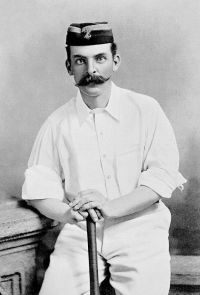
Portrait of Allan Gibson Steel Allan Gibson Steel,  Cricket (1888)

“ It is always best for a fast bowler to try a ball or two before beginning, excepting in circumstances when he is called upon to bowl to some one he has never bovled to before, and especially so to some one who has never seen him bowl. How often when batting have we silently chuckled with joy at seeing a man quite unknown to us rapidly loosening his arms with two or three balls before beginning to bowl! It is a great thing to have an unknown bowler on one's side, but he loses half his value if his style and action are revealed to the batsman before he receives the ball. ”
Source: Wikisource

Portrait of Allan Gibson Steel Allan Gibson Steel,  Cricket (1888)

“ A fast bowler must be straight to be good. This is not the art of one skilled in the dodges of slows; he has to bowl straight, and a good length too, or else the runs will come at an enormous rate. In the present day it is usual to do with out a long-stop even to the fastest bowlers; this makes it imperatively necessary for the bowler not to bowl to leg, or, if missed by the batsman, the balls have a good chance of flying past the wicket-keeper to the boundary for four. ”
Source: Wikisource

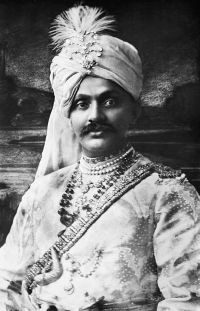
Portrait of Ranjitsinhji Vibhaji II Ranjitsinhji Vibhaji II,  The Jubilee Book of Cricket (1897)

“ The very object of fast bowling is to beat the batsman by the swift flight of the ball. The batsman is very apt to miss or make a bad stroke off a fast ball that bumps, shoots, keeps low, or acts otherwise than expected. An erratic fast bowler is better than none at all. One who can maintain his pace for a considerable time, and keep a good but not too monotonous length, is always valuable. Many natural fast bowlers fall into the error of being over-anxious to make the ball break, and thus are liable to spoil both pace and length. ”
Source: Wikisource

Get perspective with Kwize: daily news enlightened by great literature