Glacial ice

Definition and stakes

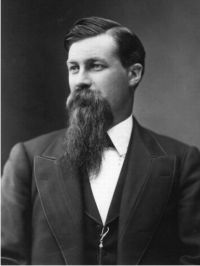
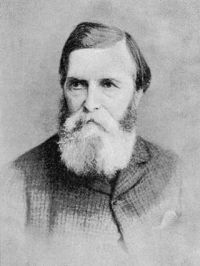
Portrait of Joseph Dalton Hooker Joseph Dalton Hooker,  Himalayan Journals — Volume 2

“ I found it impossible to distinguish the glacial ice from perpetual snow; the larger beds of snow where presenting a flat surface, being generally drifts collected in hollows, or accumulations that have fallen from above: when these accumulations rest on slopes they become converted into ice, and obeying the laws of fluidity, flow downwards as glaciers. I boiled water at the most advantageous position I could select, and obtained an elevation of 16,522 feet.* [Temperature of boiling water, 183 degrees, air 35 degrees.] ”
Source: Gutenberg

Various,  The Atlantic Monthly, Volume 12…

“ Of such ice glaciers are composed; but, in the glacier, another element comes in which we have not considered as yet,—that of immense pressure in consequence of the vast accumulations of snow within circumscribed spaces. We see the same effects produced on a small scale, when snow is transformed into a snowball between the hands. Every boy who balls a mass of snow in his hands illustrates one side of glacial phenomena. Loose snow, light and porous, and pure white from the amount of air contained in it, is in this way presently converted into hard, compact, almost transparent ice. ”
Source: Gutenberg

T. Sterry Hunt,  The American Cyclopædia (1879)

“ Those, on the other hand, who restrict the action of land ice to local glaciers, and call in the aid of floating ice and the arctic current, maintain that the process of glaciation is limited rather by place than by time. Ever since the conditions of the earth have been such as to give rise to the formation of polar ice, the shores and the shallow seas to which the arctic current has borne it must have been subject to glacial action such as we have endeavored to describe. ”
Source: Wikisource

Get perspective with Kwize: daily news enlightened by great literature