Lace industry

Definition and stakes

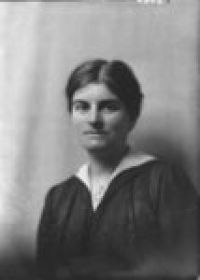
Portrait of Charlotte Kellogg Charlotte Kellogg,  Bobbins of Belgium

“ The lace industry can not be captured and subjected to cold analysis and tabulation. It must be studied differently from other industries that can be localized. As in learning to know the garden flowers of a country, one must go from doorstep to doorstep, so if one wishes to understand lace, one should become familiar with its milieu, the family and community life from which it springs. In a sense, then, these little journeys to lace districts which are the subjects of my chapters, may suggest more about what lace really is than a more technical and formidable volume. ”
Source: Gutenberg

Mrs. Bury Palliser,  History of Lace

“ The four hundred lace-workers now employed are divided into seven sections, in order that each may continue in the same sort of work and, as much as possible, in the same class of lace. By this method each one becomes thoroughly proficient in her own special department, executes it with greater facility, and consequently earns more, and the school gets its work done better and cheaper.
While Countess Marcello was working to re-establish the making of needle-point at Burano, Cav. Michelangelo Jesurum was re-organising the bobbin-lace industry at Pellestrina, a small fishing-town on the Lido.
”
Source: Gutenberg

Mrs. Bury Palliser,  History of Lace

“ The lace industry of Brussels is now divided into two branches, the making of detached sprigs, either point or pillow, for application upon the net ground, and the modern point à l'aiguille gazée, also called point de Venise, a needlework lace in which the flowers are made simultaneously with the ground, by means of the same thread, as in the old Brussels. It is made in small pieces, the joining concealed by small sprigs or leaves, after the manner of the old point, the same lace-worker executing the whole strip from beginning to end. ”
Source: Gutenberg

Get perspective with Kwize: daily news enlightened by great literature