“ The skin of the Leopard has always been highly valued on account of its beauty, and in Africa, at the present day, a robe made of its spotted skin is as much an adjunct of royalty as is the ermine the emblem of judicial dignity in England. In more ancient times, a leopard skin was the official costume of a priest, the skin being sometimes shaped into a garment, and sometimes thrown over the shoulders and the paws crossed over the breast. ”
Leopard skin
Definition and stakes
The theme of “leopard skin” has been addressed by authors such as Richard Lydekker and William Henry Flower, Robert Hamill Nassau, J. G. Wood, Sir Samuel White Baker and Sarath Kumar Ghosh. It is often associated with terms like lion, tiger, animal, Africa and spot.
Quotes about “leopard skin”
Phebe Westcott Humphreys, A Natural History for Young People…
“ Viewed in his wild state, few animals can surpass the lurking Leopard in point of beauty, his brilliant orange and white skin, which shines like silk, being richly studded with open rosettes, sometimes of the most intense sable, at others disposed as if a Cat had been walking over him with her paws tarred. ”
 Thomas Wallace Knox,
The Boy Travellers on the Congo
“ AN AFRICAN FEZ OF LEOPARD-SKIN. "All the adult males wear skull-caps of goat or monkey-skin, except the chief and elders, whose heads were covered with the aristocratic leopard-skin, with the tail of the leopard hanging down the back like a tassel."The women were weighted with massive and bright iron rings. One of them, who was probably a lady of importance, carried at least twelve pounds of iron and five pounds of copper rings on her arms and legs, besides a dozen necklaces of the indigenous Achatina monetaria. ”
 Northcote Whitridge Thomas,
1911 Encyclopedia Britannica
(1911)
“ Leopard.—The cult of the leopard is widely found in West Africa. Among the Ewe a man who kills one is liable to be put to death; no leopard skin may be exposed to view, but a stuffed leopard is worshipped. On the Gold Coast a leopard hunter who has killed his victim is carried round the town behind the body of the leopard; he may not speak, must besmear himself so as to look like a leopard and imitate its movements. In Loango a prince’s cap is put upon the head of a dead leopard, and dances are held in its honour. ”
 Jonathan Carver,
Travels Through the Interior Parts of North America…
“ The hair or fur resembles also the skin of that domestic animal; the colour however differs, for the former is of a reddish or orange cast, but grows lighter near the belly. The whole skin is beautified with black spots of different figures, of which those on the back are long, and those on the lower parts round. On the ears there are black stripes. This creature is nearly as fierce as a leopard, but will seldom attack a man. ”
Phebe Westcott Humphreys, A Natural History for Young People…
“ THE LEOPARD. The Leopard is smaller and more active than the Tiger and larger than the Panther. It is arboreal in its habits and finds in the spots or rosettes which decorate its tawny skin a provision highly favorable to concealment among the foliage, wherein it lurks, until some passing animal approaches sufficiently near to enable it to spring upon its unsuspecting prey. ”
Various, Robert Merry's Museum, Vol. VII, No… (1842)
“ This animal, a handsome, but fierce member of the great family of cats, is smaller than either the lion or the tiger. Its skin is very beautiful, being spotted with large ocellated black spots on a light ground, which sometimes approaches to a bright yellow color. The leopard is remarkably lithe and flexible in all its motions. It is a very symmetrical animal, and as its expression partakes as much of wildness as of fierceness, it is among the handsomest of its tribe. It preys upon small animals, is frequently on the hunt, and probably kills more creatures than do the tiger or the lion. ”
 Rudyard Kipling,
Just So Stories
“ He told me I ought to change; and as I’ve nothing to change except my skin I’m going to change that.’ ‘What to?’ said the Leopard, tremendously excited. ‘To a nice working blackish-brownish colour, with a little purple in it, and touches of slaty-blue. It will be the very thing for hiding in hollows and behind trees.’ So he changed his skin then and there, and the Leopard was more excited than ever; he had never seen a man change his skin before. ‘But what about me?’ he said, when the Ethiopian had worked his last little finger into his fine new black skin. ”
Various, The Mirror of Literature, Amusement…
“ The leopard of Southern Africa is known among the Cape colonists by the name of tiger; but is, in fact, the real leopard, the Felis jubata of naturalists, well known for the beauty of its shape and spotted skin, and the treachery and fierceness of its disposition. The animal called leopard (luipaard) by the Cape Dutch boors, is a species of the panther, and is inferior to the real leopard in size and beauty. Both of them are dreaded in the mountainous districts on account of the ravages which they occasionally commit among the flocks, and on the young cattle and horses in the breeding season. ”
Samuel G. Goodrich, Illustrative Anecdotes of the Animal Kingdom
“ This animal is more slender and graceful than the panther, yet it has all the savage qualities of the feline race. Its skin is exceedingly beautiful, being of a light fawn, marked with black spots. Nothing can surpass the ease, grace, and agility, of its movements. Hunting the Leopard.—Two boors in Southern Africa, in the year 1822, returning from hunting the hartebeest, fell in with a leopard in a mountain ravine, and immediately gave chase to him. ”
Thomas Wallace Knox,
The Boy Travellers in Australasia
(1889)
“ The guide said they ejected this water when touched; and if it fell on a wound or scratch, or into the eye, it caused intense pain, and sometimes resulted in temporary or even permanent blindness. The sea-slugs were of all colors—black, red, gray, and two or three varieties of green. The most dangerous is an olive-green one marked with orange spots, and hence called the leopard. When it is disturbed it throws up long filaments like threads or strings, which adhere very tenaciously; and wherever they touch the skin they raise a burning blister. ”
 Arthur Mangin,
The Desert World
“ For the vulgar, every great cat with a spotted skin is a tiger. But scientific naturalists neither apply this name to the American jaguar nor to other spotted Felidæ of the Old or New World; and it is with difficulty they now agree to recognize in the Leopard and the Panther two ill-defined varieties of the same species. Assuredly they exhibit very marked differences. The Leopard is nearly as large as the lion; his limbs are robust, his head is strong. ”
 Allen Upward,
The club of masks
(1926)
“ At all events their skins are sufficiently like the true leopard’s to be called leopard skins by an ignorant man like Gerard. What I want you to do is to ascertain if such animals occur in the East Indian archipelago, and particularly in the Island of Sumatra. ”
Allen Upward,
The club of masks
(1926)
“ I shouldn’t think that unmounted skins could be very common—skins that could be made part of a costume.”My chief had punctuated these suggestions with a series of approving nods. At the close he spoke.“Very good indeed, Cassilis. You have the makings of a detective, I can see. And now let me explain to you where I see a chance of success. You may put the taxidermists on one side. Leopard skins are such perishable things, and the climates in which leopards are killed are so treacherous, that the skins have to be roughly cured on the spot if they are to be preserved. ”
William Bingley, Useful Knowledge: Volume 3. Animals
“ Leopards' skins are much esteemed in Europe. They seldom exceed four feet in length; and should be chosen large, of lively yellow colour, marked on the back and sides with annular spots, the belly covered with longish white hairs, and with large and oblong spots on the tail. Their use is for hammer-cloths, muffs, the trimmings of ladies' dresses, and other purposes. Some of the most valuable of these skins sell for ten guineas each and upwards. The flesh of the leopard is said, by Kolben, to be white and of good flavour. ”
 Agnes Herbert,
Two Dianas in Somaliland: The Record of a Shooting Trip
“ Our stolen homestead being of native make, I had a great loop-hole made for me in the inner circle and remained inside our main camp, You have to do this miserable form of sport to bag leopards, because they are too cunning as a rule to appear in the day-time, and rarely walk about in the open way lions will. There is nothing magnificent about the character of a leopard. He is a mere cunning thief. A rush, and the leopard was on his prey, his side towards me, his tail slowly lashing from left to right with pleasure as he drank the warm blood. ”
 Sir Samuel White Baker,
Wild Beasts and Their Ways, Reminiscences of Europe…
“ The nature of this beautiful creature is entirely opposed to the cat-like crouching tactics of the ordinary leopard: its large and prominent eyes embrace a wide field of view; the length of neck and legs, combined with the erect attitude of the head, denotes the character of the animal, as it includes a vast distance in its gaze, showing that it seeks its game upon a wide expanse of plain, instead of surprising the prey by an unexpected and treacherous attack. ”
Stanley Waterloo, A Son of the Ages: The Reincarnations and Adventures of Scar… (1914)
“ It is like a woman, soft and smiling and caressing, at least upon the surface; it is like a stallion pawing and tossing his white mane; it is like a green forest bending and heaving before the wind; it is like an unbounded sheet of shimmering, supple glass, supine beneath a calm; and, at last, it is like a herd of wild beasts, roaring and hungry and devouring. Let none count our Mediterranean as harmless as compared with the mighty western ocean. The leopard is more treacherous than the lion! ”
Various, The International Monthly Magazine…
“ It is difficult to say how many leopards and jaguar skins are annually imported, as the majority are brought by private hands. We have been told by an eminent furrier that about five hundred are sold each year to the London trade. They are chiefly used as shabraques, or coverings to officers' saddles in certain hussar regiments, but skins used for this purpose must be marked in a particular manner, and the ground must be of a dark rich color. Such skins are worth about three pounds; ordinary leopard and jaguar skins are valued at about two pounds, and are chiefly used for rugs or mats. ”
Adelia B. Beard, Mother Nature's Toy-Shop
“ It is really wonderful how much this little animal, made of parts of a beautiful flower and broom-straws, looks like the stealthy, prowling, wild creature which lives in Africa and Asia. The yellow coat of the live leopard is covered with black spots, and so is that of our flower leopard. The fierce living animal has a long tail that it moves slowly [79] back and forth in anger or when it threatens to attack another animal or a man. Our little leopard also has a long tail which, if it does not really move, looks as if it were just going to. ”
Various, The International Monthly Magazine…
“ The tiger crouches in the tangled brake; The spotted axis bounds in fear away; The leopard darts on his defenceless prey, 'Mid reedy pools and ancient forests rude, Cool peaceful haunts of awful solitude!"There is no class of animals which combine in such a marked degree, beauty of form, with a wily and savage nature, as that to which the Leopard tribe belongs. The unusual pliability of the spine and joints with which they are endowed, imparts agility, elasticity, and elegance to their movements, whilst the happy proportions of their limbs give grace to every attitude. ”
James Inglis, Sport and Work on the Nepaul Frontier
“ With the approach of night, however, they begin their wandering in quest of prey. In a beat such as we were having 'all is fish that comes to the net,' and leopards, if they are in the jungle, have to yield to the advance of the beaters, like the other denizens of the forest.Experience tells you that the leopard is daring and ferocious. Old experienced hands warn you, that unless you can make sure of your shot, it is unwise to fire at a leopard approaching. ”
The Circle of Knowledge: A Classified…
“ The general color is yellowish; the lower parts lighter; the spots darker than the general color of the fur. The leopard is extremely agile, and possesses the power of leaping and also that of climbing trees in great perfection. Deer and antelopes are its habitual prey; but it is equally ready to feed on pigs, poultry, or whatever animals may be found in the vicinity of a farm or village. The size and strength of the leopard render it dangerous to man; but it generally seems to dread and flee from man, unless assailed. ”
Richard Lydekker and William Henry Flower, 1911 Encyclopædia Britannica, Volume 16… (1911)
“ In habits the leopard resembles the other large cat-like animals, yielding to none in the ferocity of its disposition. It is exceedingly quick in its movements, but seizes its prey by waiting in ambush or stealthily approaching to within springing distance, when it suddenly rushes upon it and tears it to ground with its powerful claws and teeth. It preys upon almost any animal it can overcome, such as antelopes, deer, sheep, goats, monkeys, peafowl, and has a special liking for dogs. ”
R. V. Russell, The Tribes and Castes of the Central Provinces of India…
“ It cannot maintain this for more than three or four hundred yards, however, and if in that distance the animal has not seized its prey, it relinquishes the pursuit and stalks about in a towering passion. The Pārdhis say that when it misses the game the leopard is as sulky as a human being and sometimes refuses food for a couple of days. ”
J. Hampden Porter, Wild beasts (1894)
“ Leopards are described as having been shot right and left in the jungle, treed by dogs and killed on limbs without difficulty, pelted from the doorways of deserted huts, and speared in the open from the saddle. Leveson, Drummond, and Baker relate experiences of this kind, but the literature of the subject contains many very different accounts of their prowess. Both in Asia and Africa they have often been found to be extremely dangerous and destructive animals. There is good reason why in heraldic blazonry the leopard should be represented as passant gardant. ”
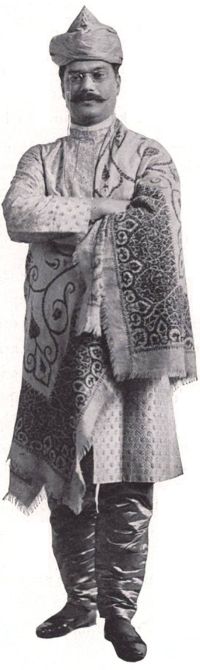 Sarath Kumar Ghosh,
The Wonders of the Jungle, Book Two
“ He creeps silently through the jungle, till he comes near his prey; then he gives a sudden bound and falls upon it.The leopard has splendid muscles; the muscles are not big, but they are hard. The leopard leads such an active life that he is generally slim, without any flabbiness. In fact, the leopard is a perfect type of feline grace, beauty, and agility. The lion is the laziest animal of the Cat Tribe; the leopard is the [180] most active. The leopard is even more active than the tiger. ”
Sir Samuel White Baker,
Wild Beasts and Their Ways, Reminiscences of Europe…
“ It is impossible to deny such facts, although they are fortunately rare exceptions to the general rule; but there can be no doubt that a panther or leopard would attack upon many occasions when a tiger would prefer to slink away.The habits of the leopard are invariably the same, it prowls stealthily about sunset and throughout the night in search of prey. It seizes by the throat and clings with tenacious claws to the animal's neck, until it succeeds either in breaking the spine, or in strangling its victim, should the bone resist its strength. ”
J. G. Wood, Story of the Bible Animals
“ It is scarcely necessary to mention that the Leopard is a beast of prey belonging to the cat tribe, that its colour is tawny, variegated with rich black spots, and that it is a fierce and voracious animal, almost equally dreaded by man and beast. It inhabits many parts of Africa and Asia, and in those portions of the country which are untenanted by mankind, it derives all its sustenance from the herb-eating animals of the same tracts. ”
Thomas Wood, The Mosaic History of the Creation of the World
“ A profane and voluptuous man was represented by a Swine, whose filthy disposition caused it to be hated by all the eastern people. A great hypocrite, or a notorious dissembler of wicked intentions, was expressed by a Leopard, because this animal acts craftily, concealing his head that he may with less difficulty catch his unwary prey; for the creatures are as much alarmed at his presence, as they are pleased with the agreeable scent of his body: when therefore they approach him, delighted with the perfume, he will cover his head with his paws, till they come within his reach. ”
 William Henry Giles Kingston,
In the Wilds of Africa
“ The female is without horns, but the male has magnificent spiral ones upwards of three feet in length, which rise erect from his exquisitely-formed head, and give him an air of nobility and independence. The animal is about four feet high at the shoulder, and the general colour is a reddish grey, marked with white bars over the neck and croop. When walking slowly its action is very graceful. While watching the beautiful creatures I caught sight of a leopard lurking in the neighbourhood. ”
Related terms
Authors who wrote about “leopard skin”
Richard Lydekker and William Henry Flower Robert Hamill NassauJ. G. WoodSir Samuel White BakerSarath Kumar GhoshPhebe Westcott HumphreysWilliam BingleyJohn H. WeeksAgnes Herbert
 Fitzwilliam Thomas Pollok
 Charles Catton
 Carl Ethan AkeleyJ. Hampden PorterVariousTheodore WoodThomas Wallace KnoxNorthcote Whitridge Thomas
 Sir James Emerson TennentJames InglisRudyard Kipling
Robert Hamill NassauJ. G. WoodSir Samuel White BakerSarath Kumar GhoshPhebe Westcott HumphreysWilliam BingleyJohn H. WeeksAgnes HerbertFitzwilliam Thomas PollokCharles CattonCarl Ethan AkeleyJ. Hampden PorterVariousTheodore WoodThomas Wallace KnoxNorthcote Whitridge ThomasSir James Emerson TennentJames InglisRudyard Kipling