Lethal dose

Definition and stakes

Alexander Wynter Blyth,  Poisons, Their Effects and Detection

“ Fatal Dose.—The amount necessary to kill an adult man is not strictly known; fatality so much depends on the concentration of the acid and the condition of the person, more especially whether the stomach is full or empty, that it will be impossible ever to arrive at an accurate [79] estimate. Christison’s case, in which 3·8 grms. (60 grains) of concentrated acid killed an adult, is the smallest lethal dose on record. Supposing that the man weighed 681⁄2 kilo. ”
Source: Gutenberg

Alexander Wynter Blyth,  Poisons, Their Effects and Detection

“ Fatal Dose.—The fatal dose for dogs is from 1⁄2 to 2 drops; for rabbits, a quarter of a drop; for an adult not accustomed to tobacco the lethal dose is probably 6 mgrms.
§ 336. Post-mortem Appearances.—There seem to be no appearances so distinctive as to be justly ascribed to nicotine or tobacco-poisoning and no other.
A more or less fluid condition of the blood, and, generally, the signs of death by the lungs, are those most frequently found. In tobacco-poisoning, when the leaves themselves have been swallowed, there may be some inflammatory redness of the stomach and intestine.
”
Source: Gutenberg

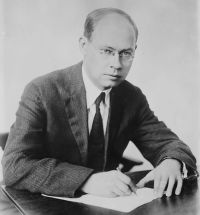
Portrait of Arthur B. Reeve Arthur B. Reeve,  The War Terror

“ But, in the case of such poisoning, not only is the lethal dose very small but our chemical methods of detection are nil. The dose of the active principle, aconitin nitrate, is about one six-hundredth of a grain. There are no color tests, no reactions, as in the case of the other organic poisons.”
I wondered what he was driving at. Was there, indeed, no test? Had the murderer used the safest of poisons—one that left no clue? I looked covertly at Sato’s face. It was impassive. Doctor Bernardo was visibly uneasy as Kennedy proceeded.
”
Source: Gutenberg

Get perspective with Kwize: daily news enlightened by great literature