Lucid dreaming

Definition and stakes

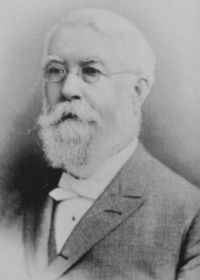
Portrait of James Sully James Sully,  Illusions: A Psychological Study

“ When dreaming, we are still sane, and shall soon prove our sanity. After all, the dream of the sleeper is corrected, if not so rapidly as the illusion of the healthy waker. As soon as the familiar stimuli of light and sound set the peripheral sense-organs in activity, and call back the nervous system to its complete round of healthy action, the illusion disappears, and we smile at our alarms and agonies, saying, "Behold, it was a dream!" ”
Source: Gutenberg

Portrait of James Sully James Sully,  Illusions: A Psychological Study

“ Instead of holding the images and ideas, and combining them according to some rational end, the attention relaxes its energies and succumbs to the force of imagination. And thus, in sleep, just as in the condition of reverie or day-dreaming, there is an abandonment of the fancy to its own wild ways.
It follows that the dream-state will not appear to the mind as one of fancy, but as one of actual perception, and of contact with present reality. Dreams are clearly illusory, and, unlike the illusions of waking life, are complete and persistent.
”
Source: Gutenberg

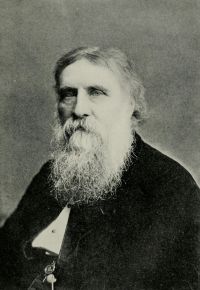
Portrait of James Sully James Sully,  Illusions: A Psychological Study

“ On the one side, it is urged against the theory of unbroken mental activity, that we remember so little of the lowered consciousness of sleep. [73] To this it is replied that our forgetfulness of the contents of dream-consciousness, even if this were unbroken, would be fully accounted for by the great dissimilarity between dreaming and waking mental life. It is urged, moreover, on this side that a sudden rousing of a man from sleep always discovers him in the act of dreaming, and that this goes to prove the uniform connection of dreaming and sleeping. ”
Source: Gutenberg

Get perspective with Kwize: daily news enlightened by great literature