Majolica

Definition and stakes

Jennie J. Young,  The Ceramic Art

“ All the glazed earthen-ware of Italy was thereafter called majolica; and the application of the word has been growing wider ever since. Mr. Fortnum says, “We think, with M. Jacquemart, M. Darcel, Mr. J. C. Robinson, and others, that the word ‘maiolica’ should be again restricted to lustred wares.” Any such attempt must necessarily end in failure. The popular employment of a word is not to be controlled by its scientific application. The tendency is in the opposite direction—toward the establishment of a universal usage by which faience and majolica will become convertible terms. ”
Source: Gutenberg

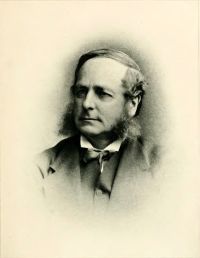
Portrait of Charles Wyllys Elliott Charles Wyllys Elliott,  Pottery and Porcelain, from early times down to the Philadelphia exhibition of 1876

“ THE term Maiolica, or Majolica, as has been often explained, came from the island of Majorca, whence came to Italy, in the twelfth century, some of those peculiar potteries already described under the name of Hispano-Moresque.
The Balearic Islands, lying in such convenient proximity to the mainland, were then possessed by the active and enterprising Moors—that most daring and doing race, who had planted the standard of the Prophet in Southern Europe. From these convenient islands they could organize pleasant surprises upon the coasts of Italy, and gratify themselves with much plunder.
”
Source: Gutenberg

Jennie J. Young,  The Ceramic Art

“ Leaving out of view the questions as to the priority of Chaffagiolo to Faenza and Pesaro’s precedence in metallic lustring, we may begin with Tuscany.
The leading Tuscan towns were Chaffagiolo, Florence, Siena, and Pisa. The first of these produced the earliest Tuscan majolica. Its leading features are a thick dark blue, made from cobalt; a bright orange and yellow; a fine clear green, red, brown, and purple.
”
Source: Gutenberg

Get perspective with Kwize: daily news enlightened by great literature