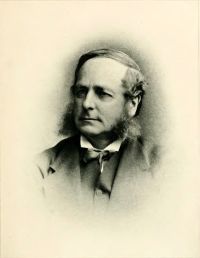
Charles Wyllys Elliott

Biographical details

Portrait of Charles Wyllys Elliott Charles Wyllys Elliott,  Pottery and Porcelain, from early times down to the Philadelphia exhibition of 1876

“ In their tombs have been found gold-work, jewels, manuscripts, vases: all of which tell their stories of the way men lived, how they worked, what they sought; all of which show us that man then was the same as man is now—if you pricked him he bled, if you tickled him he laughed. We are apt to think that the Past was ignorant, brutal, savage. Have we, boastful as we are, made porcelain better than the Chinese? Have we made vases more beautiful than the Greeks? Poetry more musical?
In the far past man was savage, brutal, ignorant; and there is in man still the latent tiger.
”
Source: Gutenberg

Portrait of Charles Wyllys Elliott Charles Wyllys Elliott,  Pottery and Porcelain, from early times down to the Philadelphia exhibition of 1876

“ When, in 1518, the Portuguese introduced fine Oriental porcelains into Europe, and, after them, the Dutch brought by ship-loads the beautiful productions of China and Japan, they were spread over Europe like water passing its dikes. Every king, every noble, every man of taste, was touched as by a fairy wand, and became inspired with a desire of possession, and also with a wish to create such articles of use and beauty. But the secrets of porcelain were locked in the souls of those keen Orientals, who would not part with their knowledge. ”
Source: Gutenberg

Portrait of Charles Wyllys Elliott Charles Wyllys Elliott,  St. Domingo, its revolution and its hero… (1855)

“ The Hour has come and the Man. Toussaint Breda, from his eyrie near Dondon, sweeps the horizon. In the East he sees the decadent power of Spain—it has spoken no word of freedom for the blacks. In the West he sees the white sails of England—she is hand and glove with the planters to reëstablish slavery. In the North France and Laveaux are nigh death. France only has proclaimed liberty to the blacks. Toussaint sees the “opening” for his race and for himself, and from this day he is Toussaint Louverture—the first of the blacks. ”
Source: Gutenberg

Get perspective with Kwize: daily news enlightened by great literature