Mark (currency)

Definition and stakes

William Arthur Shaw,  The History of Currency, 1252 to 1896

“ A single instance will serve to show their nature. In 1342 the mark of gold, which in a normal time just preceding was valued at 41 livres 13 sols, was proclaimed equal to 117 livres, and in 1360 the mark of silver, valued normally at 5 livres, rose to 102 livres. [5] It stands to reason that such abnormal movements must be neglected in any attempt to determine the course of such fluctuations in value of the metals, and the ratio of gold and silver, as arose naturally from the metallic and currency history of the time. ”
Source: Gutenberg

William Arthur Shaw,  The History of Currency, 1252 to 1896

“ Each state will confine its mintings to such pieces as prevail in the system of which it forms part.
"5. In larger specie, and also in divisional coin, each state to bind itself to exercise the greatest care to preserve the standard and weight.
"7. For the purpose of the commerce of the contracting states union or convention coins (vereinsmünze) shall be minted seven to the mark of fine silver, at an equivalence of 2 thalers or 3 1⁄2 guldens, fully tenderable throughout the Union.
"8. Alloy to be .9 silver, .1 copper; so that 6 3⁄10 pieces = 1 Mint mark in weight; remedy = .003.
”
Source: Gutenberg

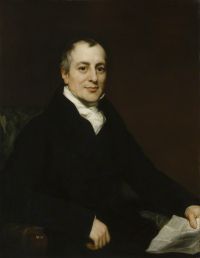
Portrait of John Stuart Mill John Stuart Mill,  Principles of Political Economy (1871)

“ When the gold or silver has all gone from circulation, and an equal quantity of paper has taken its place, suppose that a still further issue is superadded. The same series of phenomena recommences: prices rise, among the rest the prices of gold and silver articles, and it becomes an object as before to procure coin in order to convert it into bullion. There is no longer any coin in circulation; but if the paper currency is convertible, coin may still be obtained from the issuers, in exchange for notes. ”
Source: Wikisource

Get perspective with Kwize: daily news enlightened by great literature