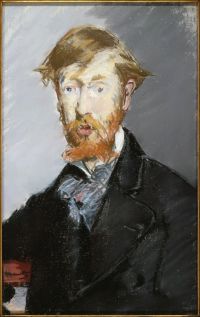
“ Trying to get into step is interesting and instructive, and the novitiate, though hardly bearable at times, is better than sitting in the lonely guest-room. Mother Hilda's instruction in the novitiate seems childish, yet why is it more childish than a hundred other things? Only because one is not accustomed to look at life from the point of view of the convent. ”
Novitiate
Definition and stakes
The novitiate refers to the period of training and preparation experienced by Christian novices seeking religious life, emphasizing spiritual discernment, integration into a community, and dedication to vows. Authors such as George Moore portray it as a transformative yet demanding stage, testing both the novice's determination and the community's ability to discern suitability.
Joseph McCabe, on the other hand, underscores its function as a strict probationary period for those aspiring to monastic life. Albert Mackey, in a non-religious context, points to its role in reflecting on ethical teachings. Whether within monastic or secular orders, the novitiate acts as a structured trial in which individuals and communities evaluate their mutual compatibility with a shared spiritual journey.
Quotes about “novitiate”
“ Mother Mary Hilda thought it would be dangerous to open the doors of the novitiate to one who admitted she was entering the religious life only as an experiment, especially to one like myself, an opera singer, who, however zealously she might conform to the rule, would bring a certain atmosphere with her into the novitiate, one which could not fail to affect a number of young and innocent girls, and perhaps deleteriously. ”
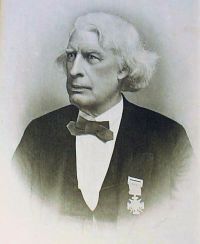 Albert Mackey,
The Principles of Masonic Law…
(1856 | portal)
Albert Mackey,
The Principles of Masonic Law…
(1856 | portal)
“ It necessarily requires the novitiate to reflect upon the bearing of all that has been so far taught him, and consequently to impress upon his mind the beauty and utility of those sublime truths, which have been illustrated in the course of the ceremonies he has witnessed in his progress in the mystic art. ”
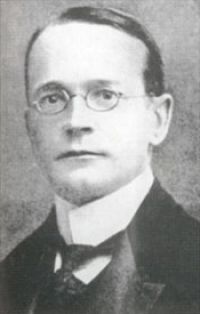 Joseph McCabe,
Twelve Years in a Monastery — Chapter III. Novitiate
Joseph McCabe,
Twelve Years in a Monastery — Chapter III. Novitiate
“ The novitiate is an episode in the training of the monastic, not of the secular, clergy: it is a period of probation imposed upon all aspirants to the monastic life. Religious of every order and congregation, [1] both men and women, must spend at least one year as ‘novices’ before they are permitted to bind themselves by the solemnity of the vows. During that period they experience the full severity and asceticism of the life to which they aspire, and they in turn are minutely observed and tested by their superiors. ”
 Eugène Sue,
The Mysteries of Paris, illustrated with etchings…
Eugène Sue,
The Mysteries of Paris, illustrated with etchings…
“ Since the beginning of her novitiate there has been but one opinion of her piety, her charity, and the exactitude with which she fulfils all the rules of the order; she even exaggerates their austerity. She exercises in the convent that authority she exercised everywhere, but of which she herself is ignorant. She confessed to me this morning that she is not so absorbed by her religious duties as to forget the past. ”
Anonymous, The Life of the Venerable Mother Mary of the Incarnation
“ The day was to come, when the Mother of the Incarnation would be bound to her Lord by the vows of religion, but before becoming a guide for His consecrated Spouses, she was to pass through married life and widowhood, that she might first furnish an example of perfection in both conditions, and thus serve as a model for woman in every state. Her ultimate destiny involved a species of apostolate among the savages of Canada, and for this, the novitiate awaiting her in the world would prove a more effectual preparation, than would the novitiate of the cloister. ”
Joseph McCabe,
Twelve Years in a Monastery — Chapter III. Novitiate
“ And when the place was finally chosen as convent of the novitiate the good friars put their house in order, tightened their girdles, and resigned themselves to a more or less regular discipline; for one of their most sacred principles is that novices must not be scandalized. ”
Alban Butler, The Lives of the Fathers, Martyrs…
“ Therefore, a fervent novitiate, employed in the exercises of an interior life, ought to be a part of the preparation for this state; and in the discharge of his duties, a person ought always to unite contemplation with action, and reserve to himself sufficient time for conversing with God and his own soul, and taking a frequent review of his own interior. ”
 Alice Meynell,
The poor Sisters of Nazareth
(1889)
Alice Meynell,
The poor Sisters of Nazareth
(1889)
“ The rules of the Novitiate are the result of the experience of monasticism in its long life; and who shall say that their severity is a harder preparation than is necessary for the dying life which the Nun must lead? To the outsider the isolation of the Novices is very striking. They form together a little school under the care of the Nun who is appointed Novice-mistress, and with the other Sisters they hold no communication of companionship or speech. ”
 Paul Sabatier,
Life of St. Francis of Assisi
Paul Sabatier,
Life of St. Francis of Assisi
“ For these reasons we command you by these presents to admit no one to make profession until after one year of novitiate; we forbid that after profession any brother shall leave the Order, and that any one shall take back again him who has gone out from it. ”
Various, The Catholic World, Vol. 23, April…
“ From that moment she renounced her worldly life, and soon entered the novitiate at Grenoble as a postulant. Even there, her historian relates, “on souriait de ses manières mondaines, de ses belles salutations, de ses trois toilettes par jour! Même sous le voile de novice qu’elle portait maintenant, elle laissait voir encore, pas sans complaisance, l’élégance de sa taille et les avantages de sa personne. On ne tardera pas à voir ce que cette âme de jeune fille changée en âme d’apôtre était capable d’entreprendre pour Dieu et le [Pg 601] prochain.” ”
 James George Frazer,
The Golden Bough: A Study in Magic and Religion…
James George Frazer,
The Golden Bough: A Study in Magic and Religion…
“ Boys of seven or eight years of age are admitted, or rather serve a novitiate until they arrive at a proper age; for it is difficult to procure exact information, and even somewhat dangerous to make many inquiries. ”
Novatian, Ante-Nicene Fathers Vol. V, A Treatise of Novatian Concerning the Trinity… (1885)
“ For He does not desire from us the glory of His magnitude; but He wishes to confer upon us, even as a father, a religious wisdom. And He, wishing moreover to attract to gentleness our minds, brutish, and swelling, and stubborn with cloddish ferocity, says, “And upon whom shall my Spirit rest, save upon him that is lowly, and quiet, and that trembleth at my words?” ”
 Richard Watson,
A Biblical and Theological Dictionary
Richard Watson,
A Biblical and Theological Dictionary
“ NOVATIANS, the followers of Novatian, a priest of Rome, and of Novatus, a priest of Carthage, in the third century. They were distinguished merely by their discipline; for their religious and doctrinal tenets do not appear to be at all different from those of the church. They condemned second marriages, and for ever excluded from their communion all those who after baptism had fallen into sin. They affected very superior purity; and, though they conceived that the worst might possibly hope for eternal life, they absolutely refused to reädmit into their communion any who had lapsed into sin. ”
Henry D. Inglis, Spain in 1830, vol. 1
“ Such reasoning cannot fail to produce its effect upon the mind of a young person who has never known the world, and who is daily assured by the sisters in the convent that they are happy: add to this, a certain eclât in taking the veil,—extremely captivating to a youthful mind,—and it will scarcely seem surprising, that when the noviciate expires, there should be nothing terrible, or even very affecting in the ceremonial that fixes the destiny of the novice. ”
 William Ware,
Aurelian; or, Rome in the Third Century
William Ware,
Aurelian; or, Rome in the Third Century
“ Christians, the great Novatian is he to whom we owe what purity the church yet retains, and it is in allegiance to him—''The great Novatian!' exclaimed a priest of the Roman church, 'great only in his infamy! Himself an apostate once, he sought afterwards, having been received himself back again to the church upon his repentance, to bury his shame under a show of zeal against such as were guilty of the same offence. His own weakness or sin, instead of teaching him compassion, served but to harden his heart. Is this the man to whose principles we are to pledge ourselves? ”
Novatian, Ante-Nicene Fathers Vol. V, A Treatise of Novatian Concerning the Trinity… (1885)
“ And since he who has imbibed this truth into his mind and soul, and has believed of all things that thus it shall be, he shall even now see, as it were, in some measure the Father whom he will see hereafter; and he may so regard it, as if he actually held, what he knows for certain that he shall one day hold. But if Christ Himself had been the Father, why did He promise as future, a reward which He had already granted and given? For that He says, “Blessed are they of a pure heart, for they shall see God,” [23] it is understood to promise the contemplation and vision of the Father ”
Hannah Adams, A Dictionary of All Religions and Religious Denominations… (1817)
“ In order that this scrutiny into their character may be as complete as possible, a long noviciate must expire, during which they pass through the several gradations of ranks in the society, and they must have attained the full age of thirty three years, before they can be admitted to take the final vows by which they become members of this society. ”
Novatian, Ante-Nicene Fathers Vol. V, A Treatise of Novatian Concerning the Trinity… (1885)
“ And therefore he shall not only come to God the Father, and shall know the Father Himself; but, moreover, he ought thus to hold, and so to presume in mind and heart, that he has henceforth not only known, but seen the Father. For often the divine Scripture announces things that are not yet done as being done, because thus they shall be; and things which by all means have to happen, it does not predict as if they were future, but narrates as if they were done. And thus, although Christ had not been born as yet in the times of Isaiah the prophet, he said, “For unto us a child is born;” ”
 Mrs. George de Horne Vaizey,
The Love Affairs of Pixie
Mrs. George de Horne Vaizey,
The Love Affairs of Pixie
“ Unless your nephew himself releases her, she will feel as much bound as if they had been married in Westminster Abbey. It’s the way she’s made—the most faithful little creature under the sun! It will be our duty to protect her against herself, by making the young fellow understand that for her sake, almost more than his own, he must be honest, and not allow a mistaken sense of honour to urge him to repeat his proposal if his heart is not in it. ”
 Alfred Noyes,
Collected Poems: Volume Two
Alfred Noyes,
Collected Poems: Volume Two
“ Can that be he? It is not sundown yet. See who is there. [Exit Novice. She returns excitedly.] NOVICE A lady asks to see you! She is robed like any nun and yet she spoke Like a great lady—one that is used to rule [Pg 259] More than obey; and on her breast I saw A ruby smouldering like a secret fire Beneath her cloak. She bade me say she came On Robin Hood's behest. PRIORESS What? Bring her in Quickly. [Exit Novice and returns with Queen Elinor in a nun's garb. At the sign from the Prioress the Novice retires.] ELINOR Madam, I come to beg a favour. ”
Novatian, Ante-Nicene Fathers Vol. V — Introductory Notice to Novatian… (1885)
“ Let us cherish the gratitude we owe to them for their good works, and use their testimony so far as it was faithful; covering their shame with the mantle of charity, and praying for grace never to imitate their faults. “If any teacher have wandered from the faith, it is permitted,” says St. Vincent of Lerins [1] , “by Divine Providence for our trial, whether we love God or not, with all our heart and with all our soul.”We find Novatian apparently exercising jurisdiction, sede vacante, in Rome, with his co-presbyters, and as vicar-general (to use a later term) corresponding with Cyprian. ”
Novatian, Ante-Nicene Fathers Vol. V, A Treatise of Novatian Concerning the Trinity… (1885)
“ So that, while the Son of man cleaves in His nativity to the Son of God, by that very mingling He holds that as pledged and derived which of His own nature He could not possess. And thus by the word of the angel the distinction is made, against the desire of the heretics, between the Son of God and man; yet with their association, by pressing them to understand that Christ the Son of man is man, and also to receive the Son of God and man the Son of God ”
 Julian Stafford Corbett,
Kophetua the Thirteenth
Julian Stafford Corbett,
Kophetua the Thirteenth
“ It is not ceremonies that unite two half-souls into one. Stay here the period of probation. Consecrate thy life to her; sacrifice thine every hour to her greater comfort; offer to her thine every thought and every action till the months of thy noviciate be expired. ”
Novatian, Ante-Nicene Fathers Vol. V, A Treatise of Novatian Concerning the Trinity… (1885)
“ Whence if so great an authority cannot here be regarded as belonging to any other angel, that He should also avow Himself to be God, and should bear witness that a vow was made to Him, except to Christ alone, to whom not as angel only, but as to God, a vow can be vowed; it is manifest that it is not to be received as the Father, but as the Son, God and Angel. ”
Novatian, Ante-Nicene Fathers Vol. V, A Treatise of Novatian Concerning the Trinity… (1885)
“ Chapter I. Argument.—Novatian, with the View of Treating of the Trinity, Sets Forth from the Rule of Faith that We Should First of All Believe in God the Father and Lord Omnipotent, the Absolute Founder of All Things. The Works of Creation are Beautifully Described. ”
Novatian, Ante-Nicene Fathers Vol. V, A Treatise of Novatian Concerning the Trinity… (1885)
“ Whence, while all things put under Him are delivered to Him who is God, and all things are subjected to Him, the Son refers all that He has received to the Father, remits again to the Father the whole authority of His divinity. The true and eternal Father is manifested as the one God, from whom alone this power of divinity is sent forth, and also given and directed upon the Son, and is again returned by the communion of substance to the Father. ”
Novatian, Ante-Nicene Fathers Vol. V, A Treatise of Novatian Concerning the Trinity… (1885)
“ But now, whatever He is, He is not of Himself, because He is not unborn; but He is of the Father, because He is begotten, whether as being the Word, whether as being the Power, or as being the Wisdom, or as being the Light, or as being the Son; and whatever of these He is, in that He is not from any other source, as we have already said before, than from the Father, owing His origin to His Father, He could not make a disagreement in the divinity by the number of two Gods, since He gathered His beginning by being born of Him who is one God. ”
Novatian, Ante-Nicene Fathers Vol. V, A Treatise of Novatian Concerning the Trinity… (1885)
“ In which place, if they will have it that the Father was seen at that time to have been received with hospitality in company with two angels, the heretics have believed the Father to be visible. But if an angel, although of the three angels one is called Lord, why, although it is not usual, is an angel called God? Unless because, in order that His proper invisibility may be restored to the Father, and the proper inferiority [9] be remitted to the angel, it was only God the Son, who also is God, who was seen by Abraham, and was believed to have been received with hospitality. ”
Novatian, Ante-Nicene Fathers Vol. V, A Treatise of Novatian Concerning the Trinity… (1885)
“ Who then can doubt, when in the last clause it is said, “The Word was made flesh, and dwelt among us,” that Christ, whose is the nativity, and because He was made flesh, is man; and because He is the Word of God, who can shrink from declaring without hesitation that He is God, especially when he considers the evangelical Scripture, that it has associated both of these substantial natures into one concord of the nativity of Christ? For He it is who “as a bridegroom goeth forth from his bride-chamber; He exulted as a giant to run his way. ”
Novatian, Ante-Nicene Fathers Vol. V, A Treatise of Novatian Concerning the Trinity… (1885)
“ For he is not God for whose existence the workman must be asked. And He has added hereto by the prophet, “The heaven is my throne, and the earth is my footstool: what house will ye build me, and where is the place of my rest?” ”
Novatian, Ante-Nicene Fathers Vol. V, A Treatise of Novatian Concerning the Trinity… (1885)
“ And, because He of His own free-will is both liberal and kind, lest the whole of this globe, being turned away from the streams of His grace, should wither, He willed the apostles, as founders of our family, to be sent by His Son into the whole world, that the condition of the human race might be conscious of its Founder ”
Novatian, Ante-Nicene Fathers Vol. V, A Treatise of Novatian Concerning the Trinity… (1885)
“ God indeed is shown as the Son, to whom the divinity is beheld to be given and extended. And still, nevertheless, the Father is proved to be one God; while by degrees in reciprocal transfer that majesty and divinity are again returned and reflected as sent by the Son Himself to the Father, who had given them; so that reasonably God the Father is God of all, and the source also of His Son Himself whom He begot as Lord. Moreover, the Son is God of all else, because God the Father put before all Him whom He begot. ”
Novatian, Ante-Nicene Fathers Vol. V, A Treatise of Novatian Concerning the Trinity… (1885)
“ And if by the apostle Christ is called “the first-born of every creature,” [10] how could He be the first-born of every creature, unless because according to His divinity the Word proceeded from the Father before every creature? And unless the heretics receive it thus, they will be constrained to show that Christ the man was the first-born of every creature; which they will not be able to do. Either, therefore, He is before every creature, that He may be the first-born of every creature, and He is not man only, because man is after every creature ”
T. De Witt Talmage, The Wedding Ring
“ Your heavenly Father charges against you all the advantages of a pious ancestry—so many prayers, so much Christian example, so many kind entreaties—all these gracious influences one tremendous aggregate, and He asks you for an account of it.Ought not you to be better than those who had no such advantages? Better have been a foundling picked up off the city commons than with such magnificent inheritance of consecration to turn out indifferently. ”
