Paca

Definition and stakes

comte de Georges Louis Leclerc Buffon,  Buffon's Natural History. Volume 07…

“ THE paca (fig. 129) is an animal of the new world, which digs itself a borough like a rabbit, to whom he has often been compared, though there is scarce any likeness between them; he is much larger than the rabbit, or even the hare; his body is bigger and more compact; he has a round head and short snout; he is fat and bulky, and is more like a pig in form, grunting, waddling, and manner of eating, for he does not use, like the rabbit, his fore feet to carry food to his mouth, but grubs up the earth like the hog to find subsistence. ”
Source: Gutenberg

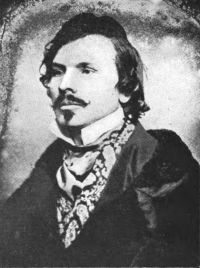
Portrait of Arthur Mangin Arthur Mangin,  The Desert World

“ He is about a foot in height and two feet in length, with hind limbs much longer than the fore, but considerably bent. The claws are thick, strong, and conical; the eyes large, prominent, and of a brownish hue; the ears nearly naked, and whiskers rigid. The paca is heavy and corpulent, but swims and dives with remarkable agility. As he feeds only on fruits and tender plants, his flesh is exceedingly savoury, and a staple dish in many parts of America. ”
Source: Gutenberg

Frank E. Beddard,  Cambridge Natural History Mammalia (1902)

“ The fur is greyish; of the domestic animals the colour is too well known to need description.
Fam. 4. Dasyproctidae.—The genus Coelogenys includes but two species. C. paca, known as the "Spotted Cavy" or "Paca," has a brown body, with white spots like those of a Dasyure; it is one of the largest of Rodents, and has a quite short tail. The hand and foot are both provided with five digits; but the thumb is small, and in the foot the three middle toes considerably exceed the others in length. The hind-foot is practically three-toed.
”
Source: Wikisource

Get perspective with Kwize: daily news enlightened by great literature