Papaya

Definition and stakes

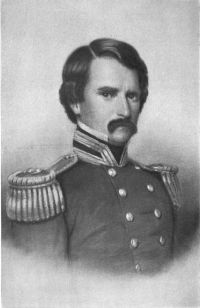
Portrait of Albert Smith Bickmore Albert Smith Bickmore,  Travels in the East Indian archipelago (1868)

“ The papaw (Carica papaya) thrives luxuriantly on most soils. The natives are always fond of it, and I found it a most palatable fruit, but the Europeans in the East generally consider it a too coarse or common fruit to be placed on the table. It was evidently introduced by the Portuguese and Spanish from [86] the West Indies, and the Malay name papaya comes from the Spanish papayo.
At the height of one thousand feet ferns appear in very considerable numbers, and here also the useful bamboo grows in abundance, though it is found all the way down to the level of the sea.
”

Source: Gutenberg

Rollin H. Baker,  The Avifauna of Micronesia, Its Origin…

“ Many of the garden plots lay fallow during the war and were allowed to grow up in thick stands of papaya. As a fruit began to ripen, the starlings would peck out one side of a ripe fruit, feeding on the tissues and the seeds. It was seldom that a fully ripe papaya fruit was found that had not been at least partly eaten by the starlings. Apparently the birds do not feed on the fruit before it is fully ripened. ”
Source: Gutenberg

Portrait of Henry Yule Henry Yule,  Hobson-Jobson — P (1903)

“ Papaya is applied in the Philippines to Europeans who, by long residence, have fallen into native ways and ideas.
c. 1550.—"There is also a sort of fruit resembling figs, called by the natives Papaie ... peculiar to this kingdom" (Peru) .—Girol. Benzoni, 242. 1598.—"There is also a fruite that came out of the Spanish Indies, brought from beyond ye Philipinas or Lusons to Malacca, and frõ thence to India, it is called Papaios, and is very like a Mellon ... and will not grow, but alwaies two together, that is male and female ...
”
Source: Wikisource

Get perspective with Kwize: daily news enlightened by great literature