Planetary orbit

Definition and stakes

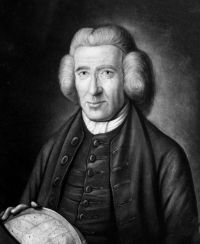
Portrait of James Ferguson James Ferguson,  Astronomy Explained Upon Sir Isaac Newton's Principles

“ Astronomers are not far from the truth, when they reckon the Sun’s center the lower focus of all the Planetary Orbits. Though strictly speaking, if we consider the focus of Mercury’s Orbit to be in the Sun’s center, the focus of Venus’s Orbit will be in the common center of gravity of the Sun and Mercury; the focus of the Earth’s Orbit in the common center of gravity of the Sun, Mercury, and Venus; the focus of the Orbit of Mars in the common center of gravity of the Sun, Mercury, Venus, and the Earth ”
Source: Gutenberg

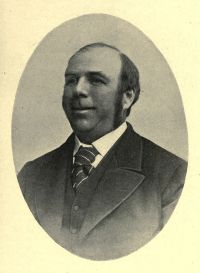
Portrait of Robert S. Ball Robert S. Ball,  The Story of the Heavens

“ We can, however, give numerical definiteness to the principle according to which the velocity of the planet varies. The adjoining figure (Fig. 39) shows a planetary orbit, with, of course, the sun at the focus S. We have taken two portions, A B and C D, round the ellipse, and joined their extremities to the focus. Kepler's second law may be stated in these words:—
"Every planet moves round the sun with such a velocity at every point, that a straight line drawn from it to the sun passes over equal areas in equal times."
”
Source: Gutenberg

William George Hooper,  Aether and Gravitation

“ If it teaches us anything at all, it teaches us that every satellite and planet moves with varying velocity in a varying orbit around some central body. So far as our observation goes, then, in relation to planetary motion, or the motion of satellites, we learn that every body which moves in space fulfils Kepler's First Law, and describes an orbit round a central body, that body occupying one of the foci. ”
Source: Gutenberg

Get perspective with Kwize: daily news enlightened by great literature