Summary

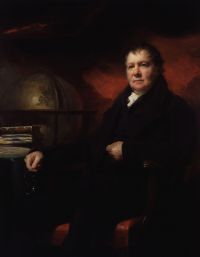
Portrait of John Playfair John Playfair Illustrations of the Huttonian Theory of the Earth (1802)

If it is meant by this merely to say, that it is better to have facts without theory, than theory without facts, and that it is wiser to inquire into the secrets of nature, than to guess at them, the truth of the maxim will hardly be controverted. But if we are to understand by it, as some may perhaps have done, that all theory is mere fiction, and that the only alternative a philosopher has, is to devote himself to the study of facts unconnected by theory, or of theory unsupported by facts, the maxim is as far from the truth, as I am convinced it is from the real sense of Bergman.
Source: Gutenberg

Portrait of John Playfair John Playfair Illustrations of the Huttonian Theory of the Earth (1802)

He sees himself in the midst of a vast ruin, where the precipices which rise on all sides with such boldness and asperity, the sharp peaks of the granite mountains, and the huge fragments that surround their bases, do but mark so many epochs in the progress of decay, and point out the energy of those destructive causes, which even the magnitude and solidity of such great bodies have been unable to resist.
Source: Gutenberg

Portrait of John Playfair John Playfair Illustrations of the Huttonian Theory of the Earth (1802)

The geologist must not content himself with examining the insulated specimens of his cabinet, or with pursuing the nice subtleties of mineralogical arrangement; he must study the relations of fossils, as they actually exist; he must follow nature into her wildest and most inaccessible abodes; and must select, for the places of his observations, those points, from which the variety and gradation of her works can be most extensively and accurately explored. Without such an exact and comprehensive survey, his mind will hardly be prepared to relish the true theory of the earth.
Source: Gutenberg

Get perspective with Kwize: daily news enlightened by great literature