“ Actually, they aren’t boats, although they do carry bananas. They are refrigerator ships. Seamen call them reefers—just as railroad men call a refrigerator car a reefer. Everything about a banana boat is arranged to keep her cargo cool. She is even painted white, because white things reflect some of the sun’s rays into the air{44} instead of absorbing their heat. Inside the ship, blowers send cool air circulating around the bananas all the time. It isn’t enough just to chill them once and leave them there. Bananas actually make heat themselves. ”
Quotes about “reefer”
 Clara Reeve,
The Old English Baron — Part I
(1777)
Clara Reeve,
The Old English Baron — Part I
(1777)
“ He soon after returned, followed by a youth of about eighteen years."Make haste, John," said the father, "and be sure you say neither more nor less than what I have told you.""I will, father," said the lad; and immediately set off, ran like a buck across the fields, and was out of sight in an instant."I hope, friend," said Sir Philip, "you have not sent your son to provide for my entertainment; I am a soldier, used to lodge and fare hard; and, if it were otherwise, your courtesy and kindness would give a relish to the most ordinary food." ”
 William Lyon Mackenzie King,
The Secret of Heroism: A Memoir of Henry Albert Harper
William Lyon Mackenzie King,
The Secret of Heroism: A Memoir of Henry Albert Harper
“ However, Rex, I need not assure you that I am constantly with you in thought. Your life has grown into mine to such an extent that your hopes and aspirations are mine as well. Take care of yourself, my dear Rex, and whatever may be the outcome of your mission, I know that you will have done your duty. When you are in the mountains [155] think of one whose soul is also profoundly stirred by the message which great, glorious, beautiful Nature has for man. ”
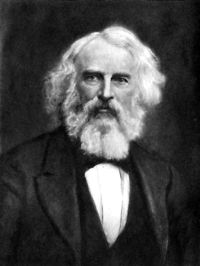 Henry Wadsworth Longfellow,
Voices of the Night — The Reaper and the Flowers
(1839)
Henry Wadsworth Longfellow,
Voices of the Night — The Reaper and the Flowers
(1839)
“ The Reaper said, and smiled; "Dear tokens of the earth are they, Where He was once a child. "They shall all bloom in fields of light, Transplanted by my care, And saints, upon their garments white, These sacred blossoms wear." ”
The English and Scottish popular ballads…
“ They ride on to a town, light at a comely hall, and are taken into a room with a bright fire and candles lighted. The carl, who has already described himself as John the Reeve, husbandman and the king’s bondman, inquires of the earl who the long fellow may be, and who the other in the sark: the first, he is told, is Piers, the queen’s chief falconer, the other a poor chaplain, and the earl himself a sumpterman. ‘Proud lads, and I trow penniless,’ is John’s comment; he himself, though not so fine, has a thousand pound and more. They move on to the hall, and are civilly received by the goodwife. ”
Sophia Reeve, The Mysterious Wanderer; Vol. II
“ The old man snatched up the torch, which lay burning on the ground, and, placing it in the earth, hastily applied himself to extricate me from the fetters with which I had been loaded. Fully sensible of the inevitable death he had preserved me from, I endeavoured to express the gratitude which swelled in my heart, and promised not only to join with Sir Henry in procuring his liberty, but to add such a recompense as should evince my sense of the obligation I owed him. ”
Clara Reeve,
The Old English Baron — Part VI
(1777)
“ He called the servants in. "Let nothing be mentioned out of doors," said he, "of what has lately passed within, especially in the east apartment; the young gentlemen had not so much reason to be frightened as they apprehended; a piece of furniture fell down in the rooms underneath, which made the noise that alarmed them so much; but I can certify that all things in the rooms are in quiet, and there is nothing to fear. All of you attend me in the chapel in an hour; do your duties, put your trust in God, and obey your Lord, and you will find every thing go right as it used to do." ”
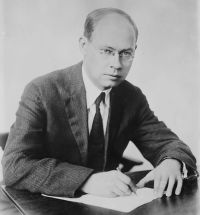 Arthur B. Reeve,
The Best Ghost Stories
Arthur B. Reeve,
The Best Ghost Stories
“ In such tones as the rabbi had never before heard, so strange, so surpassing any human sounds, the young woman began:"Yes, rabbi, I will speak, even though I know that I shall never go from this place alive, which would be the very best thing for me! No, rabbi, I was not forced to be married. My parents have never once said to me 'you must,' but my own will, my own desire, rather, has always been supreme. My husband is the son of a rich man in the community. To enter his family was to be made the first lady in the gasse, to sit buried in gold and silver. ”
Clara Reeve,
The Old English Baron — Part I
(1777)
“ I have taken a long journey to no purpose, and have met with nothing but cross accidents. This life is, indeed, a pilgrimage! Pray direct me the nearest way to the next monastery.""Noble sir," said the peasant, "it is full five miles off, the night is coming on, and the ways are bad; I am but a poor man, and cannot entertain your honour as you are used to; but if you will enter my poor cottage, that, and every thing in it, are at your service.""My honest friend, I thank you heartily," said Sir Philip; "your kindness and hospitality might shame many of higher birth and breeding ”
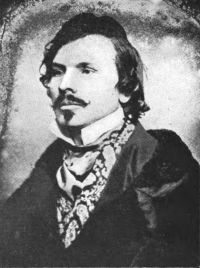 Mayne Reid,
The Finger of Fate: A Romance
Mayne Reid,
The Finger of Fate: A Romance
“ Even the long-robed priest of the village passed to and fro amongst them, distributing crosses and benedictions; for all of which the brigands paid him in coin, that had no doubt been taken from the pockets of some unfortunate traveller—perhaps one of his own sacred cloth!It certainly was a scene of sufficient originality to interest the eyes of a stranger, that stranger an artist; and the young Englishman, as he gazed upon it, for a time forgot that he was a captive. Of this he was reminded as night drew near. Hitherto his captors had not even taken the precaution to tie him. ”
 Angela Brazil,
A Terrible Tomboy
Angela Brazil,
A Terrible Tomboy
“ Folks had said that the Rector, like many a man who marries late in life, had made an idol of his motherless boy, and they had said, again, that the father's heart was broken and the print of death was on his face as he stood by his child's open grave. ”
 John Seely Hart,
The Young Rector
(1852)
John Seely Hart,
The Young Rector
(1852)
“ Yet, if “millions of spiritual creatures walk the earth,” might not this be one, sent on a mission of mercy to his suffering, struggling spirit; to raise him from despondency; to bid him bear on unmurmuringly, and, while wearing the cross, to look ever upward and onward to the promised crown? When the Rector awoke the next morning, the sun was brighter to his eye, the wind fell more softly on his cheek, and stirred the light clustering hair upon his brow. He was no more alone, for that ministering angel had taken up her abode within his soul, and her serene smile was fixed upon him ever. ”
The Book of the Thousand Nights and a Night… (1888)
“ Henry Reeve, a cross and cross-grained old man whose surly temper is equalled only by his ignoble jealousy of another's success. Let them bedevil the thin-skinned with their godless ribaldry; for myself peu m'importe—my shoulders are broad enough to bear all their envy, hatred and malice. ”
Henry Reeve, Memoirs of the Life and Correspondence of Henry Reeve…
“ Val Richer, September 10th.—I am just up, my dear Sir, having been in bed for a fortnight. Grief and indignation are unhealthy at eighty-three. I am better, and only wish I was as sure of the convalescence of France as of my own. ”
John A. Clark, Gleanings by the Way
“ The reapers were plying their glittering steel, and gathering the falling grain into sheaves. The sound of rustic music came upon his ears as he rode along through the fields. It was the song of the reapers. He approached them. They were his own hired servants. Though they were poor, and had to toil for their daily bread, their wealthy employer did not despise them. He was one who feared the Lord, and saw in every human form a brother. Kind were his words as he approached the reapers, and full of pious sentiment—for his salutation was, The Lord be with you. ”
Arthur B. Reeve,
The Dream Doctor
(1914)
“ Spencer reached over and touched her arm to encourage her to go on. She did not seem to resent the touch. "Opposite me, in the middle of the open floor," she resumed, her eyes dilated and her breath coming and going rapidly, "stood the mummy-case of Ka, an Egyptian priestess of Thebes, I think. The case was empty, but on the lid was painted a picture of the priestess! Such wonderful eyes! They seem to pierce right through your very soul. Often in the daytime I have stolen off to look at them. ”
Clara Reeve,
The Old English Baron — Part VII
(1777)
“ He then gave her the letter he found upon his pillow; she read it with great emotion."Saint Winifred assist me!" said she; "what can I think? 'The peasant Edmund is no more, but there lives one,' — that is to my thinking, Edmund lives, but is no peasant.""Go on, my dear," said William; "I like your explanation.""Nay, brother, I only guess; but what think you?""I believe we think alike in more than one respect, that he meant to recommend no other person than himself to your favour; and, if he were indeed of noble birth, I would prefer him to a prince for a husband to my Emma!" ”
Clara Reeve,
The Old English Baron: a Gothic Story
“ I will have no will but yours, no ambition but to be worthy of the name of your son.” “And this day,” said the Baron, “do I enjoy the true happiness of a father! Rise, my son, and take possession of the first place in my affection without reserve.” They embraced with tears on both sides; The company rose, and congratulated both father and son. The Baron presented his son to Lord Clifford, who embraced him, and said: “You shall have my daughter, for I see that you deserve her.” Sir Philip Harclay approached—the Baron gave his son’s hand to the knight. ”
Mayne Reid,
The White Gauntlet
“ The fair equestrian appeared to ponder on some plan—only half-formed and half-resolved, as her muttered reflections indicated.“Dare I do it? What would my proud father say, if he were to know? Even gentle cousin Lora would chide me? A stranger whose name I only know, and that’s all. Perhaps not a gentleman? Oh—yes—yes—yes! He can not be other. He may not be a lord of the land—but he is lord of my poor heart! ”
“ His lordship did not expect otherwise. He was but speaking to give his abused protégé a chance of swallowing the dishonour.“You’re the last man in the world,” he continued, “with whom I should wish to have a misunderstanding. I’d do anything to avoid it; and if there be any service I may render you, name it. Can you think of anything I may do?”“I can, my lord.”“What is it you would wish?”“A title. Your lordship can bestow it?” This time the nobleman started right out of his chair, and stood with eyes staring, and lips aghast. “You are mad, Mr Swinton!” ”
Clara Reeve,
The Old English Baron — Part IX
(1777)
“ You will hear things that will surprise you as much as they do me; you will judge of them with that justice and honour that speaks your character; and you will unite with us in wondering at the ways of Providence, and submitting to its decrees, in punishing the guilty, and doing justice to the innocent and oppressed. My best wishes and prayers attend you and your hopeful family. My lord, I remain your humble servant,"CLIFFORD." Every one present expressed the highest approbation of this letter. ”
Unknown, The Book of the Thousand Nights and One Night (1901)
“ Then said she to the woman, “What is thy name?” “O my lady,” replied she, “my name is Taufic.” “And what is thy daughter’s name?” asked she. “Saad,” [2] answered the slave. “Thou sayst sooth,” rejoined her mistress. “Thou art indeed happy, and happy is he who hath bought thee.” Then said she to her husband, “O my cousin, what wilt thou call her?” “What thou choosest,” answered he. “Then let us call her Num,” [3] quoth she, and he said, “Good.” The little Num was reared with Er Rebya’s son Nimeh in one cradle and each grew up handsomer than the other. ”
“ I should be contented with a coronet.”“Madness, Mr Swinton!”“Well; if you can’t make me a lord like yourself, it’s within bounds for me to expect a baronetcy. I’ll even be content with simple knighthood. Surely your lordship can get me that?”“Impossible!” exclaimed the patron, in an agony of vexation. “Is there nothing else you can think of? A post—an office?”“I’m not fit for either. I don’t want them. Nothing less than the title, my lord.”“It’s only a title you want?” asked the nobleman, after a pause, and as if suddenly impressed with some idea that promised to serve him. ”

“ He came to feel that, while the rector himself was unaffectedly impressed by that profusion of gifts with which it had pleased heaven to distinguish him, he was yet constantly annoyed and embarrassed by the fact that he was thus made so salient a man. Young Reeves found him an appreciative person, moreover, one who betrayed a sensible interest in a fellow's own achievements, finding many reasons to be impressed by a few little things in the way of athletics, travel, and sport that had never seemed at all to impress the many—not even the members of one's own family. ”
Various, International Weekly Miscellany of Literature…
“ I would attend to the fellow no more than to that red-headed rector—every priest is a rector now—who often held my horse at his father's forge, when T happened to throw a shoe hunting,—and would half break his back bowing, if I handed him now and then a sixpence. ”
 Ivana Brlic-Mazuranic,
Croatian Tales of Long Ago
Ivana Brlic-Mazuranic,
Croatian Tales of Long Ago
“ So Relya became a prince; and the princess, who was getting old by now, yet lived to see great happiness in her old age. And when the princess and Relya, with Lavender and Primrose, entered their new and stately castle for the first time, the village children scattered evergreens and sweet basil on their path, men and woman pressed round the princess, seized the hem of her robe and kissed it. ”
Arthur Shearly Cripps, Cinderella in the South: Twenty-Five South African Tales
“ I knew that bishop, and I found him in, and in a listening mood, on the following day. He wanted to hear about Africa. I described missions and missionaries to him. Then I told him at some length about Leonard Reeve.'Yes, you have drawn the man convincingly,' he said. 'You didn't invent those touches. I think he's a man after my own heart. I don't understand you people that bury yourselves in little rose-covered, immoral, earthy country villages. ”
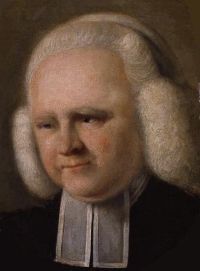 George Whitefield,
The works of the Reverend George Whitefield…
(1771)
George Whitefield,
The works of the Reverend George Whitefield…
(1771)
“ London, December 15, 1757. Reverend and very dear Sir, IF yet in this dying world, be pleased to accept a few grateful lines, from one who highly esteems you for the sake of our common Lord. Thousands can witness how often I have prayed for you in public, and the great day will discover how earnestly your lingering case hath been mentioned in my poor addresses to our God in private. Surely, in a literal sense, reverend Sir, you are called to die daily. But I trust and believe, the more the outward man decayeth, you will be strengthened so much the more in the inward man. ”
Clara Reeve,
The Old English Baron: a Gothic Story
“ He thought that he heard people coming up the staircase that he had a glimpse of; that the door opened, and there entered a warrior, leading a lady by the hand, who was young and beautiful, but pale and wan; The man was dressed in complete armour, and his helmet down. They approached the bed; they undrew the curtains. He thought the man said, “Is this our child?” The woman replied, “It is; and the hour approaches that he shall be known for such.” They then separated, and one stood on each side of the bed; their hands met over his head, and they gave him a solemn benediction. ”
Arthur B. Reeve,
The Best Ghost Stories
“ He will nevermore have the desire to be happy. Veile, God in heaven cannot forgive you for that.""Silence! silence!" groaned the wretched woman."No, Veile," he continued, with a stronger voice, "let me talk now. You are certainly willing to hear me speak? Listen to me. You must do severe penance for this sin, the twofold sin which rests upon your head. God is long-suffering and merciful. He will perhaps look down upon your misery, and will blot out your guilt from the great book of transgressions. But you must become penitent. Hear, now, what it shall be." [Pg 72] The rabbi paused. ”
George Reber, The Christ of Paul; Or, The Enigmas of Christianity
“ For your renowned Presbyter, worthy of God, is fitted as exactly to the Bishop as the strings are to the harp." (Ignatius to the Eph., sec. 4.) "Let no man deceive himself: Except a man be within the altar he is deprived of the bread of life." (Ib., sec. 5.) "I exhort you, that you study to do all things in a divine concord, your Bishop presiding in the place of God," (Ignatius to Magnesians, sec. 6.) "It is therefore necessary that you do nothing without your Bishop, even as ye are wont. In like manner, let all reverence the Deacons as Jesus Christ, and the Bishops as the Father ”
