Rotation of the Earth

Definition and stakes

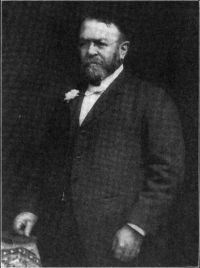
Portrait of Robert S. Ball Robert S. Ball The Earth's Beginning

It therefore follows that the energy withdrawn from the earth-moon system is not to be obtained at the expense of the revolution of the moon.
The energy must therefore be obtained at the expense of the rotation of the earth on its axis. But if this be the case, the speed with which the earth rotates must be diminished; that is to say, the length of the day must be increased. And if the speed of the earth’s rotation be reduced, that means that the amount of moment of momentum contributed by the earth is lessened.
Source: Gutenberg

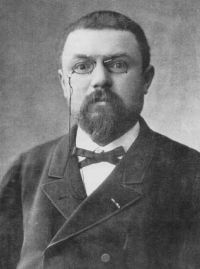
Portrait of Edwin J. Houston Edwin J. Houston The Wonder Book of Volcanoes and Earthquakes

In order that our earth should be able to violently throw off a large portion of its mass, it is only necessary that at the time this separation occurred, its motion of rotation on its axis was sufficiently great to enable it to make one complete revolution in rather less than three hours instead of in the twenty-four hours it now requires. At this velocity of rotation, objects would fly off the earth in the neighborhood of the equator, under the influence of the high centrifugal force. Let us, then, endeavor to see if it was at all probable that the earth ever did turn so rapidly on its axis.
Source: Gutenberg

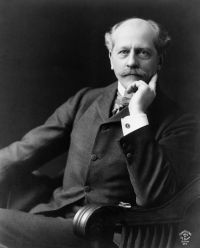
Arthur Berry A Short History of Astronomy

To the objection that if the earth had a rapid motion of rotation about its axis, the earth would be in danger of flying to pieces, and the air, as well as loose objects on the surface, would be left behind, he replies that if such a motion were dangerous to the solid earth, it must be much more so to the celestial sphere, which, on account of its vastly greater size, would have to move enormously faster than the earth to complete its daily rotation
Source: Gutenberg

Get perspective with Kwize: daily news enlightened by great literature