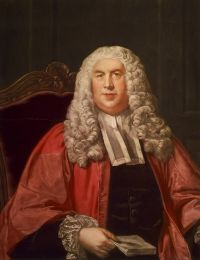
 William Blackstone,
Commentaries on the Laws of England
(1768)
William Blackstone,
Commentaries on the Laws of England
(1768)
“ The royal assent may be given two ways: 1. In person; when the king comes to the house of peers, in his crown and royal robes, and sending for the commons to the bar, the titles of all the bills that have passed both houses are read; and the king’s answer is declared by the clerk of the parliament in Norman-French: a badge, it must be owned, (now the only one remaining) of conquest; and which one could wish to see fall into total oblivion; unless it be reserved as a solemn memento to remind us that our liberties are mortal, having once been destroyed by a foreign force. ”