Royal order

Definition and stakes

Bill of Rights (1689)

“ And I do declare that no foreign prince, person, prelate, state or potentate hath or ought to have any jurisdiction, power, superiority, pre-eminence or authority, ecclesiastical or spiritual, within this realm. So help me God." Upon which their said Majesties did accept the crown and royal dignity of the kingdoms of England, France and Ireland, and the dominions thereunto belonging, according to the resolution and desire of the said Lords and Commons contained in the said declaration. ”
Source: Wikisource

Giles Gossip,  Coronation Anecdotes

“ Her Majesty has been taught to believe that the most valuable laws of this country depend upon, and derive their authority from, custom; that your Majesty's royal prerogatives stand upon the same basis: the authority of ancient usage cannot therefore be rejected without shaking that foundation upon which the most important rights and institutions of the country depend. Your Majesty's council, however, without controverting any of the facts or reasons upon which the claim made on the part of her Majesty has been supported, have expressed a judgment in opposition to the existence of such right. ”
Source: Gutenberg

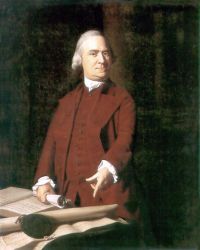
Portrait of Samuel Adams Samuel Adams,  The Writings of Samuel Adams - Volume 2

“ Your Excellency says, that "persons thus holding under the Crown of England, remain, or become subjects of England," by which, we suppose your Excellency to mean, subject to the supreme authority of Parliament, "to all intents and purposes, as fully, as if any of the royal manors, &c. within the realm, had been granted to them upon the like tenure." We apprehend, with submission, your Excellency is mistaken in supposing that our allegiance is due to the Crown of England. Every man swears allegiance for himself, to his own King, in his natural person. ”
Source: Gutenberg

Get perspective with Kwize: daily news enlightened by great literature