Sibilant

Definition and stakes

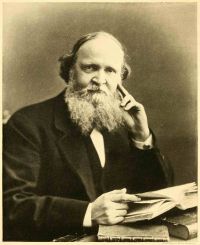
Portrait of William Dwight Whitney William Dwight Whitney,  Sanskrit Grammar (This republication 1950, original 1889)

“ The nasals are more freely combinable: a nasal may either precede or follow a mute of either kind, or the sonant spirant h; it may also follow a surd aspirant (sibilant) ; no nasal, however, ever precedes a sibilant in the interior of a word (it is changed instead to anusvāra) ; and in external combination their concurrence is usually avoided by insertion of a surd mute.
d. A semivowel has still less sonantizing influence; and a vowel least of all: both are freely preceded and followed by sounds of every other class, in the interior of a word.
”
Source: Wikisource

Alfred Leach,  The letter H, past, present, and future (1880)

“ They need the help of a vowel, or of a voiced consonant, in order to express themselves fully. This circumstance, together with the fact of vocalised breath entering into the formation of many consonants, will probably account for the common notion that no consonant can be uttered without a vowel accompaniment. The independence of the sibilant s, offers alone a sufficient refutation of the assumption. It is in Polynesia that savages are found who cannot put two consonants together without a vowel between them. ”
Source: Gutenberg

Portrait of Ellen Wood Ellen Wood,  Once a Week (1862)

“ Why did you marry her?”
“Why does anybody else marry?” returned Lionel.
“But why did you marry her? A sickly fractious thing! I saw enough of her in the old days. There! be quiet! I have done. If it hadn’t been for her, I’d have asked you to come here to your old home; you and I should jog along together first-rate. But Sibylla bars it. She may be a model of a wife; I don’t insinuate to the contrary, take you note, Mr. Verner; but she’s not exactly a model of temper, and Verner’s Pride wouldn’t be big enough to hold her and me.
”
Source: Wikisource

Get perspective with Kwize: daily news enlightened by great literature