“ I was forthwith conducted to an inner sanctum, where I was received by the head of the firm himself. Then I experienced my first shock—he squinted! Now, I never could endure a man with a squint, and I distrusted this man instantly. You know, there are squints and squints! There is the soft uncertain squint feminine, which is really charming. And there is a particular obliquity of vision which, in a man, rather gives a larky expression, and so makes you feel that there is nothing prim and formal about him, and seems to put you on good terms at once. ”
Squint
Definition and stakes
Squinting, the act of viewing with partially closed eyes, is both a physiological response and a symbolic gesture. Medically, it temporarily enhances vision for those with refractive errors, as noted by ophthalmologist Robert MacLaren, who dismisses claims it damages sight.
In literature and film, it evokes uncertainty—Clint Eastwood’s squint conveyed stoicism or desire, while authors like C. Schweigger and William Bates examined its clinical aspects, connecting it to strabismus and vision correction. From medical texts to cinematic portrayals, squinting reveals a complex interplay of biology, perception, and narrative subtlety.
Quotes about “squint”
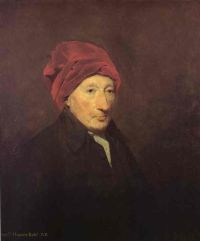
Thomas Reid,
An Inquiry into the Human Mind…
“ If it is true, as has been commonly affirmed, that one who squints sees an object with both eyes at the same time, and yet sees it single, the squint will most probably be such as we have described in this article. And we may further conclude, that if a person affected with such a squint as we have supposed, could be brought to the habit of looking straight, his sight would thereby be greatly hurt. ”
C. Schweigger, Clinical Investigations on Squint
“ The transition from squint to the normal condition is formed by those cases, in which the proper position of the eyes is maintained by a desire for binocular single vision, while the elastic tensions of the muscles are such, that squinting sets in as soon as binocular single vision is rendered impossible (latent squint) .The squint is generally one sided (monolateral) , for the eyes in this case are usually of unequal value, and the best is always preferred for use. The eye which has the acuter vision is always made use of when something has to be carefully observed. ”
William Horatio Bates, Perfect Sight Without Glasses… (1920)
“ One of the best ways of gaining mental control in cases of squint is to learn how to increase the squint, or produce other kinds of squint, voluntarily. In the case illustrated the patient had divergent vertical squint in both eyes. When the left eye was straight the right eye turned out and up, and when the right eye was straight the left eye turned down and out. Both eyes were amblyopic and there was double vision, with the images sometimes on the same side and sometimes on opposite sides. ”
C. Schweigger, Clinical Investigations on Squint
“ If we contemplate first the largest group, that of the ordinary permanent convergent squint, the choice of the method is principally determined by the average degree of deviation, the condition of error, and the visual power, lastly by the mobility, particularly the outward movement of the eyes. ”
C. Schweigger, Clinical Investigations on Squint
“ A very simple examination suffices to determine these doubts:—Cause the patient to gaze at a certain point on the horizon and cover first one eye and then the other. If the covered eye remains stationary, no squint exists, but if it is observed that when giving one eye its freedom and covering the other, the first must make a movement in order to fix the object to [Pg 2] be looked at, it is only a question of discovering whether the squint does not simply ensue from the covering up of the eye. ”
R. Austin Freeman, The Mystery of 31 New Inn (1913)
“ We can all squint towards our noses, but no normal person can turn his eyes away from one another. My impression is that the presence or absence, as the case might be, of a divergent squint would be accepted as absolute disproof of identity. ”
C. Schweigger, Clinical Investigations on Squint
“ If we want to draw a comparison between convergent and divergent squint, we must consider only absolute divergent strabismus, for convergent strabismus does not offer a parallel to relative divergent squint. In absolute divergent squint the direction of the visual axes is such that they would meet behind the patient's head; in the relative divergent squint the axes of vision are parallel or slightly convergent, but they do not cross at the point fixed by the one eye, but at a greater distance off. ”
C. Schweigger, Clinical Investigations on Squint
“ Conscious suppression of squint happens now and then, although very rarely.Case 41.—Miss A. L—, æt. 27, is stated to have commenced to squint in her first year, until at the age of eighteen she took pains to cure the habit, and with perfect success as far as regards the position of the eyes; the only disagreeable symptom was that she could no longer read with the naked eye. Spectacles were therefore prescribed for her, convex 5 D., but even they did not quite remove the trouble in reading; it was now a disagreeable, painful sensation to have recourse to squint in order to see more clearly. ”
William Horatio Bates, Better Eyesight Magazine — November 1920
“ Anyone who can squint voluntarily will never squint involuntarily. 1 Textbook of Ophthalmology, authorized translation from the twelfth German edition by Duane, p. 795. HOW I CURED MY CHILD OF SQUINT By Mrs. B. F. Glienke The following remarkable story is published in the hope that it may help other parents in the treatment of squinting children. The patient was first seen on April 24, 1920, her age being four years. When her sight was tested with pothooks her eyes were straight and her vision normal. ”
C. Schweigger, Clinical Investigations on Squint
“ Typical accommodative squint occurs quite independently of the will on each effort of the accommodation, and is not combined with diplopia. It is otherwise in those cases of hypermetropia of high degree in which patients voluntarily call forth convergent squint, and retain it for a short time for the purpose of distinct vision. They are then perfectly conscious of the squint, and perceive also as a rule the double images which occur at the same time; I have seen such cases in adults who could only produce the accommodation necessary for distinct vision by the aid of a too strong convergence ”
C. Schweigger, Clinical Investigations on Squint
“ Another proof that the squinting eye is really used for vision appears to me to lie in the fact that persons who squint, provided of course that the vision of the eye concerned is not very defective, do not show that uncertainty in the estimation of distance, which is apt to prove so troublesome to those who have only monocular vision. ”
C. Schweigger, Clinical Investigations on Squint
“ Of course a theory which cannot exist without the assertion that occasional alternation suffices to hinder the development [Pg 92] of defective vision caused by disuse, cannot possibly hold periodic squint to be the cause of it. Certainly permanent squint may also disappear, but this much I have been able to determine, that this seldom happens before the twelfth year of life, and one may surely reckon that children in whom permanent squint is developed at the usual early period of life, still squint at the age of ten years. ”
Daniel Woolf, Refraction and muscular imbalance… (1921)
“ Such a deviation, whether squint or heterophoria, is called “continuous.”3. Alternating and Uniocular Squint: An alternating squint is one in which when both eyes are uncovered, so that both have a chance to “fix”; sometimes the right eye will deviate, sometimes the left. In uniocular (less properly monocular) squint, under the same conditions, one eye, either the right or the left, always “fixes” and the other always deviates. A uniocular squint is denoted as right or left, according to whether it is the right or left eye which deviates. ”
William Horatio Bates, Perfect Sight Without Glasses… (1920)
“ To produce convergent squint is comparatively easy. Children usually do it by straining to see the end of the nose. The production of divergent squint is more difficulty, but with practice persons with normal eyes become able to turn out either eye, or both, at will. ”
C. Schweigger, Clinical Investigations on Squint
“ Whether the state of refraction or the condition of the muscular equilibrium is held to be the chief cause of squint, defective vision of one eye will always have to be acknowledged as one of the most important favouring circumstances; in order to cure squint it is important to have regard to the visual acuity of both eyes, and not only to the defective condition. ”
William Horatio Bates, Perfect Sight Without Glasses… (1920)
“ All the theories heretofore suggested fail to explain the foregoing facts; but it is a fact that in all cases of squint a strain can be demonstrated, and that the relief of the strain is in all cases followed by the cure of the squint, as well as of the amblyopia and the error of refraction. It is also a fact that all persons with normal eyes can produce squint by a strain to see. It is not a difficult thing to do, and many children derive much amusement from the practice, while it gives their elders unnecessary concern, for fear the temporary squint may become permanent. ”
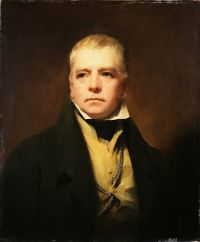
Sir Walter Scott,
Tales of My Landlord
(1816)
“ All waited for the stranger's answer.—His features, austere even to ferocity, with a cast of eye which, without being actually oblique, approached nearly to a squint, and which gave a very sinister expression to his countenance, joined to a frame, square, strong, and muscular, though something under the middle size, seemed to announce a man unlikely to understand rude jesting, or to receive insults with impunity. ”
C. Schweigger, Clinical Investigations on Squint
“ Case 37.—Miss H—, governess, æt. about 30, came under treatment for asthenopic disorders; on both sides hypermetropia 2·5 D., visual acuteness 5/18. She owns to have squinted as a child,—it had often been remarked when she was at school. The squint gradually disappeared, but still occurred sometimes on keen fixation. The usual position of the eyes appears perfectly normal, and gives no suspicion of squint; convergence occurs on exclusion, sometimes with downward deviation of the right eye. With the aid of a red glass changing fixation is easily produced even without prisms, but never diplopia. ”
William Horatio Bates, Perfect Sight Without Glasses… (1920)
“ With one good eye and one blind eye, both eyes may be straight. The blinder the eye, as a rule, the more marked the squint; but exceptions are frequent, and in rare cases an eye with nearly normal vision may turn in persistently. A squint may disappear and return again, while convergent squint will change into divergent squint and back again. With the same error of refraction, one person will have squint and the other not. A third will squint with a different eye. A fourth will squint first with one eye and then with the other. ”
C. Schweigger, Clinical Investigations on Squint
“ Whether squint originates in the permanent or periodic form depends chiefly on whether the movement of convergence is retained or lost. There are cases of considerable divergent squint, in which the near point of the convergence is scarcely removed, while on the other hand, the physiological innervation for convergence may be lost, without absolute divergence ever being brought about. In a number of emmetropic or slightly myopic cases with absolute preponderance of the externi, the physiological connection between accommodation and convergence is maintained in a relaxed way ”
William Horatio Bates, Perfect Sight Without Glasses… (1920)
“ They also become able to turn either eye upward and inward, or upward and outward, at any desired angle. Any kind of squint can, in fact, be produced at will by the appropriate kind of strain. Some persons retain the power to produce voluntary squint more or less permanently. Others quickly lose it if they do not keep in practice. There is usually a lowering of the vision when voluntary squint is produced, and accepted methods of measuring the strength of the muscles seem to show deficiencies corresponding to the nature of the squint. ”
Thomas Reid,
An Inquiry into the Human Mind…
“ Dr. jurin, affirms, that squinting persons never see the object with both eyes; and that if they did, they would see it double. If the common opinion be true, the cure of a squint would be as pernicious to the sight of the patient, as the causing of a permanent squint would be to one who naturally had no squint: and therefore no physician ought to attempt such a cure; no patient ought to submit to it. But if Dr. jurin's opinion be true, most young people that squint may cure themselves, by taking some pains; and may not only remove the deformity, but at the same time improve their sight. ”
C. Schweigger, Clinical Investigations on Squint
“ The theory that the demands on the working eye must be very much increased is quite unfounded. If any harmful influence were to be feared for the fixing eye, one would observe the same in convergent squint, when, as a rule, one eye only is used for fixation even after operation. ”
C. Schweigger, Clinical Investigations on Squint
“ The fixing eye was emmetropic in one case, in the other the condition of error could not be determined owing to nebulæ of the cornea.We more frequently see periodic squint disappear. [Pg 107] Case 33.—M—, a boy æt. 10, was first examined by me in April, 1873; the right eye has hypermetropia 4·5 D., and almost full visual acuteness, the left has convergent squint, and recognises No. 6-1/2 (Snellen) with convex 10 D.; V. = 1/18 at 1 metre. (The boy's father also squints with the left eye, which is amblyopic to a high degree (V. = 1/36) , right eye has emmetropia, and full visual acuteness) . ”
C. Schweigger, Clinical Investigations on Squint
“ People who squint seldom complain of diplopia, but double images can be rendered apparent in a comparatively large proportion of cases, usually with the greatest ease, by covering the best eye with a red glass and squinting with a vertically deviating prism. Many squinters now admit the presence of double images, but their position by no means corresponds to the identity theory, their lateral displacement is far too slight, or patients find themselves unable to localise the position of the image. ”
C. Schweigger, Clinical Investigations on Squint
“ The fact that those who squint do not as a rule have diplopia, while squints depending on paralysis of the ocular muscles are combined with diplopia, was difficult to explain as long as the view was adhered to of identical retinal areas founded on anatomical construction. ”
William Horatio Bates, Perfect Sight Without Glasses… (1920)
“ The literature of the subject is full of the impossibility of curing amblyopia, and in popular writings persons having the care of children are urged to have cases of squint treated early, so that the vision of the squinting eye may not be lost. ”
C. Schweigger, Clinical Investigations on Squint
“ Excessive convergence and strain on the accommodation is often enough present in weak sight, for example, in astigmatism without the existence of squint; were short sight in general an inducement to convergent squint these cases would appear much oftener than they actually do, owing to the frequency of myopia. In my opinion the cause of their rarity lies in the fact that myopia is frequently combined with insufficiency of the interni and preponderance of the externi, but only rarely with the reverse condition of the muscles. ”
C. Schweigger, Clinical Investigations on Squint
“ Javal, who tries to make this case coincide with his theory, accepting an intermitting paresis of accommodation as the cause of squint, is manifestly in error, as Mannhardt particularly mentions that acuity of vision, refraction and accommodation remained perfectly equal on both days. ”
C. Schweigger, Clinical Investigations on Squint
“ I have personally investigated every case, and the observations on each were carefully examined before being included in the statistics; all cases with myopia of six or more dioptres, all cases of double nystagmus, and, finally, all those cases where the previous existence of squint might be suspected, were excluded, as above stated. ”
C. Schweigger, Clinical Investigations on Squint
“ The theory of Donders that squint is less frequent in hypermetropia of high degree because too strong convergence would not suffice to furnish clear retinal images, is scarcely tenable in the face of such cases. If indistinct retinal images are added to a visual acuteness of only 1/3 to 1/4 still, even with faulty accommodation, it is difficult to believe how a child could learn to read if it did not hold the book close to its eyes, which was not the case here, and indeed seldom happens. ”
C. Schweigger, Clinical Investigations on Squint
“ If we find that binocular fusion does not exist with available power of vision on both sides, but that the same conditions of sight appear in the eyes as we have learnt to attribute to squint, there is no reason for doubting the statements about a previously existing squint. ”
C. Schweigger, Clinical Investigations on Squint
“ If the relative strength of the muscles is normal, so also are the position and movements of the eyes, if elastic preponderance on the part of the muscles is present, which in monocular defective vision of considerable degree is no longer governed by binocular fusion, and this is frequently the case, squint is developed. ”