Nystagmus

Definition and stakes

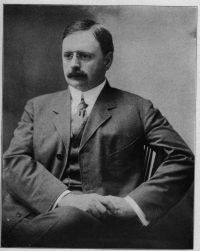
Portrait of Elmer Ernest Southard Elmer Ernest Southard,  Shell-shock and other neuropsychiatric problems

“ These movements were those of nystagmus, almost transverse and very rapid, and suggestive rather of a vibratory trembling than of a true nystagmus of the eye or of labyrinthine disease. When the patient fixed an object, the nystagmus would stop for a few seconds and then immediately reappear. There had never been any vertigo, nausea, vomiting, deafness, ocular disorder, or disorder of equilibration. During the tests for nystagmus, the morbid nystagmus would stop and be replaced by the normal nystagmus which was obviously slower and more regular. ”
Source: Gutenberg

A system of practical medicine… (1886)

“ Whether diplopia occur as an early symptom or not, nystagmic oscillation of the eyeballs is commonly found in the developed affection. This nystagmus is usually universal, noted in associated movements in every direction, and aggravated by excitement, by constrained positions, and by any act of innervation of the eye-muscles. It may be looked upon as an intention tremor of the latter, and attributed to sclerotic foci in the cerebral axis, particularly in the tegmental part of the pons varolii. ”
Source: Gutenberg

Harvard Psychological Studies, Volume 2

“ The conclusion above reported that the visual inhibition during the more rapid phase of the nystagmus in no wise depends on an inadequate stimulation of the retina, due to the greater speed of the rapid movements, and that the inhibitory process is purely central, is further supported by the following phenomenon. If before the rotation has commenced, the eyes are so strongly stimulated that a lasting after-image is obtained, this after-image will, during the rotation, always be seen to swim in the direction opposite to the rotation, that is, with the slow eye-movements ”
Source: Gutenberg

Get perspective with Kwize: daily news enlightened by great literature