Sustainable development, defined as fulfilling current needs without undermining the capacity of future generations to do the same, emerged as a key concept in the late 20th century, fueled by increasing recognition of ecological constraints and social inequalities. The Brundtland Report (1987) presented it as a balance among economic expansion, environmental conservation, and social fairness, highlighting that progress must be equitable and environmentally viable.
Scholars such as the United Nations World Commission on Environment and Development emphasized the interconnectedness of these foundational elements, noting that economic expansion alone cannot resolve issues of poverty, resource allocation, and environmental decline. At the same time, Maithripala Sirisena advocated for universally accessible frameworks, while the Rio Declaration (1992) reinforced the necessity of curbing unsustainable consumption practices. These viewpoints together illustrate sustainable development as a complex, evolving process that demands comprehensive transformation and global collaboration to align human advancement with the limits of the planet.
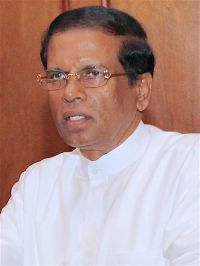 Maithripala Sirisena,
Address to the United Nations General Assembly…
(2015)
Maithripala Sirisena,
Address to the United Nations General Assembly…
(2015)