Swordsmith

Definition and stakes

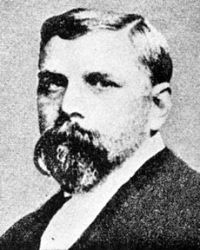
Baron Rowland George Allanson-Winn Headley,  Broad-Sword and Single-Stick

“ The above-quoted description, though short and superficial, is sufficient to indicate some of the chief difficulties of the swordsmith’s art, and it sets one thinking, too, as to the various uses to which cutting instruments are put, and gradations of hardness, from the high temper of razors and certain chisels to the low temper of hunters’ and sailors’ knives, which should always be of rather soft steel, for they are sharpened more easily, and the saw-like edge is better suited for cutting flesh, ropes, etc., than a very fine edge would be. ”

Source: Gutenberg

Frederick Pollock and Hilaro W. Barlow,  1911 Encyclopædia Britannica (1911)

“ Mechanical invention has not been able Manufacture of Swords by Hand-work. to supersede or equal hand-work in the production of good sword-blades. The swordsmith’s craft is still, no less than it was in the middle ages, essentially a handicraft, and it requires a high order of skill. His rough material is a bar of cast and hammered steel tapering from the centre to the ends; when this is cut in two each half is made into a sword. The “tang” which fits into the handle is not part of the blade, but a piece of wrought iron welded on to its base. ”
Source: Wikisource

Get perspective with Kwize: daily news enlightened by great literature