Telegraph operator

Definition and stakes

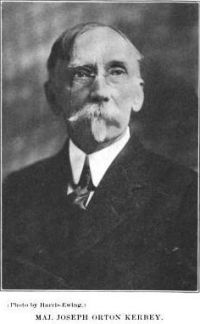
Portrait of Joseph Orton Kerbey Joseph Orton Kerbey,  The Boy Spy

“ In modern mind-reading a telegraph operator has a very great advantage over any of the professional mind-readers, from the fact that, by a simple contact of the hand to any part of the body, the telegraph operator can telegraph by silent taps or touches or by simple pressure of the hands the characters of the telegraph alphabet, and thus spell out rapidly any word. ”
Source: Gutenberg

Alfred Powell Morgan,  Wireless Telegraphy and Telephony Simply Explained

“ Wireless telephony, like wireless telegraphy, but to an even greater extent, is peculiarly suited for the conveyance of marine intelligence. Wireless telephony occupies a unique position in this regard-no operator is required. The additional expense of an operator is an objection to the wireless telegraph in many cases, and forbids its installation. Anybody can operate the wireless telephone. It is also much quicker-words can be spoken more rapidly than they can be put into Morse signals and translated. ”
Source: Gutenberg

Various,  Popular Science Monthly (1886)

“ The improvement of the telegraph is taking other directions. On the common lines the messages are sent by the operator at the rate of about thirty or forty words a minute, lint inventions are in progress, and are now being introduced, which will enable a thousand words a minute to be sent. Think of sending messages from Boston to New York over one wire, and recording them there, at the rate of a thousand words a minute! Few people speak at the rate of two hundred words a minute. ”
Source: Wikisource

Get perspective with Kwize: daily news enlightened by great literature