Tidal wave

Definition and stakes

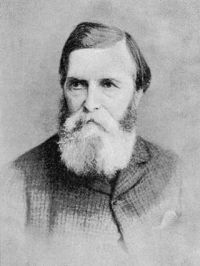
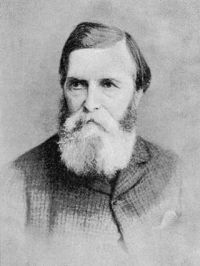
Portrait of Richard A. Proctor Richard A. Proctor,  Pleasant Ways in Science

“ To raise a tidal wave the sun and moon require not merely an ocean of wide extent to act upon, but an ocean so placed that there is a great diversity in their pull on various parts of it; for it is the difference between the pull exerted on various parts, and not the pull itself, which creates the tidal wave. Now the Polar sea has not the required extent, and is not in the proper position, for this diversity of pull to exist in sufficient degree to produce a tidal wave which could be recognized. ”

Source: Gutenberg

by the United States government,  Chapters (2002)

“ A tidal wave that propagates up a relatively shallow and sloping estuary or river in a solitary wave. The leading edge presents an abrupt rise in level, frequently with continuous breaking and often immediately followed by several large undulations. An uncommon phenomenon, the tidal bore is usually associated with very large ranges in tide as well as wedge-shaped and rapidly shoaling entrances. ”
Source: Wikisource

Henry Charles Adams,  The Sewerage of Sea Coast Towns

“ Along the south coast from Land's End to Beachy Head the average velocity is 40 miles per hour, the rate reducing as the wave approaches Dover, in the vicinity of which the tidal waves from the two different directions meet, one arriving approximately twelve hours later than the other, thus forming tides which are a result of the amalgamation of the two waves. On the ebb tide the direction of the waves is reversed. ”
Source: Gutenberg

Get perspective with Kwize: daily news enlightened by great literature