Wainscot

Definition and stakes

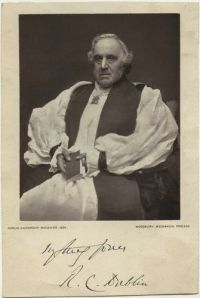
Portrait of Richard Chenevix Trench Richard Chenevix Trench,  A select glossary of English words used formerly in senses different from their present (1890)

“ At present, however, the word “wainscot” is always used to designate the real wainscot oak.’ It will be seen from this very interesting explanation that within the narrow limits of a particular trade, the old meaning of ‘wainscot,’ which has everywhere else disappeared, still survives. It would be curious to trace how much in this way of earlier English within limited technical circles lives [Pg 298] on, having everywhere else died out. For a further account of ‘wainscot,’ see Skeat’s Dictionary, p. ”
Source: Gutenberg

A Book of Distinctive Interiors

“ It is suggested that the room be wainscoted in oak to a height of seven feet, with rectangular panels formed by very flat rails and stiles, without any panel moldings. A wide plate-rail forms the cap of the wainscot, affording a place to put bits of china and old pieces of pewter or copper. Above the wainscot the plaster is sand-finished, as is also the ceiling, and at the intersection of the ceiling and side walls a cornice is carried around the room. On the north side is a large fireplace, which is a necessity on a rainy day to make breakfast cheerful and the room comfortable. ”
Source: Gutenberg

William Harrison,  Elizabethan England

“ And of all in Essex, that growing in Bardfield Park is the finest for joiners’ craft; for oftentimes have I seen of their works made of that oak as fine and fair as most of the wainscot that is brought hither out of Denmark: for our wainscot is not made in England. Yet divers have essayed to deal without oaks to that end, but not with so good success as they have hoped, because the ab or juice will not so soon be removed and clean drawn out, which some attribute to want of time in the salt water. ”
Source: Gutenberg

Get perspective with Kwize: daily news enlightened by great literature