“ After scudding about for some little time in a devious side-to-side pathway, less up and down, as it seems to me, than the other, it suddenly tilts itself sideways, or almost sideways—one wing pointing skywards, the other earthwards—and makes a rapid swoop down, with the wings not beating. I watch it doing this time after time, both with the naked eye and through the glasses, and each time that the swoop is made no bleating or other sound accompanies it: the flight is noiseless, like that of an ordinary bird. ”
Wing covert
Definition and stakes
The theme of “wing covert” has been addressed by authors such as James Bell Pettigrew, Alfred Marshall Mayer, Edmund Selous, James Duncan and S. P. Langley. It is often associated with terms like flight, bird, air, downstroke and body.
Quotes about “wing covert”
 James Bell Pettigrew,
Animal Locomotion; or, walking…
“ In birds which glide or skim, it has appeared to me that the wing is recovered much more quickly, and the down stroke delivered more slowly, than in ordinary flight—in fact, that the rapidity with which the wing acts in an upward and downward direction is, in some instances, reversed; and this is what we should naturally expect when we recollect that in gliding, the wings require to be, for the most part, in the expanded condition. ”
Elias Lewis Jr., Popular Science Monthly (1874)
“ Curves in the Wing of a Partridge in Flight. The wings, when flexed and extended in flight, assume curved surfaces, which change at each instant and carve the air, as does the tail of the fish the water, into complex wave-lines; and such is the structure of the wing that these results are inevitable when it is put in motion. "The muscles, bones, ligaments, and feathers, are so adjusted with reference to each other that, if the wing is moved at all, it must move in the proper direction." The bird no more thinks of its motions in flying than we do of ours in walking ”
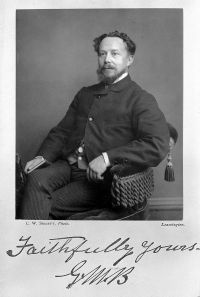

Related terms
Authors who wrote about “wing covert”
James Bell Pettigrew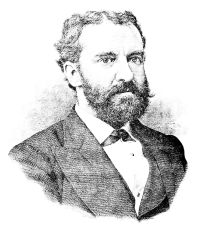 Alfred Marshall MayerEdmund Selous
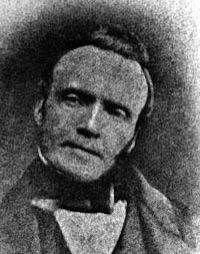 James DuncanS. P. Langley
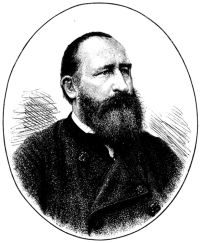 Alfred Edmund Brehm
 Julia McNair WrightLeander S. KeyserW. Lockwood MarshWilliam Keith BrooksElias Lewis Jr.
 Orville WrightGeorge Teasdale Teasdale-BuckellAlfred NewtonVariousJames Slough Zerbe
 Richard Jefferies
 Adeline Knapp
 Jean-Henri FabreAbbott H. Thayer
