AI-generated from sources
Arches without emperors, the republic and its old fear of glory in stone
In Brief
- A triumphal arch shelters no one and serves no practical purpose: its only function is to declare whom the state glorifies, which makes the choice of its honoree a political act.
- Early critics of the American Constitution saw glory as the currency of empire, warning that a vast central government would heap honours on its rulers at the price of the citizens' servitude.
- The monument survived by being redirected to the dead and to ideas: Chateaubriand, the French memoirist and former ambassador, imagined Napoleon's coffin crowning the Arc de Triomphe, while the Statue of Liberty honours no man at all.
- The transfer never fully settles the matter: a dead hero's glory can resist free examination, and democracies tend to refill the pedestals they have emptied.
Main authors
According to an American magazine of 1852, Napoleon learned after a victory that a brilliant solemnity was being prepared in his honour, and he turned the arch down. He wanted no triumphal arch, he said, "but the public satisfaction" [1]. The magazine found the nation's enthusiasm and gratitude unsurprising, since in four months he had lifted France from ruin to the summit of prosperity and renown [1]. The gesture is subtler than it looks. By declining the stone, the ruler made the people's contentment his monument, and the refusal itself became part of his glory. The arch, in any case, outlived the refusal: in his memoirs, Chateaubriand imagined the Arc de Triomphe crowned with Napoleon's sarcophagus [2]. The living man had once declined an arch; Chateaubriand wished one for the dead.
That passage from a living ruler to a dead one holds the whole problem. A triumphal arch shelters no one and leads nowhere; its only function is to declare to whom the state's glory belongs. Republics, which claim to belong to everyone, have long distrusted glory granted to a living man, because they read in it the first stone of a throne. They did not abolish the form. They redirected it—towards the dead, towards the nation, towards an idea. Yet the transfer never quite settles the matter, for the glory of the dead can govern too, and the pedestals a democracy empties tend to fill up again.
Freeman in Italy and the building that serves no purpose
The triumphal arch is architecture with its function removed, and that is what makes it a statement. Edward A. Freeman, travelling in Italy, described a family of structures that sit exactly between the gateway and the statue [3]. Unlike a wall, a house, a temple or a hall of council, they serve no purpose in the ordinary economy of things. They exist only to commemorate something or somebody [3]. Yet they are not mere monuments either, since they have the bulk and the air of a working building. Freeman found them, for that reason, "a little deceptive" [3]. The deception is the point: the arch borrows the dignity of a public building to serve a single act of commemoration.
What remains, once use is stripped away, is pure meaning—and meaning set in stone is hard to revoke. An essay in The Atlantic Monthly in 1858 placed domestic architecture only half-way among the fine arts, because its first aim is shelter [4]. The triumphal arch, like the statue and the temple, belonged to the other side, to a monumental beauty freed from that duty [4]. Half a century later, Gilbert Keith Chesterton drew the political consequence. Architecture, he argued, is a good test of a society's strength because it comes closer than any other art to being irrevocable: a picture can be turned to the wall, a poem torn up, but a town hall is rarely torn down [5]. A building, he concluded, is "akin to dogma" [5]. An arch is a dogma about glory, and it stays in the street long after the power that voted it.
Whose glory, then? Long before any republican doctrine, the monumental impulse was tied to the ambition of a few. Burton Willis Potter listed towers, pyramids, obelisks and triumphal arches among the great structures that men raised out of pride and that the whole world admired [6]. Every principle of their masonry, he added, merely imitates the humblest spear of grass [6]. A speech at the founding of a lighthouse, reported by W. H. Davenport Adams, made the contrast sharper. The pyramids, it said, were built by the pride of kings to preserve the memory of men whose ambition enslaved the world; the lighthouse was a work of use rather than luxury, meant to increase the nation's wealth [7]. The speaker was praising a kingdom, not a republic. The suspicion of the monument is not born of republicanism. It is the suspicion of any useless stone raised to one man's memory, and republics would inherit it rather than invent it.
From the Capitol to the Tarpeian rock, a republic wary of its great men
Rome bequeathed two models of glory, and neither was harmless. The first was collective. In a judgment that William Hone quotes with approval, the Roman republic in its most virtuous times made the country itself an idol, to which its greatest patriots were ready to sacrifice whole multitudes, while other nations counted only as instruments of its ambition [8]. Glory given to the people rather than to a man could devour just as well. The second model came with the empire. The emperor Julian observed that once the government had become a monarchy, an ancient honour survived stripped of its power [9]. It became a prize handed to private citizens as a reward of virtue, loyalty, a favour done to the ruler or some brilliant exploit, and for emperors a final ornament on top of everything they already held [9]. The form outlived the republic and changed owner.
The American critics of the Constitution reasoned in the same terms. One of the Essays on the Constitution of the United States accused its promoters of seeking to abolish the state governments and to erect on their ruins one great and extensive empire [10]. That empire, the author warned, would raise its rulers far above the common herd and "encircle them with honours and glory," at the price of the abject servitude of the citizens whose labour paid for it [10]. The verb is architectural: an empire is something erected on ruins. In the state conventions, even a speaker who invoked national glory and honour anticipated an objection: "it may be said" that the ancients who won glory had lost their liberty [11]. The pairing is telling. In this vocabulary, glory is what liberty may risk.
Political theory had already supplied a reason. In 1764, Cesare Beccaria argued that honour is one of the fundamental principles of limited monarchies, and that it vanishes, or blurs into other things, both under absolute despotism and under extreme political liberty [12]. In a fully free state, reputation becomes useless because the laws hold sovereign sway [12]. A commentator on France writing long after, once the Napoleonic age was over, gave the fear its practical form. The moment France produced a great soldier or sailor, he predicted, that man would capture the army and turn the government into a monarchy or a despotism [13]. The glorious man is not an ornament of the republic but its likely successor.
The French Revolution showed how short a living man's triumph could be. In Anatole France's novel The Gods Are Athirst, a character complains that ordinary folk are losing the thread [14]. They have seen too many great men and patriots "led in triumph to the Capitol" only to be hurled afterwards from the Tarpeian rock—Necker, Mirabeau, La Fayette, Bailly, Pétion, Manuel [14]. The Roman pairing of honour and execution returns as a political rhythm. A republic can celebrate a living man. It cannot promise that the celebration will last, and an arch in stone would outlive his fall by centuries.
A sarcophagus on the Arc de Triomphe and a king missing from the Marble Arch
Monarchy had its own answer to the republican objection: the honour paid to the ruler is paid to the nation. In Alphonse de Lamartine's history of the Girondists, a speaker protests against banning the words sire and majesty, and against forbidding the people to applaud the king [15]. The founders of liberty, he argues, were not slaves, and it is "the nation that is honoured in the person" of its hereditary representative [15]. Napoleon's refusal of the arch rests on the same equation, turned inside out. When he asks for no monument but the public satisfaction, the nation's contentment becomes his tribute [1]. In both cases the line that republicans wanted to draw—between the people and the man who governs it—is erased.
Death offered a cleaner solution. Chateaubriand wished that the dispersed remains of the imperial past might be gathered, as antiques unearthed from different excavations are collected [2]. The Arc de Triomphe would then carry Napoleon's sarcophagus as its crowning, and the bronze column would raise motionless victories over immortal remains [2]. The arch becomes a tomb, and glory fixed on a corpse threatens no one. The same page shows what else a monument can do. The obelisk carved by order of Sesostris, Chateaubriand notes, now buries the scaffold of Louis XVI "under the weight of the ages" [2]. Ancient stone covers recent blood. The monument commemorates by burying.
Glory given to the dead is not neutral, however, and that limits the republican solution. A passage of Madame de Rémusat's memoirs, written under an imperial restoration its writer hoped would not endure, predicted that France would keep a fairly exalted opinion of Napoleon [16]. Its writer suspected that the country, through pride, weakness or imagination, would be reluctant to submit that opinion to the free examination of politics and philosophy [16]. A dead hero escapes the scrutiny that a living ruler must face. The republican fear of living glory does not vanish with the body; it moves into memory, where it is harder to contest.
Across the Channel, the monarchy's own arch fared poorly, as if the imported form refused to settle. The Marble Arch, John Ashton records, was designed by Nash, the favourite architect of George IV, as an adaptation of the Arch of Constantine in Rome [17]. Its estimate included £6,000 for an equestrian statue of the king meant to surmount it. The statue went instead to Trafalgar Square, and the arch, originally the chief entrance to Buckingham Palace, was re-erected in Hyde Park [17]. A building manual of 1851 cited the little triumphal arch before Buckingham Palace as a total failure, its cold white marble unsuited to a foggy climate [18]. A Roman emperor's arch, copied for a king, lost its rider, its site and its whiteness.
Washington, Liberty and the pedestals that refill themselves
The American republic met the question over a body. Frederick L. Harvey's history of the Washington National Monument recalls a proposal to move Washington's remains [19]. One Mr. Duffie opposed the removal but offered everything else: a monument as durable as the pyramids, a mausoleum in the Capitol as splendid as art could make it [19]. John A. Washington refused to let the remains be moved. That refusal, Harvey writes, seems to have prompted Mr. Clay to urge a statue of Washington at the Capitol instead [19]. The republic's founding hero was honoured as a dead man, and even his corpse belonged first to his family rather than to the state.
Once the great shaft stood, observers read it in two opposite ways. James F. Muirhead, a Briton, saw it gleaming at sunset like a golden finger pointing the gazer towards the record of a glorious history [20]. Yet he set beside it the White House, whose modest dimensions embody the democratic ideal more fitly, he feared, than some other aspects of the republic—a compliment that doubles as a warning [20]. Oliver Wendell Holmes was blunter. He welcomed the loss of the world's height record to the new tower in Paris, and called the monument "our stone hyperbole," the materialization of an American love of the superlative [21]. Glory given to a dead founder could still turn into national boasting.
The more consistent republican answer was to honour ideas rather than men. A handbook for public speakers put the principle plainly: a great monument is raised not because its subject needs it, but to honour the great ideas he represented, and it is built for the future as much as for the past [22]. The Statue of Liberty carries that logic to its end, since it honours no one at all. Matthew Luckiesh saw it standing alone in New York Harbor, proclaiming independence from the bondage of man [23]. Even the arch could be naturalized. James P. Boyd counted the Washington Arch by Stanford White among the country's monumental works, which he called "the poetry" of architecture, as against the prose of commercial building [24]. Bearing a dead founder's name, the arch now stood for a nation's pride in its art rather than a ruler's entry into a city.
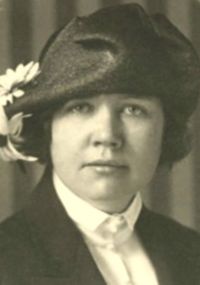
The transfer works almost too well, and the line between the idea and the man blurs. Frederic DeWitt Wells remarked that the man in the street cannot tell whether the marble statues on the roofs of the higher courts are symbols of justice or late presidents of the United States [25]. Allegory and hero have merged into one white silhouette. Rose Wilder Lane, in 1917, described the deeper mechanism. Every advance of democracy destroys an old hero, and another is hastily built; when kings are cast down from their high places, those places cannot be left empty [26]. A republic does not abolish the pedestal. It changes the occupant.
A triumphal arch is a building with no practical use, and that is why it speaks so clearly: it tells every passer-by to whom the state's glory belongs. Republics distrusted that message whenever it named a living man. Critics of the American Constitution feared an empire that would heap honours on its rulers while reducing citizens to servitude [10], and a novel of the French Revolution gives a character the lament of a Revolution that led its patriots in triumph to the Capitol before throwing them from the Tarpeian rock [14]. The form survived by changing its object. It was offered to the dead—Napoleon's coffin imagined atop the Arc de Triomphe, Washington's body disputed with his family—or to ideas, like a statue of Liberty that honours no one [2, 19, 23]. Yet a dead hero's glory still resists free examination, and democracies keep refilling the pedestals they empty [16, 26].
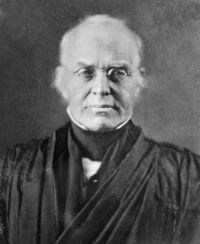
The most lucid republican writers placed the true monument elsewhere. Daniel Webster held that it would be a trifle if the walls of the Capitol crumbled, since walls can be rebuilt; what no one could rear again were the columns of constitutional liberty [27]. Joseph Story warned in 1833 that the visible order and harmony of a republic were vain if its own people let time undermine its walls [28]. John D. Philbrick added that monumental marble may "commemorate a glory which has forever departed" [29]. The arch can be built for the dead; the republic can only be kept by the living.