AI-generated from sources
Kindness or Liberty, the Captive Elephant as an Old Test of Animal Rights
In Brief
- In old accounts of elephant capture, kindness comes after force: the animal is roped, chained and humbled first, and only then fed, petted and well treated.
- Samuel White Baker, who wrote at length on handling wild beasts, held that an elephant cannot be directed by kindness alone and obeys through fear of the hook, not affection.
- The case for liberty measured a different loss than pain: the intelligence, social life and willingness to breed that observers believed captivity suppressed.
- When Jumbo, the London Zoo's famous elephant, was sold to Barnum's circus, the protests on record debated which captivity he deserved, not whether he should be captive.
Main authors
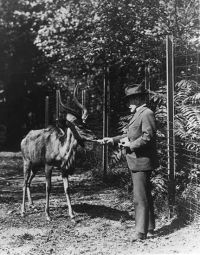
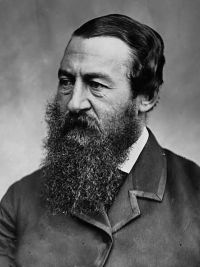
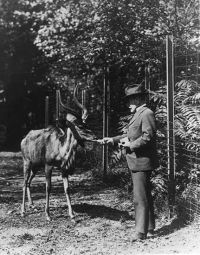
In 1883 William Temple Hornaday described the working elephant at rest. It stood “chained to a stake,” with no liberty of action beyond eating and drinking, swaying its body, swinging one foot or switching its tail [1]. Beside it he set the dog, which roams its master's house, the town and the countryside at will. His argument concerned intelligence rather than ethics. The dog owed its reputation for cleverness to that freedom, and no one could estimate what powers of reasoning a captive elephant might develop if it enjoyed the same latitude [1, 2]. Elsewhere he granted that so ponderous a beast cannot be allowed to roam at large among human beings [2]. The whole difficulty is there in miniature. One can regret the chain without proposing to remove it.
Those who caught, trained and studied elephants, from the mid-18th century to the early 20th, kept returning to that gap. Two claims run through their pages, and they are easily confused. The first asks that the captive be treated well: bathed, greased against the sun, rested in the shade [3]. The second asks whether it should be captive at all. The elephant made the difference unusually visible. It was too strong to be held by affection alone, too intelligent for its keepers to pretend it ignored its chains, and, in one famous case, too beloved for its fate to remain a private matter. Kindness could make captivity gentler, even admirable. It could not, by its own logic, refuse captivity. That refusal belonged to another argument, which the elephant's observers glimpsed often and seldom carried through.
Baker's Hook and the Kindness That Follows Capture
In the capture narratives, kindness is never the first act. It arrives once the animal has stopped fighting. Thomas Bingley describes the newly taken elephant led away between two tame ones and fastened to a tree in the forest. It stays comparatively quiet while its escorts remain. When they leave, it is seized by despair and makes the most extravagant attempts to regain its liberty [4]. A boys' book of 1903 gives the sequel. For days the roped and chained beasts struggle until they seem unable to survive the strain; no sooner are they humbled than they are fed, well treated and petted [5]. The order matters. The petting is the reward for surrender, not its alternative.
What the animal struggles for is named plainly, and by the captors themselves. Arthur Mangin credits the elephant with a love of liberty as great as that of the wildest animals. In females, he writes, it overpowers even maternal love. Nursing mothers are never released from their chains, because experience has shown that they would abandon their young to escape [6]. The detail is damning precisely because it comes from practice, not sentiment. Keepers built their routines on the assumption that the elephant wanted out. The 1903 account even praises the captive's large brain for grasping quickly that fighting gains it nothing [5]. That is a description of resignation, not of consent.
Those who handled elephants daily denied that kindness could do the work alone. Samuel White Baker admits that newcomers begin by pitying an animal driven with the hook. They soon learn, he says, that without it “the elephant is like the donkey without the stick” [7]. Simple kindness, in his judgement, cannot direct an elephant unless the power to punish stands behind it. He draws the conclusion without flinching: the elephant does not serve man through affection but is compelled through fear [7]. Kindness, on this account, is real but subordinate. It is the softer instrument of a control secured by the harder one.
The difference between a tame animal and a domestic one sharpened the point. Mangin explains the speed of taming by gratitude and, still more, by dependence on a man who grants or refuses food at his pleasure; within a few days the captive becomes docile [8]. He then quotes Boitard, for whom the elephant has never been a domestic animal but “a captive who only obeys through terror,” and who escapes to the woods whenever an opportunity arises [8]. Gratitude and terror sit in the same paragraph without embarrassment. In this world, kindness and coercion are not rival philosophies. They are the two hands of the same keeper.
Grand Under Servitude, the Best Case for the Kind Keeper
The case for humane captivity deserves a hearing at its strongest, and its strongest form is labour. A children's magazine of 1882 explains that the mahout takes his wife and children with him, because it takes several people to keep an elephant comfortable [3]. The animal is bathed morning and evening. Before each day's march its forehead, ears and paws are greased against the cracking sun. At every halt its heavy trappings come off and it rests under a spreading tree [3]. This is not cruelty in disguise. It is a whole household organised around the welfare of one captive.
Some observers went further and held that captivity ennobled the animal. A contributor to The Century in 1913 found trained elephants more intelligent and more majestic than wild ones. They seemed to him to have “become grand under servitude,” and he found it hard to believe they would wish to return to the wild [9]. Hornaday had read the same animal the opposite way, as a mind held back by the stake [1, 2]. The 1913 writer, to his credit, calls his own impression sentimentality. A paragraph later he records how the noosing of a herd's leader sealed the fate of all the rest [9]. The grandeur he admired began with a rope.
Beneath such admiration lay an ethic that never needed liberty. Voices for the Speechless states it with precision: goodness moves in a larger sphere than justice. The obligations of law and equity reach only to mankind, while kindness should extend to creatures of every species. A good man therefore cares for his horses and dogs even when they are old and past service [10]. William De Witt Hyde's Practical Ethics draws the boundaries of that duty. We may sacrifice an animal's pleasure to our own welfare, but not its welfare to our caprice; we owe it proper food, care, shelter and exercise [11]. Kindness, in this tradition, is the owner's virtue. Placed outside justice, it can grant everything except a right.
The objection came from inside the same moral world. Maria Edgeworth, weighing whether young people should be trusted with animals, warned that even the fondest and most ingenious of them cannot make an animal as happy in captivity as it would be at liberty [12]. Care has a ceiling, and liberty sits above it. The claim that captives prefer their cage met a sharper answer. Nellie L. McClung, arguing for women's suffrage, recalled the keepers' observation that an animal long confined will not come out even when the door is opened, and replied that this is no argument against freedom [13]. Her subject was women, not elephants. But the reply fits the 1913 writer exactly: a captive's contentment proves only that the captivity has worked.
The keepers themselves came closest to fusing the two claims. Rush C. Hawkins reports the theory of an old and successful keeper, who insisted that the elephant was not naturally bad but hated confinement. It demanded kindness and consideration from the people who were the visible instruments of its captivity. Denied both, it killed the tyrants who withheld “the freedom to which he was naturally entitled” [14]. In this view kindness is not a gift. It is what the captive demands of those who took its liberty, and its refusal breaks the truce. Mrs. R. Lee tells of a keeper who, losing his hold, struck his elephant with brutality; from that day hatred replaced love and indocility replaced obedience, for as long as the animal lived [15].
Goldsmith's Citizen Elephant and What the Stall Takes Away
The liberty argument measured something other than pain. It counted the faculties that captivity suppressed. Oliver Goldsmith, writing in 1759, relayed the naturalists' view that animals are sagacious in proportion as they are removed from tyranny: “in native liberty, the elephant is a citizen,” and the beaver an architect, until man intrudes and breaks their spirit [16]. Buffon's Natural History makes the same pairing. Elephants assemble, disperse and act in concert. If they carry on no work in common, it is perhaps for want of room and tranquillity, since men have long multiplied wherever they live—just as the beaver ceases to build wherever men settle [17].
The point concerned knowledge as much as morals. A captive elephant was a different animal, and the observer could not see what had been lost. Baker warned that whoever has never seen a wild elephant can form no idea of its real character, mentally or physically. Set beside the animal that stalks its native forests at break of day, the menagerie beast that takes a sixpence in its trunk and turns with difficulty to drop it in a box seems another creature [18]. More than a century after Goldsmith, Hornaday made the same suspicion his starting point: the powers of reasoning a free elephant might develop simply could not be estimated [2]. Kindness can be judged by looking at the captive. The loss of liberty is, by definition, out of sight.
The most striking evidence was the refusal to breed. Buffon described it in the language of politics. In captivity, he wrote, “the individual alone is a slave, the species remains independent,” and constantly refuses to increase for the benefit of its tyrants [19]. He credits the animal with sentiments above the nature of common brutes. José Martí draws the same observation into a moral rule. The elephant does not want to have young when imprisoned, because beasts need to be free to live happily [20]. Both writers ask the captive's body to testify. Neither suggests that better treatment would change its answer.
Yet the liberty argument, once made, was usually spent on human beings. Goldsmith's citizen elephant serves an inquiry into polite learning, and he adds at once that the parallel holds for mankind [16]. Martí turns from the elephant and the overloaded llama to say that men must be at least as respectable, and that America before liberty lived like the llama under too heavy a load [20]. McClung's cage stood for women who preferred privileges to rights [13]. The elephant gave freedom its most vivid image, then lent it to others. An exception is Edmund Selous. He pitied an animal in proportion as its power to exercise its natural functions was taken away, and he hated, intellectually as much as humanely, the cellular confinement of wild creatures in the Gardens he knew [21].
Jumbo and the Law, Two Captivities and No Door
When law took up the elephant, it spoke the language of kindness and use. The 1911 Encyclopædia Britannica records that in India capture by pitfalls was discouraged as cruel and wasteful, and that elephants had become a government monopoly [22]. Shooting them was prohibited except when they endangered people or crops. The Elephants Preservation Act of 1879 punished anyone who killed, captured or injured an elephant without a licence, with a fine of 500 rupees for a first offence [22]. The pairing of cruelty with waste says much. The law shielded the elephant from a bad capture, and turned a good capture into a right the state could lease.
Such protection followed usefulness and proximity, not sensitivity. Henry S. Salt, describing with irony a society he treats as savage, notes that its law against cruelty protects species classed as domestic from some specified wrongs. Wild species, presumably no less sensitive to pain, remain almost entirely outside the pale [23]. Even where a right to liberty was claimed outright, it could come with conditions. A bird magazine of 1900, invoking the forefathers' natural right to life, liberty and the pursuit of happiness, granted any creature liberty only so long as it can do more good at liberty than as a captive [24]. Another bird journal lamented that the argument that man has no moral right to deprive an innocent creature of liberty will always meet the indifference of the majority [25].
The elephant that claimed its own justice found no tribunal. Louise Imogen Guiney tells of a keeper who abused an elephant of saintly patience. Six years later, in another duchy, the animal spied its old tormentor, wound its trunk about his waist and cracked him against a wall. A dozen influential people pleaded the elephant's nobility of character, but the public blood was up and he had to die [26]. Guiney blamed “our accursed generic pride” for deadening thought about reforms we shall never reach [26]. Kindness could forgive an elephant's temper. It had no place for a grievance.
The most famous elephant of the age put both claims to a public test. When Jumbo, the favourite of the London Zoo, was sold to Barnum, protests poured out. One, reproduced by Charles Frederick Holder, pictured the indignity and terror of being slung aboard a ship, a fate that would seem to an elephant worse than death [27]. Another mourned the life ahead: no more quiet garden strolls, shady trees and green lawns, but a tent and the routine of a circus taken round the world [28]. A letter pleading for the city's children begged Barnum to give Jumbo back, promising that parents would repay his money with an extra sum for his expenses [29].
Not one of these voices asked for Jumbo's liberty. The quarrel set a garden against a tent, one owner against another. The love on display was love for a captive who should stay captive in the right place. A history of Punch later dismissed the uproar as “a grotesque explosion of sentimentality,” and noted that when Jumbo was killed in a railway accident in America in 1885, the magazine marked his death with an epigram [30]. The mockers and the mourners shared a premise. Jumbo's treatment was open to debate. His captivity was not.
Those who captured, kept and studied elephants left a clear record of two claims that are easily merged. Humane treatment—baths, grease against the sun, rest in the shade, proper food and shelter—was real, laborious and sometimes admirable [3, 11]. But it came after the rope and the chain, and practitioners held that it worked only with the hook behind it [5, 7]. The claim to liberty measured something else. From the naturalists Goldsmith relayed in 1759 to Hornaday, it pointed to the intelligence, social life and willingness to breed that captivity was thought to suppress [2, 19, 16]. Many who glimpsed it hedged it with usefulness or spent it on human freedom. Law and public feeling, even in the uproar over a beloved zoo elephant sold to a circus, argued about the conditions of captivity rather than captivity itself, and even an outright claim to liberty came with conditions [22, 24, 28].
An old keeper's theory, reported by a writer who knew him, states the relation most honestly. The elephant, he held, demanded kindness from those who deprived it of freedom, and took revenge on them when it received none [14]. Read that way, humane treatment is not a gift but a payment on a debt, and a debt presupposes that something was taken. Kindness can lighten a chain. It has never explained the stake.