AI-generated from sources
The Ingenious and Enduring Craft of Predation
In Brief
- Predation encompasses a wide array of sophisticated strategies, from passive architectural traps that weaponize the environment to dynamic active hunts relying on stealth and cunning.
- Predators employ ingenious methods such as constructing elaborate snares, utilizing chemical weapons, and engaging in psychological manipulation through lures and deceptive behaviors.
- The constant co-evolutionary arms race between predator and prey drives the development of equally complex defensive strategies, including camouflage, mimicry, and specialized evasive actions.
- The intricate interplay between hunting and defense is a fundamental engine of biodiversity, fostering intelligence and adaptation across the natural world.
Main authors
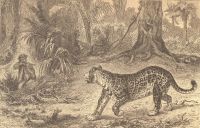
In the intricate tapestry of the natural world, survival is a contest of innovation, a relentless cycle of attack and defense. The strategies employed by predators offer a profound insight into this evolutionary drama, revealing a spectrum of techniques that range from passive, architectural marvels to dynamic, calculated pursuits. These methods are not merely instinctual behaviors but are sophisticated crafts honed over millennia, where success depends on a masterful understanding of engineering, psychology, and timing. The seemingly static trap of a spider or the patient ambush of a feline are testaments to an ongoing arms race, where every advantage gained by a predator is met with a corresponding adaptation in its prey.
This perpetual struggle has given rise to an astonishing diversity of predatory arts. Some organisms have evolved to become master builders, constructing elaborate snares that exploit the laws of physics and the predictable behaviors of their victims [1, 2]. Others rely on active cunning, employing stealth, potent chemical weapons, or deceptive lures to overcome their targets [10, 16]. Far from being a simple narrative of aggression, the study of predation reveals a complex interplay of co-evolution. It demonstrates how the pressure to hunt shapes not only the hunter but also the hunted, driving the development of equally sophisticated countermeasures, from mimicry and camouflage to behavioral artistry [20, 21, 27]. This dynamic is a fundamental engine of biodiversity, a continuous dialogue of creation and counter-creation written in the language of survival.
The Architecture of the Ambush, Passive Predatory Designs
Across the animal and even plant kingdoms, predation often takes the form of stationary engineering, where survival hinges on the ingenious construction of passive traps [5]. These mechanisms, far from being simple, represent a high degree of evolutionary craftsmanship designed to ensnare the unwary. A classic example is the antlion, which meticulously excavates a funnel-shaped pit in the sand. By positioning itself at the bottom, it transforms a simple patch of ground into a fatal precipice, leveraging gravity and terrain to capture ants that stumble over the edge . This strategy demonstrates a form of outsourced labor, where the environment itself is weaponized, requiring patience but minimal energy expenditure once the trap is set.
The art of the passive trap reaches a pinnacle of complexity in the webs of spiders. These are not just random nets but sophisticated aerial structures whose success depends on strategic placement, often across impassable chasms, and durable construction . The foundation lines of such webs are reinforced through repeated effort, becoming valuable assets that may be reused for successive snares until they are destroyed by accident . In his 1918 reflections, Henry Adams even posited that the spider's ability to deconstruct and reconstruct its web demonstrated a form of analysis and synthesis that predated similar human cognitive skills [6]. This architectural prowess is not uniform; different spider species have developed a range of techniques, from spitting sticky webs and building burrows with trapdoors to dangling a single, weighted silken thread as a lure [3].
This principle of the passive, baited trap is not exclusive to the animal kingdom. Certain plants have independently evolved mechanisms to capture and consume insects, representing a striking case of convergent evolution . The bladderwort, for example, develops a submerged trap with a nearly invisible door. When a minute aquatic creature touches the entrance, it triggers the mechanism and is drawn inside [4]. While human-made traps for game animals, such as deadfalls guided by fences, operate on a much larger scale, they rely on the same fundamental principles of exploiting an animal's predictable pathways and using a trigger mechanism to activate the snare [7]. Whether woven from silk, dug from sand, or grown from plant tissue, these stationary predatory systems highlight a form of intelligence embedded in structure itself.
The Art of the Stalk, Active Hunting Strategies
Moving beyond stationary traps, a vast array of predators engage in active hunting, a dynamic craft that relies on stealth, patience, and precisely timed aggression. Many spider species, for instance, forego webs entirely, opting instead to stalk their prey directly [9]. The trapdoor spider exemplifies a blend of passive and active strategies; it constructs a burrow not as a trap but as a concealed launching point, waiting patiently before pouncing on a passing victim from its elevated entrance [8, 14]. This method underscores the importance of concealment as a foundational element of predatory behavior, a trait common to hunters who favor rugged or overgrown terrain that provides natural cover [13].
The moment of attack is often a highly specialized maneuver. Large felines, for instance, rely on stealth and explosive power, using a few powerful springs to land on a creature's back before delivering a killing bite to the throat [15]. Similarly, tropical bird-eating spiders prowl tree branches to ambush sleeping birds, dispatching them swiftly with venomous fangs [12]. The use of toxins is a recurring theme, with some agile ant species employing their stings not merely for defense but to paralyze their prey, while larger, slower ants use their powerful jaws to extract wood-borers from their burrows . In another form of chemical warfare, swarms of ants can overwhelm a much larger creature, subduing it with repeated injections of formic acid over a prolonged struggle [17].
Some of the most sophisticated active hunting techniques involve an element of psychological manipulation. The use of lures, as noted by Frédéric Houssay, represents a significant refinement of the simple ambush. Instead of relying on chance, the predator actively entices its prey toward its hiding place, using bait or objects that mimic a food source to draw the victim into striking distance . This calculated deception is paralleled by other cunning behaviors, such as the hunting spider that learns to exploit the pitcher-plant, turning another predator's trap into its own private larder by preying on the insects ensnared within it [11]. These active strategies showcase a different kind of predatory intelligence—one based not on architecture but on dynamic assessment, behavioral cunning, and adaptive action.
An Enduring Arms Race, Co-evolution of Predator and Prey
The development of sophisticated predatory crafts does not occur in a vacuum; it is one side of a co-evolutionary dialogue where every innovation in attack prompts a counter-innovation in defense. The result is a perpetual arms race, a dynamic equilibrium where neither predator nor prey gains a permanent upper hand [24]. This contest is waged across multiple fronts, from physical attributes to behavioral cunning. The very existence of a predator's snares and fighting prowess necessitates that prey species develop heightened sensory perception and defensive strategies to survive [18, 22]. This pressure ensures that only the most wary and well-adapted individuals persist, continually raising the bar for predatory success.
Defensive mechanisms are as varied as the threats they counter. Camouflage is a primary strategy, with some spiders evolving to resemble bird droppings, dried leaves, or even ants, which are often unpalatable to birds and reptiles . In an observation that remains relevant, Thomas Belt noted in the 19th century that this drive toward perfect resemblance is relentless; as predators' perceptual abilities improve, natural selection favors ever more precise mimicry in their prey . Charles Darwin echoed this, explaining that when a vulnerable butterfly species adopts the coloration of a well-protected one, it effectively deceives predators and gains a significant survival advantage [29]. Defenses can also be chemical, as seen in the skunk, whose potent odor evolved as a highly effective deterrent once it ceased to rely on its teeth for protection [25], or botanical, with plants exuding sticky fluids or retaining dew to thwart nectar-thieving ants [19].
Beyond physical traits, survival often depends on behavioral artistry. The simplest defense is flight, but even this can be refined into a high art, with prey employing complex maneuvers to evade capture [23]. Another remarkable strategy is the phenomenon of feigning death, where certain spiders become completely immobile when threatened, allowing themselves to be handled without betraying any sign of life . This instinct for stillness is crucial, as procryptic coloration is useless without it. Some creatures demonstrate even greater situational awareness, such as spiders that escape ant swarms by rappelling on a silk thread, suspending themselves in mid-air until the danger has passed [26]. This intricate dance of adaptation and counter-adaptation, sometimes framed as an evolution of intelligence, ensures that the contest between hunter and hunted remains a central, driving force of ecological change [28].
The world of predators is a showcase of evolutionary ingenuity, a testament to the diverse pathways life takes to solve the fundamental problem of sustenance. From the architectural precision of a spider's web and an antlion's pitfall to the calculated patience of an ambush predator, these strategies reveal a deep integration of biology, behavior, and environment . Hunting is not simply an act of aggression but a multifaceted craft involving engineering, chemical synthesis, and psychological warfare. Whether through passive traps that turn the landscape into an ally or active pursuits that depend on speed and stealth, predators have developed a remarkable arsenal of tools and techniques, each honed by the unforgiving logic of natural selection.
Ultimately, this exploration of predatory craft illuminates the interconnectedness of all life within an ecosystem. The hunter’s cunning is perpetually matched by the prey’s resilience, creating a dynamic feedback loop that drives adaptation for all parties . The art of the kill is answered by the art of evasion; camouflage, mimicry, and behavioral feints are the evolutionary responses to the ever-present threat of consumption . This enduring conflict, far from being a simple narrative of violence, is a creative force that generates complexity, fosters intelligence, and enriches the diversity of the natural world, reminding us that in nature, every role—aggressor, victim, and observer—is part of a single, indivisible story of survival.