Summary

Portrait of Thomas Belt Thomas Belt The Naturalist in Nicaragua

To the south the eye first passes over about six miles of forest, then savannahs and grassy ranges stretching to the lake, which is only dimly seen, with the peaks of Madera and Ometepec more distinct, the latter bearing south-west by west. Alone on the summit of a high peak, with surging green billows of foliage all around, dim misty mountains in the distance, and above the blue heavens, checkered with fleecy clouds, that have travelled up hundreds of miles from the north-east, thoughts arise that can be only felt in their full intensity amid solitude and nature's grandest phases.
Source: Gutenberg

Portrait of Thomas Belt Thomas Belt The Naturalist in Nicaragua

When we turn from these works and remains of a great and united tribe to the miserable huts of the present natives, we feel how great a curse the Spanish invasion has in some respects been to Central America. The half-breed, wrapped up in himself, lives from year to year in his thatched hut, looking after a few cows, and making cheese from their milk. He perhaps plants a small patch of maize once a year, and grows a few plantains, content to live on the plainest fare, and in the rudest style, so that he may indulge in indolence and sloth.
Source: Gutenberg

Portrait of Thomas Belt Thomas Belt The Naturalist in Nicaragua

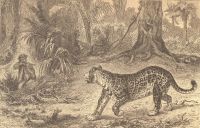
You watch the tricks of the monkey, the humming-bird's courtship, the lying in wait of the alligator, and all the ceaseless activity of the forest—that forest so monotonous in its general features, but fascinating beyond measure when the varied life-histories working out within it are realised—and you share in the keen joy of the naturalist who has written with such simple eloquence of the beauty, the wonder, and the mystery of the natural world.
Source: Gutenberg

Get perspective with Kwize: daily news enlightened by great literature