AI-generated from sources
The Labour Test, a Tool for Sorting the Poor Rather Than Employing Them
In Brief
- Under the English Poor Law, the work demanded in exchange for relief was meant less to employ the poor than to prove they were destitute: labour served as a test, just as confinement in the workhouse did.
- The test sorted rather than employed: the deserving aged and the respectable unemployed were steered toward other help, while the labour test was kept for the less respectable able-bodied, a category defined by the ability to earn any wage at all, even for the ruptured or chronically ill.
- Florence Nightingale, the nursing reformer, judged in 1869 that the workhouse test had broken down: punishing paupers with unproductive labour did not reduce pauperism, and the workhouses overflowed while people starved.
- Even reformers who wanted to abolish penal test workhouses kept work as an obligation: a public body able to find jobs or training would, they argued, finally allow the obligation to use it to be strictly enforced on those failing to maintain themselves.
Main authors
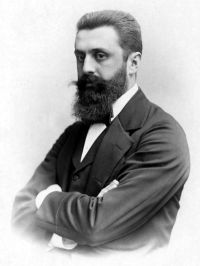
In the Paris described by Theodor Herzl, a man in want could be handed an axe. The work was deliberately easy and unskilled: chopping wood, or cutting the faggots that households used to light their stoves [1]. Herzl’s verdict on the arrangement was approving, and stark. He called it “prison-work before the crime,” a task that tested a man’s willingness to labour and kept want from driving him to crime or suicide, all without loss of character [1]. The formula exposes the strange logic of an institution that ran through the English Poor Law and its imitators. Relief was given, but only against labour. And the labour was not there to produce anything; it was there to prove something.
That distinction is the heart of the matter. The labour test was defended as a remedy for dependency, a way of stopping public money from eating away at the will to work. Those who framed it, administered it or endured it describe a different object: a sieve that separated the “deserving” from the rest, and a deterrent whose success was counted in the people who stayed away. The test seldom failed to put the poor to work, because it was seldom built to do so. What it did instead—sort, deter, and at times exploit—had a price. That price was paid in hunger and spent savings rather than in rates, and it fell largely on the workers the test claimed to protect.
Spinning rooms and allowances, the old Poor Law gives way to the test
The test was born as a reaction against an older ambition, that of finding the poor real work. In a book published in 1920, William Amias Bailward recalled that the first purpose of the old Poor Law had been to set the able-bodied to work [2]. For some 230 years, by his reckoning, it had tried to solve the problem of finding work for the unemployed. Because spinning and weaving were then the country’s main industry, the employment it manufactured usually took that form [2]. Bailward was no detached chronicler. His book, pointedly titled The Slippery Slope, invoked this history to argue that the socialism of his own day was the old Poor Law under a new name [2].
The old system’s other legacy, the topping-up of wages from public funds, became the century’s cautionary tale. John Stuart Mill, in the 1871 edition of his Principles of Political Economy, held that under this allowance system population rose fast and wages sank low. With wages and allowance together, families ended up worse off than they had been with wages alone [3]. Once a shortfall is made up by forced contribution, he argued, wages may fall below starvation point [3]. James Godkin, in his history of the Irish land war, judged that an allowance that rose with each child acted as a bounty on marriage, and quoted a Commons committee of 1824 that drew the moral conclusion: a disinclination to work must be the consequence of so vicious a system [4]. Relief mixed with wages, on this view, corrupted both the wage and the worker.
The answer was to reverse the place of work in relief. Work ceased to be its purpose and became its price. Charles E. Trevelyan, in The Irish Crisis, put the doctrine plainly: if labour was connected with relief at all, it should serve only as “a test of the destitution of the applicant,” entitling him to a bare subsistence, exactly as confinement in a workhouse did [5]. The real aim lay outside the test. The rich were to be left no choice but to keep the able-bodied as paupers or employ them at full wages on profitable works, and the poor were to have no reason to prefer public alms to their own industry [5]. W. Lyon Blease, a historian of English Liberalism, describes the resulting system. Every applicant had to pass a test, and the workhouse was made unattractive enough that only those in actual want would enter it; the poor man was thus forced to rely on his own strength and skill [6].
Its defenders presented this severity as a form of liberty. A writer in Chambers’s Edinburgh Journal conceded that the workhouse test, which made the able-bodied man give labour in return for relief, involved “slavery within the bounds of the workhouse” [7]. But it now touched only a few. The old system, looser in its giving and more generous to able-bodied workmen, had in his view imposed on that whole class a control over their movements that came unpleasantly close to slavery [7]. The argument is revealing. It admits the harshness of the test and defends it by its narrowness: confine the constraint within the walls, and the labourer outside is free.
That freedom rested on a premise the test could not supply: work to be had outside. Sir George Nicholls, in his history of the Irish poor law, quotes commissioners convinced that the able-bodied and their families would endure any misery rather than make the workhouse their home [8]. That repugnance, they added, would be a reason to recommend the workhouse only if employment could be had by those who made due efforts to find it [8]. The condition says everything. A test of willingness sorts people only where there is somewhere to send the willing. Where there is not, deterrence produces nothing but misery endured beyond the walls.
Able-bodied at any wage, how the Poor Law sorted its paupers
A test needs categories, and the Poor Law built them with care. In the eyes of the Central Authority, Beatrice Webb observes, the aged and infirm, the children and the able-bodied together made up the whole “pauper universe” [9]. The restrictions on outdoor relief to the able-bodied were universally assumed not to touch the aged and infirm [9]. Everything therefore hung on who counted as able-bodied, and the answer was economic rather than medical. The essential mark, Webb shows, was the capacity to obtain employment for hire at any wage, whatever the state of one’s health [10]. Under the Outdoor Relief Prohibitory Order of 1844, people with frequent ailments, ruptured or of weak constitution, were to be treated as able-bodied provided they earned wages, however low [10].
That definition sits uneasily with an earlier recommendation. The Poor Law Commissioners had proposed that the partially disabled, able to earn only part of their keep, be entirely supported by the guardians [11]. Not in the workhouse, Webb stresses, but by being set to work suited to their condition, or else by being barred from working on their own account [11]. The 1844 Order points the other way. A man’s body no longer decided his category; his pay did. A ruptured labourer earning a few shillings fell on the same side of the line as the fittest worker [10].
Within the able-bodied, a second sieve sorted by character. Webb sets out the Central Authority’s rules with precision. The deserving aged were not even to be urged into the workhouse and were to receive outdoor relief adequate to keep them at home; the respectable able-bodied applicant was to be sent to a distress committee, outside the Poor Law altogether; only the less respectable destitute men received outdoor relief against a labour test [12]. The test had become a badge of disrepute. William Edward Hartpole Lecky, writing of the aged and deserving poor in general, described their relief in similar terms. The great majority of the aged and deserving poor, he wrote, received only outdoor or even purely medical relief, and wherever a more stringent system was imposed, pauperism invariably and rapidly decreased [13]. His evidence measures the relief rolls, not the need behind them—and a falling count of paupers is exactly what a deterrent is built to produce.
The machinery held even when the labour market gave way. In the unemployment crisis of 1879–81, when more men were probably out of work than at any date since 1841, the Central Authority still clung to its view of what the labour test should be [14]. Webb also records a circular that, while nominally upholding the workhouse test and the labour test for the able-bodied pauper, insisted that an altogether different provision be made for the unemployed wage-earner [15]. Its motive is telling: evidence of growing privation among people usually in regular employment, who did not ordinarily seek poor relief [15]. What strained the sieve was the arrival of the respectable at its mesh.
Seen from the receiving end, the sorting ran backwards. The novelist David Christie Murray, in The Making of a Novelist, describes a law that ruins the hands of the skilled workman and detains skilled and unskilled alike until the labour market has closed to them [16]. Its dietary, he wrote, would kill anyone but a professional fasting-man within a month. Worse, it depended on the temper of local boards and labour masters, some of whom did not insist on the tale of work that others demanded [16]. His verdict inverts the whole design: the law was “made for the comfort of the worthless and is the plague of the deserving” [16]. A test that spares the hardened and wears down the craftsman has measured the wrong thing.
Savings sold and workhouses full, the price of deterrence
Deterrence strikes first at those it least means to reach. Blackwood’s Edinburgh Magazine, in March 1847, judged harmful to society any scheme that tested destitution by the terrors of the workhouse—and equally any that offered outdoor employment to the able-bodied without discrimination [17]. Its reasoning was concrete. The well-disposed independent labourer, offered work on such terms, might be scared away; he would consume his savings, sell his furniture and break his constitution rather than accept [17]. If so, the filter worked in the wrong direction. The provident man would exhaust his reserves rather than apply, and come to the door, if he came at all, poorer and sicker than he needed to be.
Two decades later, Florence Nightingale pronounced the whole apparatus a failure. In A Note on Pauperism, published in 1869, she declared that the Poor Law had broken down as a means of reducing pauperism by bringing more willing workers into work [18]. Private charity had broken down too, and had even increased the evil; the workhouse test and the unproductive-labour test had collapsed alike [18]. Her charge was double. The test punished paupers with unproductive labour at unremunerative prices, and the punishment did not even work: the workhouses were overflowing and the people starving [18]. A test that neither employs nor deters has lost both of its justifications.
The labour itself could turn into a source of profit, and profit brought a conflict of interest. Edwin A. Brown, in “Broke,” The Man Without the Dime, observed that where the lump work test brought some financial benefit to the institution, even the best superintendents grew less eager to return their most capable, willing workers to paid industry [19]. As a gauge of character, he judged the test almost worthless. Men of ordinary sense, he wrote, saw through the claim that it preserved their self-respect and recognised it as “a subtle exploitation” [19]. It cost them the chance of paid work that day, or served as penal service to discourage their return [19]. A test meant to push the poor back into the labour market here held them away from it.
The deeper flaw was structural, and Beatrice Webb named it. The rule that the pauper’s lot must be made less eligible than the independent labourer’s assumed that the lowest independent labourer lived decently [20]. He did not. The chronically under-employed dock labourer, or the sweated home-working chair-maker and slipper-maker, lived so far below adequate subsistence that to make the pauper worse off meant pushing him below any acceptable standard of civilised existence [20]. Alfred Russel Wallace, in The Remedy for Unemployment, located the trouble in the same place. The misery that moved reformers, he insisted, was that of genuine workmen, ready for any work however hard, who were kept from it by the organisation of society rather than by idleness [21]. The test was calibrated for a failure of will; the testimony points to a shortage of work.
Not every advocate of work as a condition of relief was a disciplinarian, and the exceptions sharpen the point. Herzl’s wood-choppers were to be spared crime and despair, not shamed [1]. Marie E. Zakrzewska, whose memoir appeared in 1924, described an institution where crippled invalids and destitute women and children established and supported themselves under a benevolent man who let them do as they liked, provided they would “work for what you need” [22]. She offered it as proof that charitable homes, as usually run, humiliate and degrade [22]. H. G. Wells, in A Modern Utopia, drew the line most clearly. Existing relief was unwilling charity, dispensed by administrators who often, in rural districts at least, competed for cheap labour and regarded want of employment as a crime [23]. Public employment offered as a right, without degradation and on minimum terms, would instead set a floor below which hardly anyone would work [23]. What separates these visions from the test is not the demand for work. It is the intent to degrade.
From the test workhouse to the labour exchange
In the early 20th century, the Poor Law itself seemed to be dissolving. Bailward foresaw that by the time the Royal Commission reported, only a shadow of it would remain: the aged handed to a pension authority, the able-bodied to bodies formed to find work for the unemployed, the children to education committees and the sick to a public health authority [24]. Beatrice Webb’s English Poor Law Policy set out the alternative. A National Authority would maintain the unemployed, with allowances for their dependants, under physical and industrial training meant to fit them for the work a Labour Exchange would sooner or later find [25]. The old regime received a flat refusal: the book saw no reason for the penal conditions of the English Able-bodied Test Workhouses for any honest and willing man [25].
Yet the obligation to work did not vanish with the penal workhouse; it changed instruments. An Unemployment Authority responsible for finding a man a job or placing him in training would, Webb argued, make it possible for the first time to enforce strictly, on every man and woman failing to maintain themselves and their dependants, the obligation to make use of this organ of the State [26]. Her example is pointed. When a visitor from the Children’s Care Committee found an underfed child, it would be no use for the man to say he was out of work [26]. The old test deterred by making relief miserable. The new scheme would compel by removing the excuse. Its fiercest critics did not so much abolish the condition of work as try to make it enforceable, by pairing it with the work the workhouse had never offered.
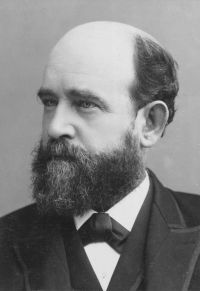
Whether public authority could actually supply that work was the open question. L. G. Chiozza Money, in Riches and Poverty, warned that unemployment insurance relieves the distress of unemployment without curing it: the man drawing out-of-work pay is still unemployed [27]. Even the Labour Party’s Right-to-Work Bill, he observed, came down on examination to “work or maintenance,” its promoters seeing that a state as poor in property as the workmen themselves could not make economic work to order [27]. William Douglas Morrison raised the same difficulty against the Dockers’ Union’s plan for municipal workshops open to all who could not find work. The men in them must work at something, and it would have to be something an unskilled labourer could quickly learn [28]. It was the very problem the old Poor Law had once answered with spinning and weaving [2]. Henry George, for his part, rejected the premise altogether: there was no need for charity or for manufactured work, only for removing the restrictions that kept natural demand from meeting natural supply [29].
Bailward drew from all this a conclusion his opponents would have rejected, though it holds a part of the truth. The old Poor Law and the new socialism, he insisted, were for all practical purposes one and the same, since both took on the responsibility of setting the able-bodied to work [2]. The polemic flattens real differences: the reformers wanted training and placement, not penal labour [25]. But it catches a genuine circle. The test had treated labour as proof of need rather than as something public relief should provide [5]. Its failures led reformers back to that very duty.
Relief on condition of labour was rarely a plan to employ the poor. In its classic form, work served as proof of destitution, as confinement in the workhouse did, and its value lay in the people it kept away [5, 6]. That design made the test a sorting machine. It drew lines by wage rather than by health, so that a ruptured worker earning a few shillings counted as able-bodied, and by reputation, reserving the labour test for the “less respectable” while the deserving aged and the respectable unemployed were steered elsewhere [10, 12]. It could deter the provident, who, Blackwood’s warned, might sell their furniture rather than apply [17]. It could not make the pauper’s lot worse than that of a sweated labourer without pushing him below any civilised standard [20]. Where its work had value, it could even keep capable men from the paid jobs it claimed to send them back to [19].
Its defenders measured success in falling numbers of paupers; its critics pointed to overflowing workhouses and people starving all the same [13, 18]. Even the reformers who wanted to abolish its penal side kept work as an obligation, hoping to make it fair by offering real jobs and training instead of make-work [25, 26]. A condition of work can be a floor or a punishment, depending on whether there is work behind it. The labour test measured the willingness of the poor with great care; it never measured what was actually missing, which was the work itself.